Annette’s wedding and engagement rings
The Time Traveler's WifeAnnette’s wedding and engagement rings pass from Henry’s father to Henry when he asks to give them to Clare. The rings are more than heirlooms: they make Henry’s proposal and intended marriage a point of contact between his parents’ past and his own future, and their significance deepens as Henry and Clare confront the uncertainty of having a child.
The Rings and Their Provenance
The rings belonged to Henry’s mother, Annette, and remained with his father after her death. Henry asks for them when he tells his father that he is going to marry Clare. He explains that he wants to give Clare his mother’s wedding and engagement rings and believes his mother would have liked the gesture. His father questions how Henry could know what Annette would have wanted, since Henry was too young to remember her well. Henry answers that he has seen his mother many times since her death, appearing to him across different moments in her life. The request thus depends on the unusual intimacy of Henry’s time-travel experience, not on ordinary childhood memory.
A Gift Between Father and Son
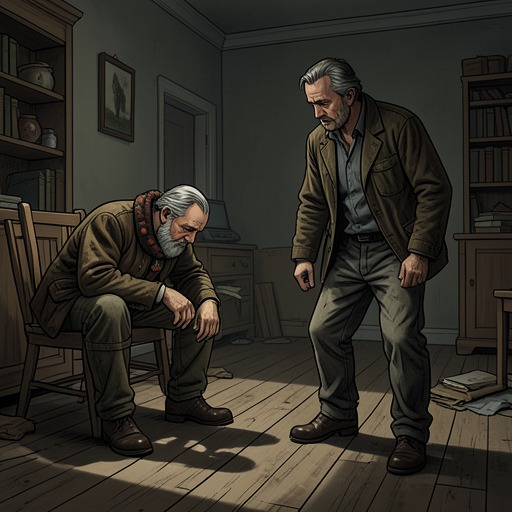
Henry’s father has already heard Henry say that he is getting married, but asks who would marry him. Henry shows him a photograph of Clare at Lighthouse Beach and identifies her as an artist. His father acknowledges that she is pretty, offering what Henry understands as the closest thing to a paternal blessing. The rings then turn the conversation from Henry’s marriage to the family history it will carry forward.
His father retrieves a small satin pouch and takes out a dark blue jeweler’s box. Inside are the two rings. He holds them between his hands for a time, then places them in Henry’s cupped palms. The exchange is deliberate and quiet: Henry’s father does not offer an expansive explanation or approval, but entrusts him with objects bound to Annette and to the marriage his parents shared. Henry notes that his parents had been happy together and that his father had seemed like a different person then. The rings make that remembered happiness tangible without erasing the distance between father and son.
Material Details and Intended Use
The engagement ring is an emerald; both rings are silver and need cleaning. Henry regards them as objects that should be worn, not merely preserved. His confidence that he knows the right person to wear them links the specific material inheritance to Clare, while the emerald’s green-and-white light gives the transfer a concrete visual detail in an otherwise restrained family scene.
The rings’ meaning is therefore both personal and prospective. They belonged to Henry’s mother, but Henry asks for them as a gift to his future wife. Their movement from his father’s keeping into his hands marks a change in who will carry the family objects and what marriage they will accompany.
Marriage, Parenthood, and Uncertainty
About two years into their marriage, Henry and Clare decide to see whether they can have a baby. Clare describes wanting a child intensely while avoiding questions about Henry’s pessimism, the hereditary possibility of his time-travel difficulties, and what he may have seen of their future. The rings’ transfer precedes this effort to form a family, but it cannot promise that the future will follow the expected course.
Henry’s time-displaced experience of their attempt to conceive later gives the uncertainty a particular form. In 1996, when they are trying desperately for a child, he has sex with Clare while she is barely awake; for Clare, the resulting pregnancy is only weeks past when Henry learns of it, though for him the encounter lies years behind. He has since decided to have a vasectomy, without Clare’s knowledge, and her announcement that she is pregnant makes the crossed timelines consequential for their marriage and plans for parenthood. The rings are not presented as a solution to these difficulties. Instead, they stand within the same family story: an inherited sign of marriage carried into a future shaped by love, temporal dislocation, and outcomes neither spouse can fully control.
Narrative Significance
The rings condense the novel’s intergenerational pattern into an exchange of two small objects. Henry cannot rely on ordinary memory of Annette, yet insists that repeated encounters with her give him grounds to imagine what she would have wanted. His father’s act of handing over the rings supplies a form of recognition that words alone do not provide. The heirlooms move from one marriage to another, but their transfer does not imply that the younger couple will repeat the older couple’s life. Their significance lies in the connection they establish: Clare is welcomed, however cautiously, into Henry’s family history, and Henry takes that history with him as he tries to make a family of his own.