Clare Abshire
The Time Traveler's WifeClare Abshire is an art student and one of the two central figures in The Time Traveler’s Wife. Her relationship with Henry DeTamble begins across a startling age and time divide: she first knows him when she is six and he is thirty-six, yet they marry when she is twenty-three and he is thirty-one. Because Henry’s genetic clock periodically displaces him into other moments of his life, their love is lived not only through encounters but through separation, uncertainty, and Clare’s repeated work of waiting for him. Her viewpoint makes the human cost of the novel’s fractured chronology tangible: the time Henry experiences as sudden movement is, for Clare, often time spent not knowing where he is or whether he is safe.
Identity and Introduction
Clare is identified as a beautiful art student; Henry is an adventurous librarian. Their connection precedes their adult courtship by many years, and its unusual beginning depends on Henry’s involuntary time travel. He is among the first people diagnosed with Chrono-Displacement Disorder, a condition in which his genetic clock resets and draws him to moments of emotional gravity from his past or future. His disappearances are spontaneous, and neither their timing nor their experience is predictable. Clare therefore knows Henry through encounters that cannot be arranged into an ordinary, shared chronology.
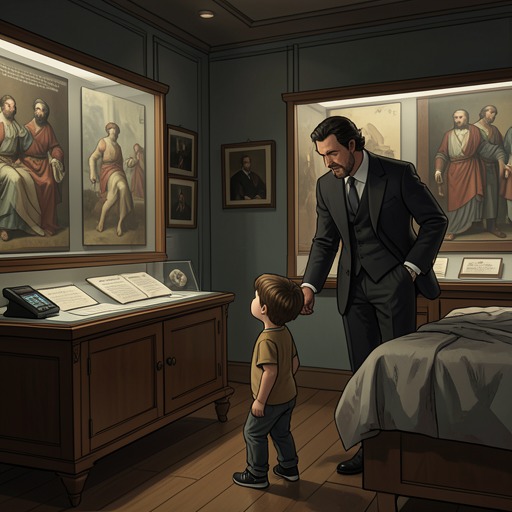
The book’s dated headings make that mismatch part of its form. A scene marked September 23, 1977 identifies Henry as thirty-six and Clare as six; a first-date heading later marks October 26, 1991, when Henry is twenty-eight and Clare is twenty. These dates place the characters at different stages of their lives without making their meetings follow a simple progression. The reader, like Clare, has to assemble a relationship from episodes whose chronological order and participants’ ages do not always coincide.
Waiting and the Shape of the Relationship
Clare gives the experience of separation a direct name: being left behind is hard, and she waits without knowing where Henry has gone or whether he is all right. Her account distinguishes her position from his. Henry is the one displaced through time; Clare is the one who stays, enduring the interval and its unanswered questions. Waiting is thus not an incidental inconvenience but one of the conditions under which their relationship exists.
The contrast also clarifies the unequal experience of a shared event. A disappearance may be spontaneous for Henry, but its consequences continue in Clare’s present, where she must live through the absence without access to the time or place he has entered. The novel’s shifting dates make that division visible in the structure as well as in her account: scenes can place Henry and Clare at different ages, while Clare’s testimony keeps the emotional fact of remaining behind in view.
Marriage and the Hope of a Child
About two years into their marriage, Clare and Henry decide, without discussing the decision at great length, to see whether they can have a child. Clare knows Henry is not optimistic about their chances. She fears he may have seen a future in which they remain childless, but she does not ask him to confirm or deny it. She is also reluctant to confront the possibility that his time-travel difficulties may be hereditary or could affect a pregnancy. Her hope for a baby therefore exists alongside concerns she deliberately leaves unexamined.
The decision makes their private future newly uncertain. Clare longs for the ordinary fact of a child of theirs, while the condition that defines Henry’s life gives the question of inheritance particular force. The evidence does not make her hope a guarantee or resolve her fears; instead, it shows how the wish to become parents draws the couple toward a future neither can fully know in advance.
Pregnancy, Risk, and Family Responsibility
On June 3, 2000, Henry is thirty-six and Clare is twenty-nine. At a later point, Henry privately decides to have a vasectomy; Clare does not know that he is at a doctor’s office considering the procedure. The evidence records this as Henry’s decision rather than as a conversation the couple has already shared, preserving an important difference between his private action and Clare’s knowledge of it.
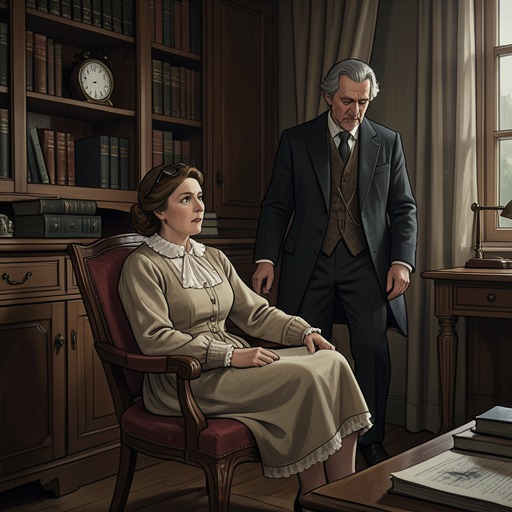
On September 23, 2000, when Clare is twenty-nine and Henry is thirty-seven, Clare tells him she is pregnant. The announcement follows Henry’s attempt to prevent a pregnancy, making the new pregnancy unexpected in the context of his decision. By August 24, 2001, Clare is thirty and Henry is thirty-eight, and the account of a medical crisis places her among medical staff while Henry holds her hand. He watches Clare as a doctor examines her and monitors the pregnancy. The scene gives the couple’s hope an immediate consequence: they face the pregnancy together in a setting of medical uncertainty, with Henry’s support expressed through his presence beside her.
Alba and the Inherited Future
The possibility that Henry’s condition could be passed on remains part of Clare’s earlier fear, and later the couple’s concern turns toward their daughter, Alba. On July 14, 2006, Clare is thirty-five and Henry is forty-three. Henry argues that, even if the outcome they fear occurs, he cannot leave Alba without trying to help her. His concern is directed toward what might happen to their daughter and toward the possibility of offering her assistance; he acknowledges that an intervention may not work and that Alba may never need to use it.
Clare’s story therefore extends beyond the couple’s decision to have a child. Their daughter’s possible inheritance makes Henry’s condition a question of family responsibility, not only individual experience. The movement from Clare’s early reluctance to ask about heredity to Henry’s later effort to help Alba gives their parenthood a continuing tension: love motivates the attempt to prepare for a future that remains uncertain.
Narrative Significance
Clare’s importance lies in the distinct temporal position she occupies beside Henry. Their relationship begins when she is a child and he is an adult, and the novel’s dated fragments repeatedly place them at different ages and moments. The form asks readers to track more than event order: each meeting carries a different balance of knowledge between them, and what is past for one may belong to another point in the other’s life. Clare’s perspective anchors those temporal crossings in the ongoing experience of a person who cannot leave with Henry.
Her account of waiting also connects the novel’s formal design to the ordinary demands of intimacy. Henry’s condition moves him unpredictably through time, but Clare’s life continues in the intervals his departures create. Marriage, the decision to try for a child, the unexpected pregnancy, and concern for Alba all unfold within that unequal arrangement. Clare is thus not merely the person who encounters a time traveler; she is the character through whom the story measures what his time travel asks of the person who remains.