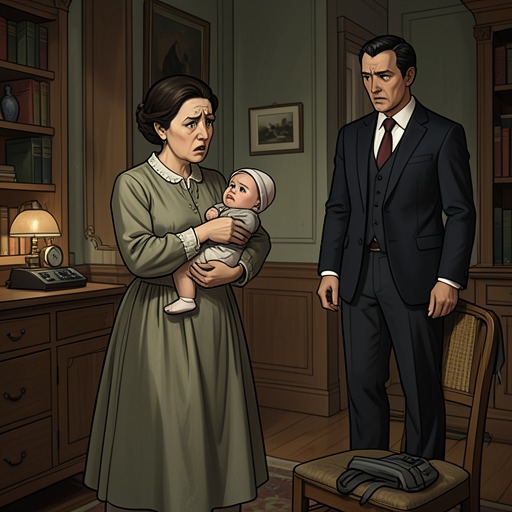
Clare’s sixth miscarriage
The Time Traveler's WifeClare’s sixth miscarriage, dated September 27, 2000, is a devastating turn in her and Henry’s effort to have a child. It gives concrete form to the risk and uncertainty that had shadowed their decision to try for a family, while the story’s disjointed chronology makes the loss inseparable from Henry’s time travel and the couple’s different experiences of elapsed time.
Background and the Decision to Try
About two years into their marriage, Clare and Henry decide to see whether they can have a baby. Clare hopes for a child but does not ask why Henry is pessimistic about their chances: she fears he may already have seen a future without a baby, and does not want to know. She also avoids considering whether his time-travel condition might be hereditary or affect a pregnancy. Her hope is intense enough to make her imagine and notice babies everywhere, even as the uncertainties go unspoken.
The couple’s circumstances include a painful mismatch in what they know and when they know it. In June 2000, Henry privately decides to have a vasectomy, without Clare knowing he is at the doctor’s office. Yet later, when Clare tells him she is pregnant, he recalls that he had been with her in 1996, during their earlier attempt to conceive, when she was barely awake. What was years in the past for Henry had happened only weeks earlier for Clare. His surprise turns into recognition of the time displacement that made the pregnancy possible.
The Loss
The event is dated Wednesday, September 27, 2000. Clare narrates the baby’s premature birth and death in a series of immediate, fragmented perceptions. The sequence breaks off as she prays; the baby stirs in her womb, and the narrative shifts to her awakening in the hospital. There, the fact of the loss is stated plainly: the baby is dead.
Henry is present when Clare awakens. His presence does not undo the loss, but it places the couple together at its aftermath. The abrupt movement from Clare’s vigil to the hospital also makes the event’s emotional reality arrive in fragments rather than as a continuous account, echoing the discontinuities that shape their life together.
Aftermath and Significance
The miscarriage belongs to a longer history of recurrent pregnancy loss, not an isolated disappointment. Clare’s earlier decision to hope while avoiding questions about heredity and the future shows how desire and fear coexist: she wants a child, but the possibility that Henry’s condition could be passed on is already part of what she cannot bear to examine. The loss intensifies that uncertainty without resolving it.
Later, Henry explains that he repeatedly travels to the scene of his mother’s fatal accident, which he describes as the pivotal event around which everything else revolves. That recurring grief is not the same as Clare’s miscarriage, but it supplies a broader context for the novel’s treatment of loss: what cannot be prevented or changed can nevertheless return, insistently, in memory and in the structure of lived time. The miscarriage similarly marks the couple’s attempt to build a future under conditions they cannot fully know or control.