Henry’s fatal shooting in the Meadow
The Time Traveler's WifeHenry’s fatal shooting in the Meadow is both a foreknown death and the end toward which several strands of the novel’s chronology converge. During a visit to the past, Henry witnesses a hunting accident that will eventually kill him, while the thirteen-year-old Clare hears the shot without understanding its full meaning. The scene’s force lies in that disparity: Henry recognizes what has happened and what it means, but Clare encounters only a frightening interruption in an otherwise ordinary family morning.
Causes and Background
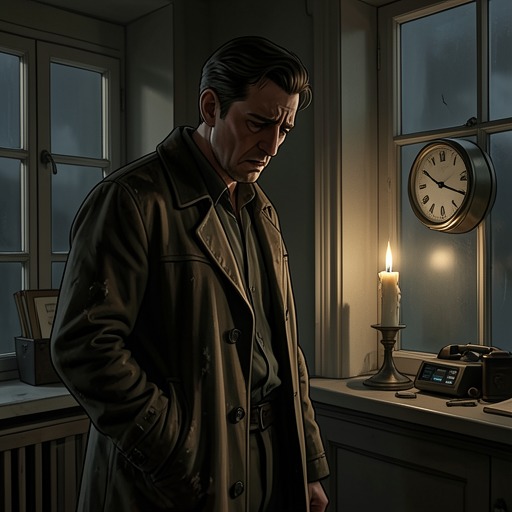
The episode is presented first as a future Henry can describe with painful certainty. On Saturday, October 27, 1984, Henry is forty-three and Clare is thirteen. He knows the ending and imagines himself sitting in the Meadow on a chilly, overcast autumn morning, wearing a black wool overcoat, boots, and gloves. The date is not on Clare’s List, the record of dates on which she expects him to visit. That omission underscores that this appearance is not one of the anticipated meetings through which Clare has learned to know him; it is a visit whose consequences she cannot yet place.
Hunting season supplies the immediate danger. A shot cracks across the cold air while hunters wait in the surrounding country. At Meadowlark House, Clare’s father, Philip, and her brother, Mark, come out carrying rifles. They head toward the woods, listening as something moves through the grass. Mark aims and fires at the movement. The accident follows from the hunters’ mistaken identification of what they hear and see: Henry is in the Meadow, concealed in the grass, where they do not know he is present.
What Happens in the Meadow
Henry’s early account establishes the episode through overlapping viewpoints. He describes the family approaching and the shot, then imagines the scream and the sudden calls for Clare. Philip runs toward the sound, followed by Henry and Mark. At the place where the shot was fired, they find blood on the earth and bent grass, but Henry is gone. The empty patch leaves the others with evidence of a person having been there and no person to identify.
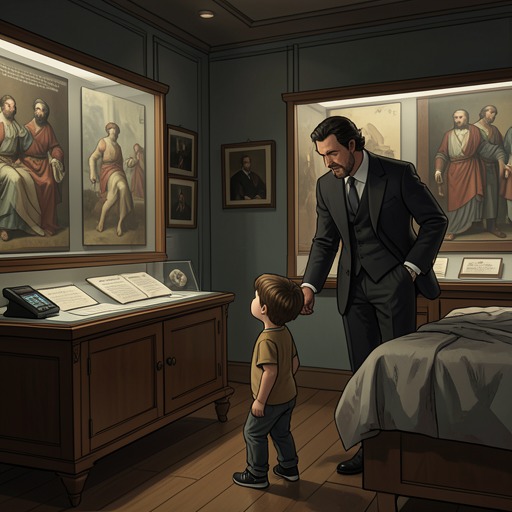
Clare hears the scream and her name from her bed. She runs downstairs and out into the Meadow in her nightgown, finding her father and brother but not understanding why they are gathered there. Henry, still present to her but unseen by them, raises a finger to his lips. When Philip walks Clare back toward the house, Henry turns away and watches from the orchard. The distinction between what Clare can see and what the reader knows makes the scene at once a family emergency for her and an encounter with her future husband’s death for Henry.
The episode’s two dated tellings bring that foreknowledge into contact with the injury itself. In a later passage paired with January 1, 2007, Henry is again associated with October 27, 1984; from his perspective the rifle shot is no longer only a sound he anticipates. He is struck, and the death he had described as an ending becomes an immediate event. The paired dates make the novel’s chronology non-linear without making the outcome uncertain: a future death can be encountered in advance, but knowing it does not remove it from the sequence of events.
Consequences and Aftermath
For the family, the immediate consequence is bewilderment. Philip embraces Clare, who is shivering, while Mark stands nearby, perplexed. Mark looks at Henry as if trying to remember him, but the family has no explanation for the bloodied ground or Henry’s disappearance. Clare returns to the house with her father, waving back toward the figure she can see. Henry remains in the orchard, separated from them by knowledge they do not share.
For Henry, the event confirms that his death is not merely a possibility he fears. In the 1984 scene, after Clare has gone inside and the others have left the spot, he understands that he is dying somewhere beyond the scene he can witness. That recognition gives the episode its particular tragedy: the visit allows him to see the people and place surrounding his death, but not to change the accident or remain with Clare through its consequences.
Chronology and Narrative Significance
The Meadow’s importance reaches back to Henry and Clare’s first meeting there, so the shooting returns their shared story to the place where it began. The setting holds opposite moments at once: for Clare it is the landscape of childhood and of her first encounter with Henry; for Henry it is also the site of the death that will separate them. Their relationship is therefore framed not only by repeated meetings across time but by a location that gathers beginning and ending into the same ground.
The novel’s dated sequence heightens the difference between foreknowledge and lived experience. Henry can narrate the 1984 scene as an ending before the later passage presents the fatal shot as happening to him. Clare, meanwhile, is inside the scene without access to its full significance. This arrangement makes the reader carry knowledge ahead of the characters who surround her, turning the hunting accident into an episode of both loss and delayed recognition. The death is external and accidental, not the result of a choice by Henry or Clare; its inevitability comes from the narrative’s repeated return to a fixed event that foreknowledge cannot undo.