September 5–6, 2001
The Time Traveler's WifeSeptember 5–6, 2001 marks the birth of Alba, Henry and Clare’s daughter, and the fulfillment of a wish complicated by repeated loss, Henry’s involuntary time travel, and fears about heredity. The birth brings the couple into the present of parenthood, but the surrounding narrative makes clear that love cannot remove the risks and uncertainty they face.
Background and Stakes
By spring 1996, about two years into their marriage, Henry and Clare had decided to try to have a baby. Clare’s longing was vivid and absorbing: she imagined a child resembling Henry and found herself noticing babies everywhere. But she was afraid to ask whether Henry had seen a future without a child, and she worried that his time-travel condition might be hereditary or affect a pregnancy. Her hope therefore grew alongside deliberate avoidance of questions she feared answering.
That hope was tested by miscarriage. In October 1997, Henry woke to find Clare in the aftermath of another loss. Later, in June 2000, he went to a doctor without Clare’s knowledge and decided to have a vasectomy. His decision reflected the painful history of their attempts to conceive, but the couple’s mismatched experience of time would complicate its consequences: what Henry remembered as a night from years earlier was only weeks in Clare’s past.
The Pregnancy and Its Unequal Timelines
Clare eventually told Henry that she was pregnant. His first reaction was confusion, because he understood that the pregnancy followed the night when they had been trying to conceive in 1996, even though, for Clare, that night was much more recent. The pregnancy thus exposed a distinctive strain in their marriage: events shared by the couple could occupy different places in their personal timelines, leaving one of them to confront consequences the other had not yet caught up with.
On September 5, Clare paced around the house as contractions began. Henry urged her to rest, but she got up again and again; after she finally slept at two in the morning, he remained awake beside her, watching and listening. He knew from what he had seen that Clare and the baby would be all right, yet he was still worried. Foreknowledge offered reassurance without making him emotionally remote from the danger of the moment.
Labor and Birth
Clare woke at 3:30 a.m. wanting to go to the hospital. During labor, she was distressed, and the medical staff responded to concern about the baby’s fast heartbeat. Henry stayed beside her and held her hand as the staff attended to her. His role was one of close presence: he could not spare Clare the labor, but he could remain with her through it.
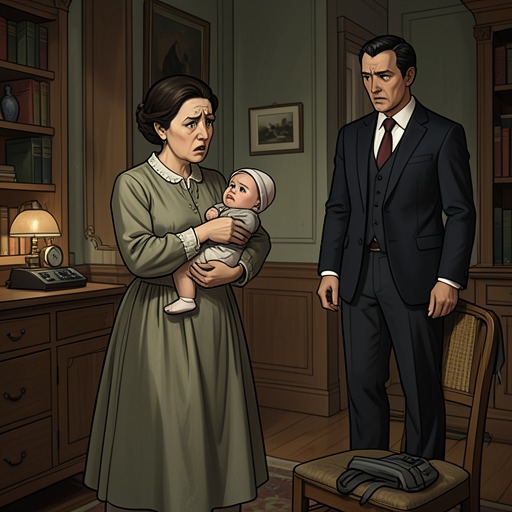
The sequence reaches its turning point when Clare gives birth and Henry receives Alba in his hands. Clare describes the immediate change as becoming empty and released, followed by the baby’s cry and her placement against Clare. Alba has black hair and reaches toward Clare; Henry touches her forehead and says her name. After the long uncertainty around conception and pregnancy, these gestures establish the new family not as an abstract hope but as a child physically present between her parents.
Consequences and Significance
Alba’s birth answers Clare’s sustained desire for a baby, but it does not resolve the fears that had accompanied the attempt to conceive. Henry later argues for research using Alba’s genetic material so that she might have a safety net if she inherits his condition. He imagines risks she may never encounter, while recognizing that she may not experience time travel as a burden. Clare’s consent follows an emotional struggle: she weeps, and Henry explains that he wants to help their daughter face possibilities neither parent could escape. The birth therefore opens a new question of parental responsibility—how to protect a child without knowing what her future will require.
The date also sits within the book’s fractured chronology. The sequence is narrated through Henry and Clare’s alternating first-person perspectives, while other dated episodes place the reader at very different points in their lives: Henry’s first-person account can jump between ages and years, and the narrative later reaches his killing on January 1, 2007 and his reunion with an elderly Clare in 2053. Against those later moments, Alba’s birth is both an arrival and a fragile beginning: the family’s joy is real, but it takes place in a story where time does not promise security.