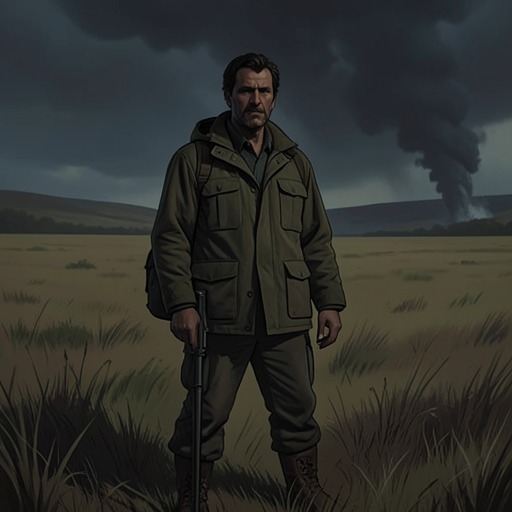
1980 Thanksgiving shooting of Nora Gardener
The TommyknockersThe 1980 Thanksgiving shooting of Nora Gardener was a defining act of violence in Jim Gardener’s life: while on a drinking binge, he shot his wife and then lost much of the surrounding time to a blackout. The immediate injury was only part of the damage. The shooting ended his marriage and teaching career, and its memory became a recurring measure of the harm his drinking could cause—one he could neither fully recall nor dismiss.
Background and Circumstances
Gardener’s relationship with alcohol was marked by cycles of abstinence, moderate drinking, and loss of control. He knew the distinction between drinking and a binge, and sometimes went months without feeling much desire for alcohol. In those stretches, a drink or two at a faculty gathering could seem compatible with sobriety; he might also have a couple of beers with Roberta “Bobbi” Anderson. Yet the absence of a strong urge did not mean that the danger had passed. On June 26, after a poetry reading in Boston, he woke wanting to drink. Ron Cummings invited him to get seriously drunk, and Gardener accepted, reassuring himself that he could stop when he chose. The novel identifies the 1980 Thanksgiving binge as an earlier and still more consequential instance of that same failure of control.
The exact circumstances of the shooting emerge in fragments rather than as a continuous recollection. Gardener remembered bringing Nora a cup of tea, then berating her about nuclear weapons. He also remembered falling in the driveway and trying to eat pizza while drunk. The surrounding two days were mostly black to him; these disconnected images offered no coherent account of how the evening had unfolded. That fractured recall shapes the event’s place in the story: its consequences are certain, but Gardener’s own memory cannot supply a complete narrative of the act.
The Shooting and Its Immediate Consequences
When Gardener later asked a deputy what he had done, the answer was blunt: he had shot his wife. The novel recalls Nora staggering backward against the kitchen counter after the gun went off. Gardener’s first response was denial; he tried to interpret the blood as ketchup before beginning to weep. The account establishes that he had fired at Nora and that she was wounded, but it does not say that she died.
The shooting had consequences beyond the injury. Gardener’s marriage ended, and the incident helped bring his teaching career to a close. He later referred to the episode as the Famous Thanksgiving Jag of 1980, a name that makes the binge itself inseparable from what happened to Nora. Years afterward, he could still describe the event as the occasion when he had come close to ending her life. The near-fatal danger was not abstract: a later reflection imagines the possible consequences of a bullet striking near the eyes, including blindness, paralysis, or death, underscoring how little separated the shooting from a worse outcome.
Blackout, Shame, and Recurrence
The shooting remained present for Gardener less as a stable memory than as an accusation that returned whenever drinking produced another blackout. After a later binge, he woke with a deep sense of doom and self-contempt. The prior Thanksgiving episode supplied the most painful precedent: that earlier binge had brought the collapse of his career and marriage and had nearly killed Nora. In the present, he feared that he had again done terrible things he could not remember. The old event thus measured the danger of each new lapse without making Gardener’s fear of repetition a reliable record of what had happened during it.
His recollections also recur through isolated details. He remembers his desperate argument about nuclear weapons, the fall in the driveway, and the pizza he could barely eat; he recalls the deputy’s answer from the jail cell and the moment Nora staggered against the counter. In another passage, he imagines the shooting again while weeping in terror. These returns do not resolve the missing hours. Instead, they make the event a continuing source of shame, with fragments of memory and the certainty of its consequences repeatedly forcing themselves into the present.
Later Understanding and Narrative Significance
Years later, Gardener still invokes the shooting when assessing his own stability. Speaking with Bobbi, he notes that some people would consider having shot his wife persuasive evidence that he was insane, even though the incident had happened eight years earlier. His remark is self-deprecating, but the event is not treated as a harmless anecdote: it remains a serious injury to Nora and a lasting rupture in his life. The elapsed years reduce neither the fact of the violence nor its emotional hold over him.
The episode also gives shape to the novel’s treatment of addiction. Gardener can sincerely recognize that he is an alcoholic and can describe periods when he is not drinking, yet the confidence that he can control alcohol repeatedly proves fragile. The Thanksgiving shooting exposes the distance between his self-explanation and the consequences borne by someone else. Later, when he drinks again and experiences the old post-binge despair, the event returns as both memory and warning: he has already crossed a boundary from which his marriage and career did not recover, and knowing that does not by itself prevent another relapse.