Derry
The TommyknockersDerry is the nearby Maine city through which Haven’s local life repeatedly meets the wider world. It serves as a destination for workers and patients, a place of lodging for a worried grandfather, and a base for state police and newspaper reporting. As Haven’s residents become mentally linked and the town closes itself off, Derry’s roads and institutions acquire a second significance: they are routes of escape and observation, but not reliable means of entry.
Setting and Local Connections
In the town’s earlier history, the road toward Derry carried loggers at the end of each month to spend their wages. The larger town was where they reserved their major spending, but the journey also sustained a modest stop along the way: loggers paused at Cooder’s Tavern and Lodging-House for a beer or two. Across the road, Hiram Cooder’s nephew operated a less successful but still marginally profitable general store; in 1828, Hiram Cooder’s cousin opened a barber shop and small surgery beside it. Derry thus appears not only as a distant destination but as the economic center that shaped the traffic and businesses on the route from Haven.
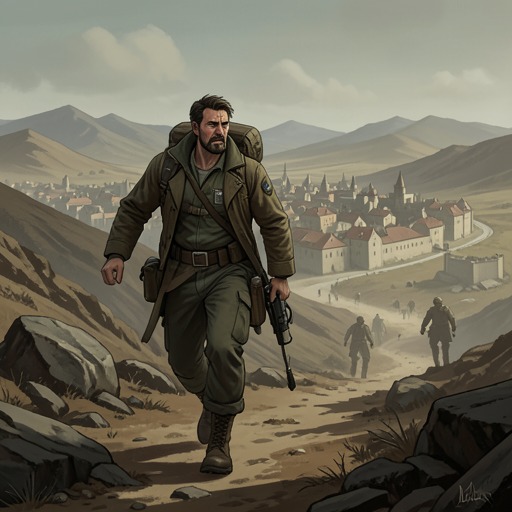
That connection continues in the present-day plot through the road itself. After escaping Haven, Ruth McCausland drives onto Derry Road and resists the impulse to speed away as fast as her old car can manage. The village recedes behind her, while the voices associated with its collective mind fall away. The road marks a physical departure from Haven, yet her apprehension persists: she begins to suspect that someone may be following. Derry is the direction of escape, but leaving the town does not immediately erase the danger or uncertainty of what has happened there.
Hospital, Lodging, and Care
Derry Home Hospital becomes a critical place of care for Hilly Brown. He spends three days there, and on his second night he slips out of the pediatric ward. The hospital searches first the ward, then the floor, and finally the whole building; staff call security, and Hilly’s parents are summoned. The search finds nothing. His disappearance turns a medical stay into a crisis for his family and reveals how little the adults can control the course of events surrounding him.
After Haven’s explosive Sunday, Ev Hillman spends Monday morning in Room 371 of Derry Home Hospital, keeping watch over Hilly. He has rented a furnished room on Lower Main Street and spends his nights there after hospital nurses make him leave. The hospital’s medical description of Hilly does not reassure him: doctors say the boy’s brain patterns resemble deep sleep rather than coma, while Ev fears that Hilly is slipping away. For Ev, the diagnostic distinction cannot answer the more urgent question of whether his grandson can be reached.
Derry also provides emergency treatment for Ruth after she arrives at a veterinary clinic carrying a dog’s corpse. Her leg is wounded, and the veterinarian tells her that it needs flushing and stitches. Ruth insists that he can flush it, postponing her trip to the emergency room until she has made several telephone calls. The scene links Derry’s medical facilities to the demands of Haven’s unfolding emergency: even when she needs care, Ruth first attends to the work she believes must be done.
Police and Outside Attention
Derry is a base for state-police activity connected to Haven. On the day Ruth visits the barracks, she speaks with Butch “Monster” Dugan, a state trooper who is prepared to do almost anything for the widow of Ralph McCausland. Derry therefore places her in contact with a powerful ally outside the town, although the help available through that connection does not make Haven’s dangers straightforward to address.
Later, state-police officer Andy Torgeson turns to David Bright of the Bangor Daily News after learning that his usual contact at the attorney general’s office is away. He tells Bright that fire crews and reconnaissance personnel cannot enter Haven without becoming sick, and that a forest ranger has been lost. Torgeson admits that he has heard something even more alarming but cannot bring himself to repeat it as fact. Derry is the institutional setting from which the town’s crisis begins to register beyond Haven, through police reports, journalists, and the failed efforts of responders to reach the scene.
A Permeable Border That Becomes a Barrier
The growing separation between Derry and Haven is not simply geographical. In the town, private errands and public work can continue even as residents share a silent mental connection; beyond it, outsiders encounter sickness and obstruction. Derry’s roads remain usable for escape, as Ruth’s flight demonstrates, but they do not guarantee safety or a clean break from the collective force she has left behind.
By the time Haven is being deliberately closed, its residents’ decisions about access have consequences for people approaching from outside. Dick Allison and Newt Berringer consider blocking the roads with force fields, but fear that an invisible barrier would alert the wrong people. Their choice reflects a larger tension: keeping Haven concealed requires controlling not only who enters but what outsiders are able to observe and report. Against that effort, Derry’s police and news connections offer channels through which the town’s isolation can become known, even when those channels cannot yet deliver direct access.