Disappearance of Benton Rhodes and Peter Gabbons
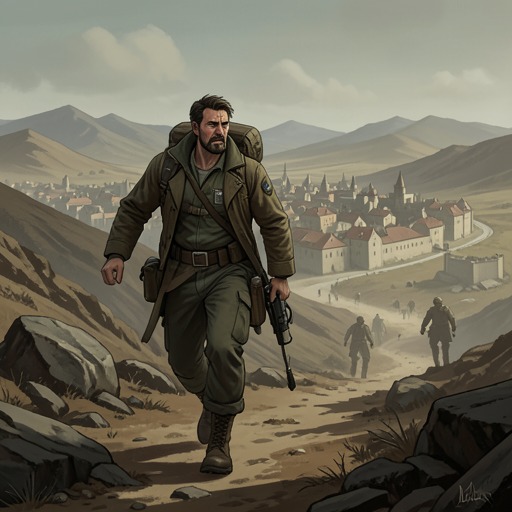
The TommyknockersThe Disappearance of Benton Rhodes and Peter Gabbons begins as a routine state-police investigation and ends as a carefully staged mystery. The two troopers enter Haven to examine a fatal furnace fire, but the town’s residents have already made them vulnerable: Haven’s influence slows their thinking, its people counterfeit their radio communications, and Beach Jernigan uses a homemade weapon to kill them. The abandoned cruiser and a cleaned deer carcass left on a Derry road turn their deaths into an apparent disappearance—and give the outside world a misleading story to pursue.
Investigation in Haven
At five-fifteen, Benton Rhodes and Peter Gabbons arrive expecting the unremarkable aftermath of a furnace explosion: a pumper truck, a few onlookers, and a straightforward inquiry. Instead, they find the Haven town-hall clock tower blown away, bricks scattered through the street, windows shattered, and dismembered dolls among the debris. Dick Allison greets them with conspicuous cordiality, as if the scene were a neighborhood supper rather than a disaster. He admits that he may have understated the damage over the telephone. The troopers had thought him a small-town bungler, perhaps a little crazy; faced with the wreckage, they can no longer dismiss the scale of what has happened.
The scene contains another shock. Rhodes spots a human arm among the dolls’ tiny imitation limbs and turns back to ask where Ruth McCausland is. His voice rises and breaks as he asks. The detail abruptly changes the character of the inquiry: what had seemed an explosion investigation now includes a likely human casualty, and the victim is someone the troopers knew. Allison keeps them in town as long as he can without making the delay conspicuous. They remain until nearly quarter to eight, while twilight gathers, and their attention is divided between the accident, the known victim, and the need to begin a substantial case without compromising its procedures.
Their departure is also shaped by Haven itself. Both men use their cruiser radio to contact Derry Base, but the voice answering them sounds subtly wrong. The replies otherwise fit what they expect, and they are too occupied to investigate the discrepancy. More than that, the town is already affecting them. The influence does not yet heal their thoughts, and they will leave before that stage can begin, but it makes them feel strange and slows the ordinary work of observation and judgment. Their confusion is not simply an effect of the gruesome scene: it is part of the danger of being inside Haven.
The ambush on the road
Haven’s residents turn the troopers’ expected route back toward Derry into an opportunity for concealment. Buck Peters, stationed at the garage of Elt Barker’s Shell with Andy Baker, impersonates dispatcher Tug Ellender over a radio connection redirected away from Derry. Andy adds static to blur Buck’s voice, while other townspeople concentrate on the troopers’ minds and relay what they learn about Ellender and the answers the officers expect. The deception succeeds in part because the men supply the familiar pattern themselves: they hear a plausible reply and do not stop to challenge it. A routine safeguard—radio contact with the dispatcher—has been converted into a controlled performance.
Beach Jernigan drives out to intercept them in his aging Chevy pickup, a truck he has not fully overhauled despite his new knowledge. He pushes it to sixty-five miles per hour, then eases off after crossing the Troy town line because the engine is close to overheating. Near Derry, he hears the troopers’ thoughts and confirms that they are approaching. He drives another quarter mile, rounds a curve, and blocks the remaining stretch of Route 3 with his truck. In its bed he has a concealed rifle-like device, powered by six train transformers nailed to a board and bolted in place so they will not slide.
As the cruiser comes around the curve, Beach activates the transformers. The troopers brake sharply; the truck’s bed fills with a white, blue-strobing light. Beach fears that he has parked too close to the blind turn and that the men may crash into him. He waits until they have left their cruiser and moved toward his truck, guns drawn, then triggers the weapon. A thick branch of green fire shoots into the darkness and engulfs both officers. Bright sparks flicker within the glare as one of them fires his pistol repeatedly. The green flame goes out after a transformer pops and throws sparks, leaving Beach to see that the men are gone—almost.
The weapon’s violence leaves a single smoking shoe on the pavement, with a sock-covered foot still inside it. Beach picks it up and puts it in his truck, intending to dispose of it after he returns to Haven. He then removes a plastic-wrapped, gutted buck from the pickup and throws the carcass into a ditch. The deer is not incidental cleanup: it supplies a visible alternative explanation for the empty cruiser and the officers’ absence. In the encounter’s aftermath, Beach checks the scene for what it will communicate to anyone who finds it, rather than treating the deaths as an event that can simply be hidden.
A disappearance made to look ordinary
Beach arranges the road as a story. The state-police cruiser is left empty at the end of a long skid, its engine off and flashers on. The buck lies in the ditch, a conspicuous find in July. Beach believes the scene will suggest that two officers returning from a fatal-accident investigation encountered people jacklighting deer; those poachers may then have panicked, shot the troopers, and buried them in the woods. The staged explanation does not identify Haven as the source of the crime. Its strength lies in directing attention toward a familiar rural offense and away from the town whose residents planned the interception.
The deception does not keep the disappearance from becoming major news. On July 25, the Bangor Daily News reports that two state police officers have disappeared in Derry after an abandoned cruiser is discovered shortly after 9:30 the previous night. The article describes the search as the second major one of the summer in eastern and central Maine. Its first had been for four-year-old David Brown of Haven, who remains missing. The report notes the bitter coincidence that Rhodes and Gabbons were returning from that same town after investigating a furnace fire that had taken one life. The discovery of the shot, gutted, and cleaned deer near the cruiser supplies the first public clue to the staged poaching account, while leaving the central question of the officers’ whereabouts unresolved.
Haven’s control extends beyond the ambush and the false trail. The residents also substitute Buck’s voice for the dispatcher’s and use their collective attention to shape what the troopers hear and how they respond. Nearby, Ruth McCausland encounters a different form of manipulation: after three days without personal mail, she goes to the post office, where Nancy Voss watches her without expression while something inside hums and makes spiderlike scratching noises. When Ruth later refuses an offer to leave Haven, she invokes friends outside the town who would take her seriously because of her late husband. In this wider pattern, ordinary channels—postal service, radio, roads, and the expectation of a familiar local response—become means through which the town governs what can pass and what outsiders can know.
Consequences and significance
The disappearance reveals a progression from the town’s immediate crisis to an organized effort to contain information. The troopers are not simply overcome by a concealed weapon: their judgment is dulled in Haven, their communications are intercepted and imitated, and the scene of their deaths is arranged to point toward a different crime. These tactics work together. The false dispatcher response helps the officers continue without recognizing that their communications have been compromised; the roadblock draws them away from the cruiser; and the buck offers investigators a ready-made lead that may carry them away from Haven.
The event also gives the outside search a defined but misleading starting point. The newspaper can report the abandoned cruiser, the officers’ connection to a fatal fire, and the deer carcass, but those facts are precisely the evidence Beach has chosen to leave behind. The search therefore begins with a public account that conceals the residents’ role and the weapon’s extraordinary effects. When the crisis later broadens, the state’s response takes a much larger form: by nightfall, the National Guard has surrounded Haven, with troops downwind wearing oxygen equipment. Two other officers, Andy Torgeson and Claudell Weems, eventually escape on foot after their cruiser is lost; their depleted oxygen packs last only as they walk well into Troy, and they emerge from what official reports will call the zone of pollution. Their survival and testimony contrast with the unresolved disappearance of Rhodes and Gabbons, while the reports of toxic air and a gigantic UFO rising from Big Injun Woods enlarge the disaster beyond the staged road scene.
The disappearance’s central irony is that the troopers enter Haven to investigate a death and become the victims of a second, more carefully concealed one. A human arm amid toy-like limbs first breaks the appearance of a manageable local emergency; later, a single shoe and a deer carcass become pieces in Beach’s fabricated account. The road, the radio, and the newspaper all carry information, but none initially tells the whole truth. The episode makes concealment an active community practice: Haven does not merely hide the officers; its residents manipulate the ordinary evidence and routines by which outsiders would try to find them.