Green-liquid suspension pods
The TommyknockersThe Green-liquid suspension pods are the repurposed shower cabinets in Bobbi Anderson’s shed where Ev Hillman, Anne Anderson, and Peter are kept alive and used as organic power sources. Their eerie combination of preservation and exploitation makes them more than containers: they embody the cost of the machinery Bobbi’s transformation has made possible, and the moment Jim Gardener sees them turns his fear into fury.
Appearance and Construction
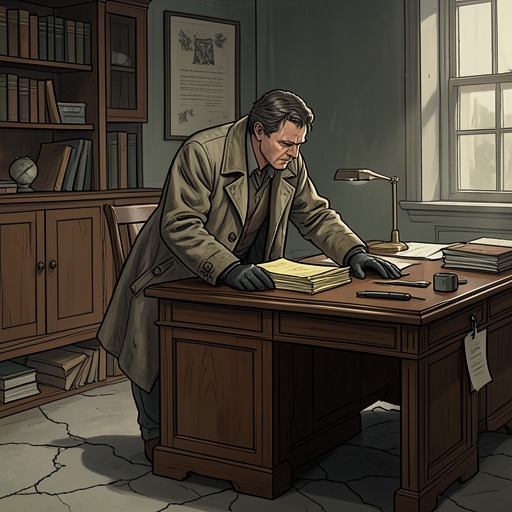
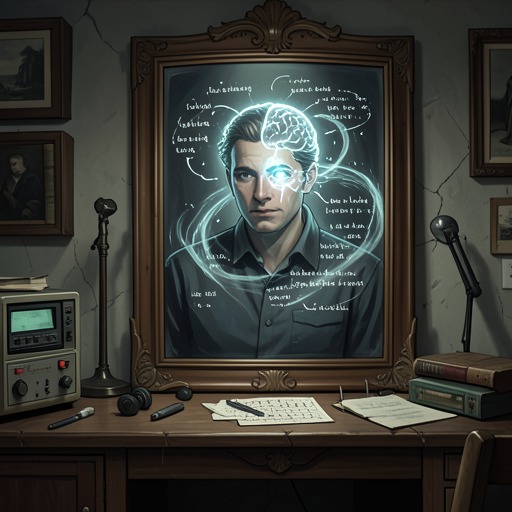
Gard discovers the pods in the shed as two old galvanized-steel shower cabinets with their doors removed. Ev, Anne, and Peter are suspended inside, still alive despite the mutilation of their bodies: heavy cables run from Anne’s forehead and Ev’s eye, while numerous smaller cords extend from Peter’s exposed, pulsing brain. The arrangement has the grotesque appearance of bodies hung on posts, but the cabinets are not ordinary restraints; they hold the captives within a clear liquid and an enclosing force that Gard cannot penetrate.
The liquid is emerald green and visibly moving, making a low, thick, sudsy sound. Its transparency does not make the scene comprehensible. Gard imagines it may be as gluey as dish detergent, and the survivors’ continued life remains difficult to explain: he wonders whether they can breathe, or whether the liquid’s movement only creates the illusion that they are alive. Peter’s whine provides a decisive counter to that doubt. His eyes, now free of cataracts, turn toward Gard, and the dog is unmistakably alive.
Containment and Use
The pods combine a physical chamber with an invisible barrier. Gard understands that the liquid is contained in the same manner as the miniature sun in Bobbi’s customized water heater: an attempt to enter would meet a tough, springy resistance. The cabinets are therefore accessible to sight but not to touch. Their open fronts promise access, yet the barrier keeps Gard from reaching the people and animal inside.
That failed access connects the pods to the wider conditions around the buried spacecraft. Haven’s residents speak of the town as if it might be enclosed beneath a bowl, while an unseen resistance elsewhere stretches and pushes back against those who try to cross it. The pods render that broader confinement intimate and bodily: a barrier that might otherwise be imagined as a limit around a town is here felt as the boundary between a horrified observer and suffering captives.
The shed’s system uses its occupants as living batteries. Gard recognizes the cables and the sustained extraction as the equivalent of drawing power from organic Delcos and Evereadys: the captives are being drained to supply Bobbi’s operation. The pods preserve enough life for that use, but preservation is not protection. In them, continued existence and ongoing injury are made inseparable.
Discovery and Consequences
Gard’s discovery begins in paralysis. He makes a hurt sound, loses the strength in his legs, and drops onto a bench, unable to look away from the pods. He is initially overwhelmed by fear, revulsion, and disbelief; the sight of Peter’s living body makes the scene more painful, not less. As he studies the cables and the green liquid, his bewilderment gives way to anger. He welcomes the fury because it gives him a response to what he is seeing: the pods have exposed the human and animal cost behind Bobbi’s devices.
The chambers also sharpen the conflict between Bobbi’s attachment to Peter and what she has done to him. Gard notices dog hair on Bobbi’s dress and wonders whether she had hugged Peter before filling the cabinet with liquid again, entertaining love, remorse, or guilt as possible explanations. The evidence does not resolve her feelings, but the contrast is stark: the dog’s visible improvement in sight coexists with his immobilization and use as a source of energy. The pods make that contradiction concrete, holding apparent care and brutal exploitation in the same enclosure.
Narrative Significance
The pods transform familiar shower cabinets into objects whose material properties govern what can happen. The removed doors suggest openness, while the springy barrier denies entry; the transparent fluid displays its occupants without allowing contact. Their ordinary metal construction makes the extraordinary system more disturbing, because the horror depends not on an unknowable exterior but on the visible bodies, cables, liquid, and barrier before Gard.
Their role also exposes the limits of technological wonder. The same alien-influenced ingenuity that enables strange devices and sustained life has produced a mechanism that consumes living beings. The pods do not merely store power; they make the source of that power impossible to overlook. For Gard, seeing them changes the shed from a place of baffling machinery into the site of an immediate moral and physical emergency.