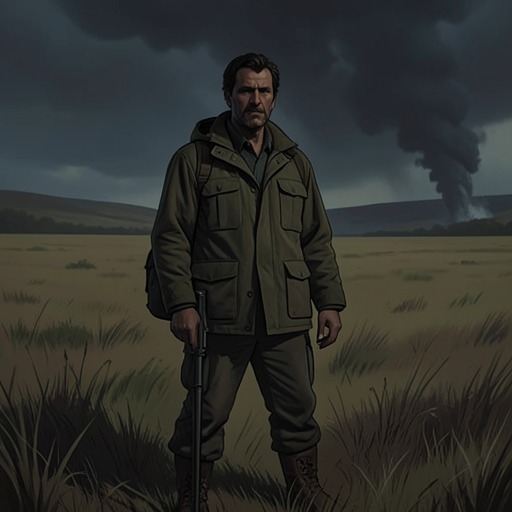
Jim Gardener’s drinking blackouts
The TommyknockersJim Gardener’s drinking blackouts make his alcoholism both a personal crisis and a narrative gap: after an eight-day binge, he cannot account for most of what he has done, while scattered memories return with the possibility of renewed harm. The gaps do not erase responsibility. Instead, they leave him to confront its consequences before he can reconstruct his actions.
Pattern of Drinking and Loss of Control
On June 26, while Roberta “Bobbi” Anderson wanted to dig, Gardener woke wanting to drink. He understood that alcoholism could not be divided into a harmless, partially arrested condition and an active one. Yet his own habits had offered him room for self-deception: he could go months without thinking about alcohol, attend an Alcoholics Anonymous meeting when two weeks had passed, and still tell himself that drinking a couple of cocktails or sharing a few beers with Bobbi was different from a binge.
Ron Cummings’s invitation to drink in the hotel bar turned that distinction into action. Gardener raised a Jack Daniel’s and told himself he could stop when he chose. He agreed to get drunk, and the fall that began in his hotel room ended eight days later on the breakwater at Arcadia Beach. The blackout is thus not an isolated failure of recall: it follows an expressed craving and a familiar attempt to treat control as something he can summon after drinking has begun.
Fragments and the Return of Responsibility
When Gardener comes to, he knows that most of the preceding two days are gone. A few recollections surface without sequence: bringing Nora tea and arguing about nuclear weapons, falling beside his driveway, struggling with a pizza, and calling Bobbi to babble something he cannot recover. The fragments provide no coherent account, but they leave him with the fear that Nora had been screaming and that he has again done something he cannot remember.
His earlier blackout gives that fear a concrete precedent. During the Thanksgiving binge of 1980, he shot Nora. The episode ended his marriage and teaching career and came close to ending her life; Gardener later learned that he had spent time in the Penobscot County Jail. The deputy’s blunt explanation of what he had done confronts him with the disparity between his blank memory and the harm that remains real to other people. His present uncertainty therefore carries the weight of a known history, not merely the anxiety of waking after a night of drinking.
As the eight missing days begin to admit patches of memory, Gardener becomes certain that he has hurt someone again, though he does not know whom or what he has done. The returning fragments do not promptly solve the mystery. At one point his head hurts too much to reconstruct the missing period; later, he can only count backward from July 4 to realize that eight days have passed. His memory’s partial return makes the blackout more unsettling, not less: it supplies enough evidence to intensify dread without restoring a complete narrative.
Shame, Relapse, and Recovery
The physical aftermath is joined by what Gardener recognizes from earlier binges as a deeper sickness: a sense of utter doom. This episode feels worse than the depression after the 1980 Thanksgiving binge, and his self-contempt turns repeatedly toward the same fact: he may have committed serious harm without knowing it. Even after eating, the depression returns, and he imagines that he should have died rather than waited. The blackout’s aftermath is therefore a renewed confrontation with the consequences of drinking, not simply discomfort after excess.
The book also distinguishes the bleakness of the immediate aftermath from the possibility of recovery. After sleeping in Bobbi’s rocking chair, Gardener notices that his aches have begun to ease and recalls the feeling that can arrive after time without alcohol: he may wake and realize he has taken no poison the night before, the week before, or perhaps for a month. This improvement does not undo the binge or establish that the underlying problem has been resolved. It shows instead how relief can follow despair and how that relief coexists with the danger of treating a temporary change in feeling as proof of control.
Blackout as Narrative and Moral Rupture
The missing time shapes how the reader encounters the binge. Rather than receive a continuous account of Gardener’s actions, the reader shares his belated reconstruction: isolated memories emerge against a dark interval, and the earlier shooting of Nora supplies the measure of what the unknown hours might contain. This fragmented sequence makes memory itself part of the suspense, while refusing to make forgotten conduct harmless.
Later, in Haven, the same problem of drinking and concealment persists in a different form. During nights when Bobbi believes Gardener is sleeping, he pours his Valium down the toilet rather than taking it, and he does not correct her assumption that he is using the pills. His unexplained secrecy and the fresh bleeding from his nose accompany his awareness that Bobbi is changing the town and bringing people into the shed. The scene does not establish that another blackout has occurred, but it connects the earlier pattern of drinking, concealment, and impaired trust to the present crisis. Across both episodes, Gardener’s memory gaps limit what he can know about his own actions; they do not release him from the need to face what those actions may have done.