Ruth McCausland's Election as Haven Constable
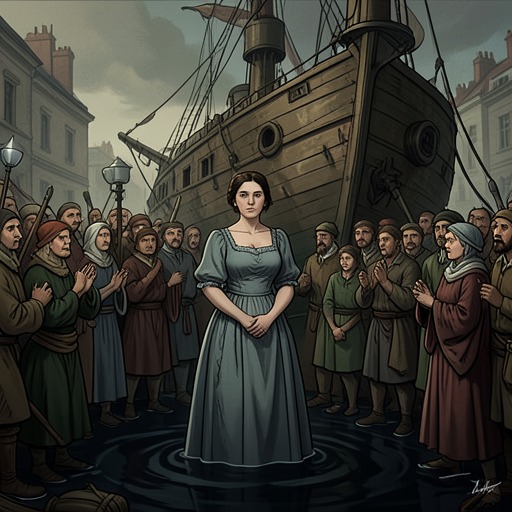
The TommyknockersRuth McCausland's Election as Haven Constable marked the end of her withdrawal after Ralph's death and her return to public service. Two years after being widowed, Ruth ran for constable in Haven and defeated Mumphry by 407 votes to 9. The result made a local election carry two meanings at once: Ruth reclaimed a role in the town, and the town welcomed her back.
Background and candidacy
Ralph's death had been sudden and nearly extinguished the generous, outward-facing part of Ruth's character. She feared that losing that part of herself would be like killing Ralph a second time. Returning to Haven and returning to service therefore became linked acts: she could remember her husband while continuing the work of being herself.
Ruth's candidacy announced that her period of mourning was over. Mumphry, a newcomer who ran as a partisan Democrat, seemed not to understand the local meaning of the contest. His platform rested on the assumption that a constable would have to arrest people for drunkenness, speeding, or disorder and might face a dangerous criminal; he questioned whether Haven would elect a woman even though Ruth had a law degree. The voters answered emphatically that it would.
The vote and its meaning
Ruth won 407 votes to Mumphry's 9. The narration suggests that four of his votes likely came from Mumphry, his wife, his brother, and his adult son, leaving five unaccounted for; Ruth suspected that Lester Moran had more supporters than she had thought. Three weeks after the election, Mumphry and his wife left Haven. Their son John stayed, though local people continued to call him the new fellow years later. Ruth faced no opposition in subsequent elections.
The lopsided result was more than a judgment on the candidates. Haven's townspeople had understood Ruth's run as a public signal that she was ready to rejoin them, and their overwhelming support served as a communal welcome. The election thus turned a private passage through grief into a visible civic event: Ruth did not simply resume a position but was received back into the life of the town.
Service and local authority
Ruth initially expected the constable's work to be boring and unpleasant. She had already accepted such tasks as canvassing for the American Cancer Society and serving on the Textbook Selection Committee, because she believed that unpleasantness did not make useful work fruitless. She also treated the decision realistically: if she disliked the office, she could decline to run again. She wanted to serve, not to make a martyr of herself.
Instead, Ruth discovered that she liked the job. It gave her the chance to stop some harmful conduct that the previous constable, John Harley, had allowed to persist and grow. The office put her practical intelligence and sense of responsibility to work in Haven, while continuing her broader return to community service. The election was therefore not a symbolic gesture alone; it placed Ruth in a position from which she could act on conditions in the town.
Later significance
Ruth's election helps explain the resolve with which she later faced pressure to leave Haven. When Bobbi Anderson urged her to go, Ruth answered that Haven was her town, invoked friends outside it who would take her seriously, and reminded Bobbi that it was Bobbi's town too. Her claim to belong was grounded in years of public service and in the bonds signaled by the election, not merely in residence.
The contest's political setting also throws later threats into relief. Earlier, Jim Gardener had advised Bobbi to contact Limestone Air Force Base about the unidentified object on her land; Bobbi argued that outside authorities could take control of the site and displace Haven residents. Later, Ruth wondered whether the town had been made into something like an enclosure, while townspeople intercepted police communications by impersonating a dispatcher. By nightfall, the National Guard had surrounded Haven, with troops downwind wearing oxygen equipment. Against this widening loss of local control, Ruth's election stands as an earlier expression of the town's civic life: Haven had chosen her overwhelmingly, and she continued to insist that it remained her community.