Bly
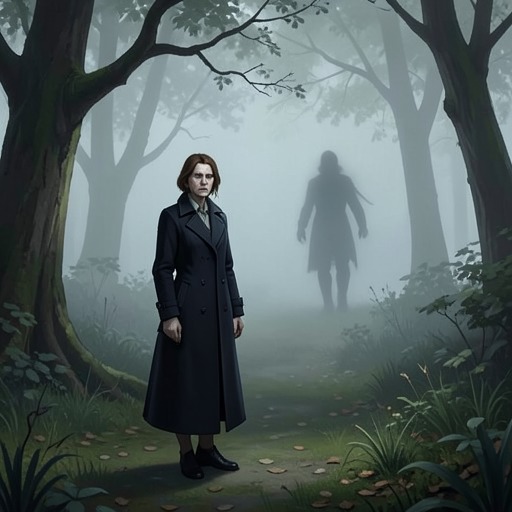
The Turn of the ScrewBly is the country estate to which the Children’s Uncle sends Miles and Flora and where the governess takes charge of their care. Its bright domestic welcome and storybook grandeur are set against its scale, age, and unsettling capacity to isolate those within it; the estate first promises refuge and privilege, then becomes the setting in which the governess confronts fear and the children’s changing relationships with her.
Definition and Setting
The Children’s Uncle places the children at Bly, his country home in Essex, because he considers the country the proper place for them and the estate healthy and secure. The house is part of his family inheritance. He appoints Mrs. Grose, formerly his mother’s maid, as housekeeper and as temporary superintendent of Flora, while the governess is to hold supreme authority over the household’s educational care. The property therefore serves both as a family residence and as an improvised institution for children whose nearest guardian stays at a distance.
The governess’s first view seems to confirm the promise of a comfortable post. On a June afternoon, a vehicle brings her along the avenue to a broad, clear front with open windows and fresh curtains. She notices two maids looking out, a lawn, bright flowers, gravel beneath the wheels, and rooks circling above the clustered treetops in a golden sky. The house appears grand beside her scant home, and the courteous welcome at the door makes her feel that her position may offer more than her employer had promised.
That favorable impression has a material counterpart indoors. The governess is given a large, impressive room, a state bed, figured draperies, and long mirrors in which she can see herself from head to foot. These comforts intensify her sense that she has been treated with unusual liberality. Bly initially makes her feel not merely employed but elevated into a more spacious and distinguished world.
Architecture and First Impressions
The house is introduced through the governess’s shifting perceptions rather than as a neutral inventory of rooms. Flora takes the new arrival on a tour, showing her Bly step by step, room by room, and secret by secret. The child’s confidence carries them through empty chambers and dull corridors, down crooked staircases that make the governess pause, and up to the summit of an old, machicolated square tower that makes her dizzy. Flora’s golden hair and blue frock, her quick movement around corners, and her readiness to lead transform the estate into a romantic castle inhabited by a rosy sprite.
The governess immediately qualifies that imaginative picture. Bly is also a big, ugly, antique, but convenient house, incorporating features of an older building that has been partly replaced and partly put to use. Its mixture of old and adapted architecture gives the place a history the new governess cannot fully know. To her, the estate feels less like a familiar home than a great drifting ship carrying a handful of passengers; the striking reversal is that she finds herself, strangely, at the helm.
This contrast between apparent command and actual vulnerability shapes the house’s significance. The governess is formally placed in authority, but the immense setting exceeds her familiarity and makes that authority feel both imposing and precarious. Bly can look welcoming in daylight and still leave its corridors, vacant rooms, and heights charged with uncertainty.
Household and Relations
Bly’s domestic life is organized around the children’s care, but the household’s arrangements also register the absences that have shaped it. Mrs. Grose manages the house and is especially fond of Flora, though she has no children of her own. Other staff include a cook, a housemaid, a dairywoman, an old groom, and an old gardener; the estate also has an old pony. The Children’s Uncle has even parted with some of his own servants to wait on the children, while visiting Bly himself whenever his affairs permit.
The children have already lost a governess who, according to the account given to the prospective replacement, cared for them beautifully and was considered thoroughly respectable. Her death leaves no alternative but to send Miles to school; Mrs. Grose then does what she can for Flora’s manners and upbringing. The new governess is expected to assume supreme authority and to look after Miles during the approaching holidays, when he is due back from school. The house thus gathers children, servants, and caregivers into a structure built around parental and supervisory absences.
The governess’s early bond with Mrs. Grose becomes one of the few sources of steadiness in this arrangement. She is struck by the housekeeper’s gladness at her arrival and later takes her wholehearted agreement about welcoming Miles as a comforting pledge that the two women will be of one mind. At first, Bly’s household seems to offer the governess companionship as well as professional authority; the intimacy of that alliance will matter when the house becomes a source of fear.
From Refuge to Contested Space
Bly’s apparent security begins to falter as the governess’s experience of it changes. After seeing a figure on the tower, she returns to the house after darkness has closed in and finds Mrs. Grose’s relieved, surprised welcome incompatible with any knowledge of what she has witnessed. Rather than tell her companion, she offers a pretext for being late and retreats to her room. The incident makes the familiar hall and the act of returning home part of an emerging pattern of concealment: the house contains both shared domestic routines and experiences the governess believes she cannot yet disclose.
The governess later sees Bly as a place where her impressions and Mrs. Grose’s knowledge meet without becoming the same. After Mrs. Grose confirms that Peter Quint is dead, she has seen nothing herself, yet accepts the governess’s account without directly impugning her sanity. The two women retreat to the schoolroom and shut themselves in to discuss what has happened. Bly’s rooms therefore become spaces for both solitary apprehension and acts of alliance: the schoolroom is where the women make a provisional pact to bear the situation together.
The house’s scale remains part of the pressure. The governess describes her new circumstances as greater and more massive than she had been prepared for, leaving her a little scared as well as proud. Her childhood-like tour with Flora had turned those same corridors and staircases into a realm of adventure; under strain, the estate’s extent instead sharpens her sense of being responsible within a space she cannot fully master.
The House as a Measure of Change
Bly’s meaning shifts as the governess’s relationship with the children changes. After Flora leaves with Mrs. Grose, the governess finds herself alone at the estate with Miles. The carriage has already gone through the gates, and the departure makes the rupture in the household visible to the maids and men, who stare without having the situation explained. The governess tries to meet the crisis by taking command of her duties, but the familiar institution of lessons has lost its footing: Miles has breakfasted with Mrs. Grose and Flora, then gone out for a stroll, and the governess recognizes that he is no longer being treated according to the old schoolroom routine.
At dinner, in the room outside whose window the governess had once received a frightening glimpse, the setting gives their altered relation a concrete frame. She arranges for the meal to be served downstairs and tries to sustain her authority by treating her ordeal as an exceptional demand on ordinary human courage. Yet it is Miles who directs the conversation to Flora’s illness and asks whether she is truly very ill. The governess tells him that Flora is expected to improve in London and says that Bly had ceased to agree with her. Miles asks whether this disagreement came on suddenly; the exchange makes the estate itself a subject between them, not merely their backdrop.
When Miles says he has been far away, all around, and has never been so free, Bly acquires a further, uneasy significance. The governess reads his relation to the house through the great window: she imagines him shut in or shut out, looking through the haunted pane for something he cannot see. She takes this impression as a hopeful sign that he may no longer share the hidden experience she believes has separated the children from her. The interpretation belongs to her perspective, but its imagery is rooted in the actual rooms and windows through which she reads their strained intimacy.
Bly’s narrative force lies in this double character. The estate is materially hospitable, staffed and maintained, and initially secure enough to promise a new life to the governess; it is also an antique, expansive house whose rooms, staircases, tower, and windows become instruments through which isolation and uncertain perception are felt. As the household’s relationships break and reform, the home’s changing appearance registers the widening distance between apparent safety and the governess’s conviction that the children are in danger.