Flora's removal from Bly
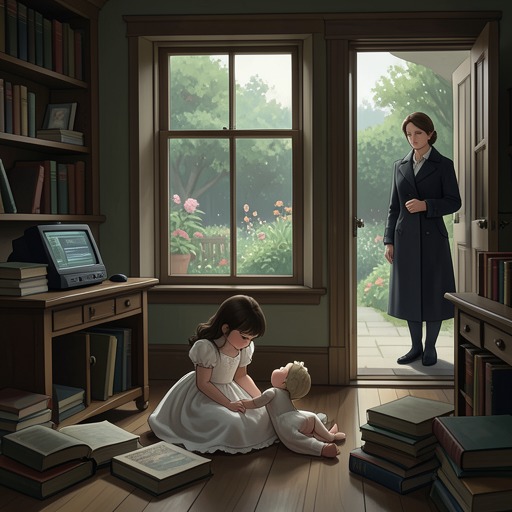
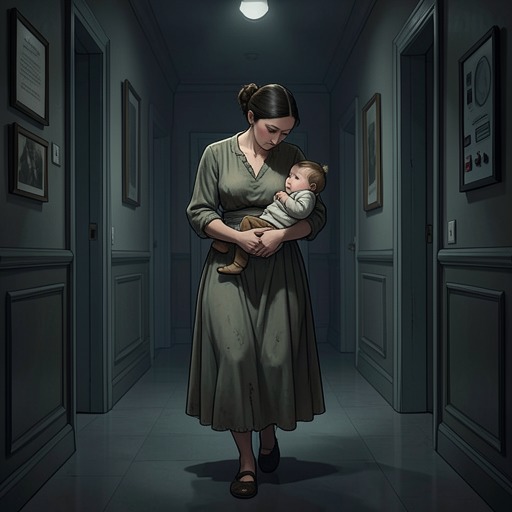
The Turn of the ScrewMrs. Grose’s removal of Flora from Bly is the governess’s deliberate answer to a crisis she believes cannot be resolved while the children remain together at the house. The governess sends Mrs. Grose and Flora away to their uncle, insists that Flora leave Bly itself, and stays behind to face Miles alone. Their departure changes the household’s arrangements and the governess’s role, turning separation into both a protective measure and the prelude to the final confrontation.
Causes and Decision
After Flora has made clear that she wants to be rid of the governess, Mrs. Grose comes to speak with her. The governess understands the visit as a possible request to speed her own departure, but rejects that solution. Though she had come close to leaving on Sunday, she now argues that she must stay and that Mrs. Grose must take Flora away. Her proposed destination is the children’s uncle: Flora is to be taken away from the house, away from the children, and, most pointedly, away from the governess herself.
The plan rests on the governess’s belief that Miles may turn against her if given the opportunity. She asks Mrs. Grose to leave with Flora as soon as possible so that she can be alone with him. The separation is therefore not simply an attempt to remove Flora from an upsetting scene; it is designed to isolate the governess and Miles for the confession she hopes to obtain. She makes the timing urgent, insisting that the children must not see one another before Flora leaves. When she fears that they may already have met, Mrs. Grose reassures her that Flora has been accompanied by a maid whenever necessary and is currently locked safely in her room.
Mrs. Grose’s Departure
Mrs. Grose hesitates before agreeing to the plan, but eventually takes the governess’s hand as a pledge and promises to go that morning. The governess offers to avoid Flora if Mrs. Grose would rather wait; Mrs. Grose replies that the problem is the place itself and that Flora must leave it. She also confesses that she cannot stay. Her agreement thus carries its own weight: the departure removes not only Flora, but the governess’s trusted companion and supporter from Bly.
Before leaving, Mrs. Grose asks whether the governess will be saved. The governess has just explained her hope that Miles will confess, since confession would mean that he could be saved. Mrs. Grose answers with a farewell kiss and cries that she will save the governess without him. Their exchange makes the departure a parting under pressure, rather than an ordinary journey arranged for convenience. Mrs. Grose goes with Flora, while the governess remains committed to the more dangerous effort of reaching Miles.
Departure and Immediate Aftermath
Once Mrs. Grose has left, the governess immediately feels her absence. The carriage carrying Mrs. Grose and her younger pupil has already rolled out through the gates by the time the governess comes downstairs. She experiences the prospect of being alone with Miles as a severe trial and spends much of the day fighting her weakness. The servants stare at the sudden change, which has not been explained to them; their blankness aggravates her nerves until she makes the need to take charge into a source of resolve.
Flora’s removal also makes the altered relationships in the household public. The previous day, Miles had kept the governess absorbed and misled her at the piano while acting in Flora’s interest. Now Flora has been confined and sent away, and the usual custom of meeting in the schoolroom has been broken. Miles has already left his room when the governess checks it; she learns that he has breakfasted with Mrs. Grose and Flora in the presence of two maids, then gone out for a stroll. The ordinary household routine has given way to a visible separation, and Miles’s casual walk registers the changed terms of his relation with the governess.
Significance
The removal divides the children at the point when the governess believes their proximity may obstruct her attempt to secure Miles’s confession. It also strips away the intermediary who has supported and affirmed her account of events. The governess had intended to let Mrs. Grose take Flora while she herself remained in reserve; once the carriage is gone, that arrangement becomes a lonely test of whether she can accomplish what she believes is necessary without help.
The departure does not settle what has happened to Flora or establish the truth of the governess’s suspicions. Instead, it changes the conditions under which the final encounter with Miles will take place. Flora is no longer at Bly, Mrs. Grose has gone with her, and the governess is left to confront the boy whose outward appearance still seems untouched by the crisis. The attempted protection and the separation that enables the confrontation are inseparable: the governess acts to get Flora out of the house, but the cost is that she must face the outcome alone.