Harley Street
The Turn of the ScrewHarley Street is the London setting of the governess’s interview with the Children’s Uncle, a meeting that leads to her appointment at Bly and establishes the isolation under which she will undertake the work. Its imposing town house and the employer’s persuasive charm form the bright opening to an arrangement whose defining condition is that she must never seek his help.
The Interview
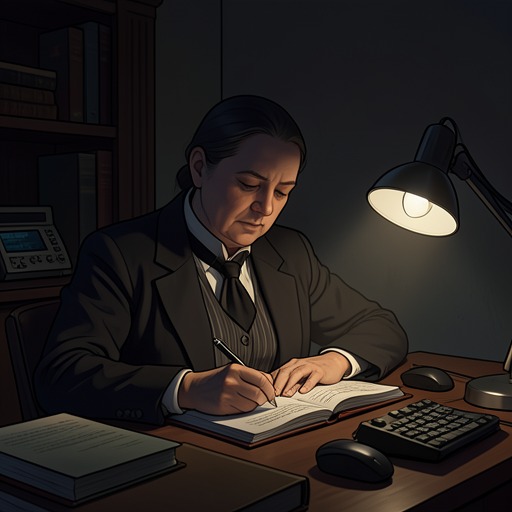
At twenty, the youngest of several daughters of a poor country parson, the governess came to London to answer in person an advertisement with which she had already begun a brief correspondence. The house in Harley Street struck her as vast and imposing; there she met a handsome, confident bachelor whose good looks, ease, and kindness seemed to belong to a world beyond her experience. She imagined him as rich and extravagant, surrounded in his town residence by travel spoils and hunting trophies.
The employer presented the appointment not simply as work but as a favor he would gratefully receive. That reversal mattered to the anxious young applicant: she felt that taking the position was a sacrifice for which his gratitude itself could reward her. Yet the interview’s appeal rested on an uneven balance of power. He was the prospective patron, and she was a young woman seeking her first schoolroom position, impressed by his manner and circumstances.
Terms of the Appointment
The Children’s Uncle explained that several applicants had been deterred by the conditions he imposed. The decisive one was that the governess must never trouble him: she was not to appeal to him, complain, or write about anything. She was to meet every question herself, receive all money through his solicitor, take the whole responsibility on, and leave him alone. She accepted. He took her hand in thanks for the sacrifice, and she told Mrs. Grose that she had already felt rewarded by the gesture.
That promise made in Harley Street governs the meaning of the location beyond the interview itself. The employer’s kindness and the governess’s gratitude accompany a rule that bars her from calling on him when difficulties arise. The arrangement thus combines personal warmth at the moment of hiring with a formal withdrawal of support: she is entrusted with the children and the household’s problems while being forbidden to communicate them to the person who appointed her.
Recollection at Bly
Later, when Mrs. Grose warned that the governess might be carried away by the little gentleman, the governess acknowledged that she had been carried away in London. Mrs. Grose immediately asked whether she meant Harley Street, and the governess confirmed it. Mrs. Grose’s reply—that the governess was neither the first nor the last to be so impressed—turns the address into shorthand for the employer’s power to charm and attract.
Harley Street therefore returns in recollection as more than the place where an appointment was made. It marks the beginning of the governess’s emotional investment in the employer, an investment sharpened by the fact that she never sees him again. The address holds together the promise that drew her into service and the distance that the no-contact condition subsequently enforces.