Miles's Death
The Turn of the ScrewMiles's death is the tragic outcome of the final confrontation with Peter Quint. The Governess believes that she can keep Miles safe by shielding him from the apparition at the window; when Miles recognizes and names Quint, however, her effort ends not in rescue but in his death. The scene binds protection, recognition, and loss together, while its account remains inseparable from the Governess's perceptions and claims.
Causes and Background
The confrontation follows the Governess's question about a letter Miles had taken from the hall table. He admits that he took it, explaining that he supposed she sometimes wrote home. The exchange brings the letter and the Governess's efforts to write to the Children's Uncle into the final scene, but the immediate crisis shifts when Peter Quint appears outside the window.
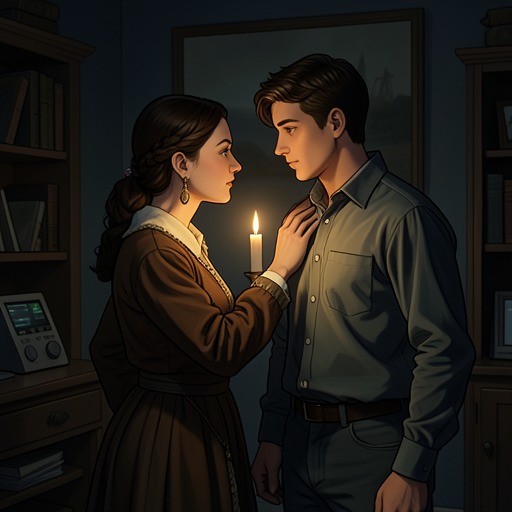
The Governess describes a sudden division of attention: she springs up, draws Miles close, and positions him with his back to the window. She recognizes the figure as Quint, who has appeared before, and sees his face glaring through the glass. Her immediate objective is to keep Miles unaware of what she sees. She understands her task as facing the apparition while preventing the boy from seeing it, and casts the struggle as a contest for his soul.
What Happens
As the Governess holds Miles, she looks toward the window and watches Quint move. She describes him first as a sentinel and then as a baffled beast, shifting his posture before fixing his gaze on the room again. The Governess believes Miles remains unconscious of the apparition, and his confession about taking the letter gives her confidence to continue speaking to him while keeping her attention on Quint.
Later, as the Governess demands that Miles explain what he had wanted to write home about, he turns away. She sees Quint again at the glass and leaps toward Miles, interpreting the apparition as an attempt to interrupt his confession. She cries out that the struggle is over and that Quint must leave him alone. Miles, however, responds by asking whether she means Miss Jessel. His mistaken identification unsettles the Governess; she insists that it is not Miss Jessel but Quint at the window.
Miles then turns his attention toward the place the Governess indicates. The account describes him as bewildered and unable to see the presence she says fills the room. He asks whether it is a man, and then names Peter Quint, calling him a devil and asking where he is. For the Governess, the name is a decisive confirmation: she hears it as both Miles's surrender of the secret and proof of her own devotion.
Consequences and Aftermath
The Governess tells Miles that Quint no longer matters because she has him, and directs him to look. Miles turns and sees only the quiet day. The discovery does not bring the release she expects. He cries out, and she catches and holds him, at first understanding the gesture as saving him from a fall. Within a minute, she recognizes that his heart has stopped.
The final reversal is stark: the Governess believes that naming Quint has freed Miles from the apparition's power, but the boy dies immediately after seeing no one at the window. Her protective embrace, which has kept him facing away from the glass, becomes the embrace in which she discovers his death. The scene closes with the Governess and Miles alone in the quiet day, not with a visible confirmation of Quint's presence.
Narrative Significance
The event resolves the immediate struggle between the Governess and Quint without resolving whether the apparition exists independently of her perception. Miles names Quint, which supports the Governess's conviction that the boy has shared her knowledge; yet the narrative gives no independent viewpoint beyond her account, and Miles's final look reveals only the ordinary day. The scene therefore makes recognition powerful but not conclusive: the name appears to confirm the haunting, while the death that follows cannot establish its cause.
The death also reverses the Governess's language of rescue. She believes she has kept Miles unaware and then claims to have him beyond Quint's reach, but her triumph lasts only until the boy turns toward the window. The last image of the quiet day contrasts with the conflict she has narrated throughout the scene, leaving the reader with the irreversible fact of Miles's death and an unresolved account of what brought it about.