Mrs. Grose
The Turn of the ScrewMrs. Grose is the housekeeper at Bly and a practical caretaker for the orphaned children, but she becomes more than a dependable member of the household: she is the Governess’s confidante and chief source of knowledge about the dead attendants Peter Quint and Miss Jessel. Her loyalty helps the Governess confront the haunting, yet the sharpest crises expose a painful limit: Mrs. Grose can believe and act on what she is told without seeing what the Governess sees herself.
Identity and Place at Bly
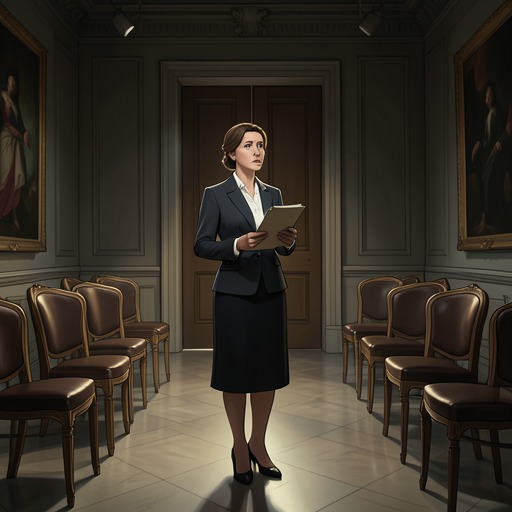
Mrs. Grose had formerly been maid to the children’s grandmother. The Children’s Uncle placed her in charge of the household below stairs and, in the absence of a governess, she also served as superintendent to Flora. She had no children of her own and was exceptionally fond of the girl. The household included other respectable staff, but the incoming Governess was to hold supreme authority over the children; Mrs. Grose’s role was therefore at once substantial and subordinate, rooted in daily care rather than formal command.
That arrangement made her a crucial witness to Bly’s domestic past. She had known Peter Quint and Miss Jessel, the former attendants whose histories the household had left unspoken. Her understanding did not begin as a complete account: the Governess’s questions and descriptions gradually draw out what Mrs. Grose knows, while her own reserve shows how deeply silence has shaped the house.
Knowledge of Quint and Jessel
When the Governess describes Peter Quint, Mrs. Grose reacts with visible shock at the suggestion that he was a gentleman. She recognizes the man behind the description, and her response confirms that the Governess’s apparition is not merely an unfamiliar figure to her. In their later discussion of Quint’s closeness to Miles, Mrs. Grose clarifies that the boy’s claim that they had been great friends should not be understood as mutual: it had been Quint’s own desire to play with and spoil Miles. She calls Quint much too free, first with the boy and then, more broadly, with everyone. Her testimony establishes a troubling intimacy without specifying every act or resolving what Miles understood.
The same process of disclosure reaches Miss Jessel. After the Governess describes the woman in black as beautiful but infamous, Mrs. Grose identifies her as Miss Jessel and concludes that both former attendants were infamous. Pressed to explain what bound Jessel and Quint together, she says there had been everything between them. The phrase conveys the breadth of the scandal while leaving its particulars unstated. Mrs. Grose’s gradual disclosures give the Governess a human history against which to interpret the apparitions, but do not independently verify the supernatural explanation she draws from them.
Alliance with the Governess
Mrs. Grose’s support is practical as well as interpretive. She listens to the Governess’s accounts, helps her bear the alarm they cause, and remains beside her as the revelations about Quint and Jessel accumulate. The Governess regards Mrs. Grose’s earlier silence as decent, then insists that the time has come to tell her the whole story. Their alliance grows through this exchange: the Governess supplies what she claims to see, while Mrs. Grose contributes memories and household knowledge that she alone can provide.
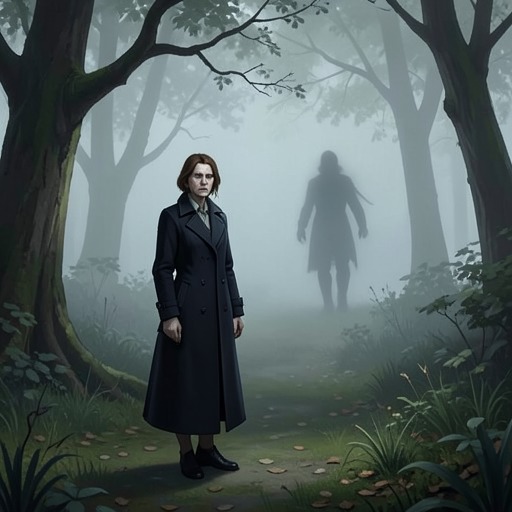
That partnership is not equivalent to shared sight. At the confrontation by the lake, the Governess addresses the apparition she sees across the water and interprets Flora’s words as evidence that the girl has been influenced by Miss Jessel. Mrs. Grose, who is blind to the figure, is nevertheless convinced that something awful has happened and that the household has undergone a collapse. At the Governess’s urgent command, she takes Flora away. Her inability to see what the Governess sees makes her both an imperfect witness and a decisive participant: she cannot confirm the apparition, but she can respond to the danger and distress unfolding around the child.
Departure and Final Crisis
Mrs. Grose agrees to leave Bly with Flora, promising to go that morning. Her decision is grounded not in a fresh sighting but in what Flora has said. Mrs. Grose reports that she has heard horrors from the child and breaks down in grief as she recalls them. She believes in the haunting, and understands removing Flora from Bly as a way of taking her far from the place and the people associated with the children’s distress. In this respect her faith is not merely assent to the Governess’s theory: it becomes a choice to remove the girl from the circumstances in which the crisis has intensified.
Before departing, Mrs. Grose also learns that the Governess’s letter to the Children’s Uncle never reached its destination. Miles has taken letters, and the attempted appeal for help has failed. The Governess nevertheless sends Mrs. Grose away with Flora, saying she will handle the remaining confrontation herself. Mrs. Grose answers that she will save the Governess without Miles, kisses her, and leaves with the girl. Once their carriage has passed through the gates, the Governess is alone with Miles. Mrs. Grose’s departure thus protects Flora and ends the women’s shared vigil, but also removes the Governess’s closest support just before the final encounter.
Narrative Role
Mrs. Grose anchors the story’s terror in household memory and ordinary care. Her recollections make Quint and Jessel part of Bly’s human history, while her blindness to the apparitions preserves the gap between what the Governess reports and what another person can verify. The narrative gives her a significant but bounded authority: she can identify former staff, describe the children’s relationships with them, acknowledge her belief, and act on Flora’s distress, yet she cannot see the supernatural figures herself.
That boundary shapes the Governess’s isolation. Mrs. Grose’s trust lends emotional and practical force to the Governess’s account, but it cannot turn that account into an independently witnessed fact. When Mrs. Grose leaves, the distinction becomes consequential: the ally who helped interpret the past and remove Flora is no longer present when the Governess faces the last crisis with Miles. Her loyalty is real, and so is the uncertainty surrounding the events to which she bears witness only indirectly.