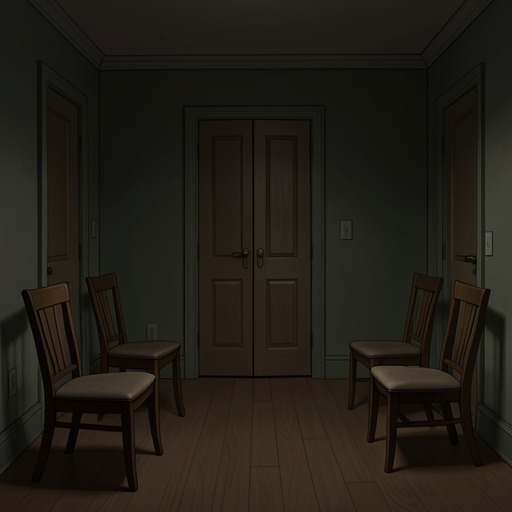
Silence and concealment
The Turn of the ScrewSilence and concealment are not merely absences of speech at Bly; they become a tacit arrangement that shapes the governess’s relations with the children and Mrs. Grose. The governess interprets the children’s reticence as possible evidence that they know more about Peter Quint and Miss Jessel than they admit, while the very act of pressing for disclosure risks making her the one who violates their silence. The resulting uncertainty is both a safeguard and a source of escalating suspicion.
Questions About the Past
The governess notices that the children have never spoken of Quint—not his name, his presence, or the time they spent with him. Mrs. Grose explains that Flora never knew or remembered him, but the governess distinguishes Miles from his younger sister: she believes he would remember Quint and know the circumstances of his death. Mrs. Grose’s immediate plea not to question the boy marks the boundary between the governess’s desire to know and her companion’s fear of what asking might do.
The governess also learns that Mrs. Grose had once regarded Quint and Miles as perpetually together for several months. She had criticized the propriety of their close association, hinted at its incongruity to Miss Jessel, and then approached Miles, telling him that young gentlemen should remember their station. Mrs. Grose recalls his answer as bad, but the account does not disclose its words. The missing reply matters: it gives the governess a reason to suspect that Miles understood something about Quint’s conduct, without establishing exactly what he knew or what he said.
When the governess presses Mrs. Grose about whether Miles had shown knowledge of what passed between Quint and Miss Jessel, Mrs. Grose can only repeat that he denied it. Her visible flush and uncertainty offer no definitive confirmation. Silence thus preserves the difference between a suspicion and a known fact, even as the governess’s questioning makes that difference increasingly hard for her to tolerate.
The Children’s Tacit Arrangement
After the governess joins the children, speaking with them remains difficult, and the strained situation lasts for a month. She becomes convinced that Miles and Flora are aware of her predicament and that their relationship with her is shaped by tacit coordination. The sense of an unnamed subject grows larger than anything they discuss openly: conversations skirt the dead, lost childhood companions, and whatever might remain of them in memory.
The children are not described as openly vulgar or as simply mocking her. Instead, the governess perceives irony in their manner and imagines that they know when she is about to approach forbidden ground and when she will turn away. They eagerly hear the stories of her own life, including family anecdotes and details of her home, while subjects touching the children’s former governess or the return of the dead remain unspoken. Their abundant conversation and their omissions operate together: talk supplies a route around what none of them names.
This pattern turns avoidance into a shared practice, though the account cannot establish how consciously the children participate in it. The governess represents their silence as an arrangement that lets them move close to dangerous topics and then stop short. What might look like ease in their companionship therefore carries a double meaning for her: it can reassure her of their affection, yet also seem to conceal an understanding from which she is excluded.
Suspicion, Vision, and Restraint
The governess’s suspicions intensify when she experiences quiet intervals in which she believes the children’s visitors are present beyond her direct awareness. She imagines confronting Miles and Flora with proof that they can no longer deny, but holds back because she fears that such an accusation could harm them more than the danger she hopes to avert. Their sociability and tenderness then appear to her not as a straightforward answer but as a possible cover for their advantage.
Her account repeatedly marks the gap between what she sees and what she thinks the children see. She fears that her own perception might fail precisely when theirs is most open, and considers the possibility that they witness terrible things she cannot know. Yet she also acknowledges that whether the children truly see the apparitions has not been definitively proved. The secrecy is therefore inseparable from the story’s uncertain access to events: the governess’s conviction is intense, but the children’s silence cannot independently verify it.
She restrains herself from pronouncing the names of Quint and Miss Jessel because she fears that speaking them would make the children’s supposed knowledge explicit and would violate what she calls their instinctive delicacy. In private, she rehearses how to raise the matter, then breaks down before saying the names. Her self-reproach sharpens the dilemma: she sees the children as maintaining silence with good manners, while she, entrusted with their care, risks becoming the person who forces an accusation upon them.
Repeated Evasions and Delayed Disclosure
The pattern of concealment has a ritual aftermath. After moments the governess takes to be encounters with the visitors, the three of them repeat familiar movements; the children kiss her and turn to the question of when their uncle in Harley Street might come and whether they should write to him. The question redirects attention from the danger she suspects, offering a socially acceptable subject at precisely the point when the atmosphere has become awkward.
The uncle’s possible arrival is itself a form of shared talk that does not become action. He never writes to the children, and the governess keeps their letters rather than sending them, treating them as literary exercises too beautiful to post. She understands that their expectation of his visit is poorly supported, yet it gives the household a topic to fall back on and contributes to the irony she senses in the children’s dealings with her. The employer’s absence from this exchange does not resolve the secret; it leaves the governess and children to manage the unsaid between themselves.
The story also delays explanation through the governess’s conversations with Mrs. Grose. At first, the governess knows only that Miles has never mentioned Quint. Much later, in a nocturnal conversation before gray dawn, she presses Mrs. Grose to explain why she had once admitted that Miles had not literally always been good. The answer—months of closeness to Quint, Mrs. Grose’s warning about propriety, and Miles’s troubling response—recasts the earlier silence without dispelling its uncertainty. Disclosure arrives piece by piece, under pressure, and still leaves the decisive contents of the boy’s answer unavailable.
The Cost of Keeping Silent
Silence serves opposing purposes. It may spare the children a direct confrontation and protect them from an accusation the governess cannot prove; it also prevents her from finding out what they remember, what they perceive, or how they understand the past. The governess’s choice not to speak is therefore not simple tact. It is bound to her fear that naming the danger will cause harm, and to her belief that withholding speech may preserve the children’s composure.
At the same time, the governess’s own interpretation of silence becomes more elaborate as the month passes. She reads sociability as possible irony, tenderness as possible evasion, and the absence of an allusion as evidence that the children may be concealing knowledge. The children’s silence cannot establish her theory, but neither does their ordinary behavior settle her doubts. The narrative keeps readers within this imbalance: the governess recounts what she experiences and infers, while the children’s interior understanding remains inaccessible.
The result is a household where conversation flourishes around a protected center. Family stories, education, affection, and talk of a possible visit fill the space, while Quint, Miss Jessel, death, and the children’s possible knowledge remain difficult to name. Concealment gives the characters a way to continue living together, but it also makes every return to silence feel charged. The governess’s pursuit of truth and her fear of speaking it become inseparable, so that the effort to break the secret helps preserve the conditions that make it powerful.