The governess’s letter to the children’s uncle
The Turn of the ScrewThe governess’s letter to the children’s uncle is an intended appeal for outside help whose failure to arrive becomes central to the household’s crisis. Missing from the hall table and ultimately burned by Miles, it exposes the limits of the governess’s attempt to break the silence around Bly—and becomes the occasion for her last confrontation with the boy while Peter Quint appears outside the window.
Purpose and Intended Journey
The letter is the governess’s alarm to the children’s uncle, the absent employer who has forbidden her to burden him with complaints or appeals. By the time she raises it with Mrs. Grose, she expects that it will already have reached town. The possibility of its arrival represents a route beyond the isolated household: someone outside Bly might learn what the governess believes is happening and intervene. That anticipated journey gives the letter a practical purpose, but also makes its fate a test of whether the governess can overcome the conditions that have kept the crisis private.
The letter’s importance is therefore not only what it says, but whether it can be delivered. The governess initially treats its arrival as settled; Mrs. Grose’s reply overturns that assumption. The message meant to carry the alarm outward has remained within the household, where its disappearance draws attention to the children’s actions and the adults’ imperfect knowledge of them.
Disappearance and Suspicion
Mrs. Grose tells the governess that the letter never went. She had noticed, on returning with Flora the previous day, that it was no longer where the governess had left it. She questioned Luke later that evening, and he said that he had neither noticed nor touched it. Mrs. Grose hesitates before disclosing what she suspects, but her reluctance gives way to a shared recognition: with Luke’s denial, Miles becomes the likely person who took it.
The governess concludes that if Miles took the letter, he probably read and destroyed it. This conclusion is initially an inference, not knowledge. Mrs. Grose’s account establishes the letter’s disappearance and narrows suspicion, while leaving its destination and the boy’s purpose unresolved. The object that should have made the governess’s concern legible to the uncle instead becomes evidence that the children may know more about her plans than she can safely say in their presence.
Miles’s Confession and the Letter’s Destruction
The governess later asks Miles directly whether he took the letter from the hall table the previous afternoon. She frames the question as a small request, separate from the larger promise she has asked him to fulfill. Miles admits that he took it. When she asks why, he says he wanted to see what she had written about him; he confirms that he opened it. The earlier suspicion is thus resolved, and the letter’s private contents are revealed to have mattered to him personally.
Asked what he did with it, Miles says that he burned it. The sequence transforms a missing piece of paper into a deliberate act: he took the governess’s appeal, read it, and destroyed it, preventing its delivery to the uncle. The confession also connects the letter to his expulsion from school. The governess asks whether burning it was what he had done at school, but the passage breaks into his response before establishing the full nature of the school incident. The text confirms the question and its connection, not an answer that would settle the earlier scandal.
The Letter at the Window
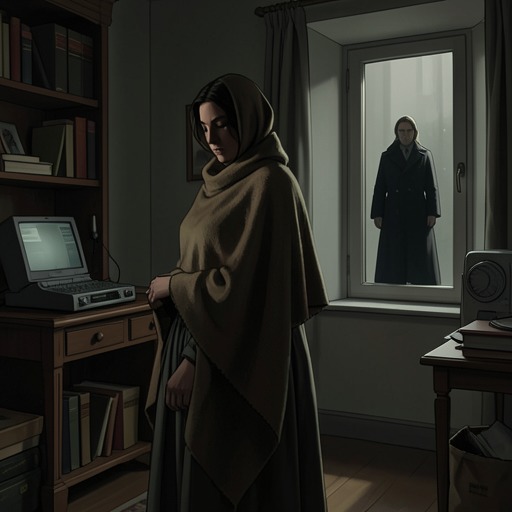
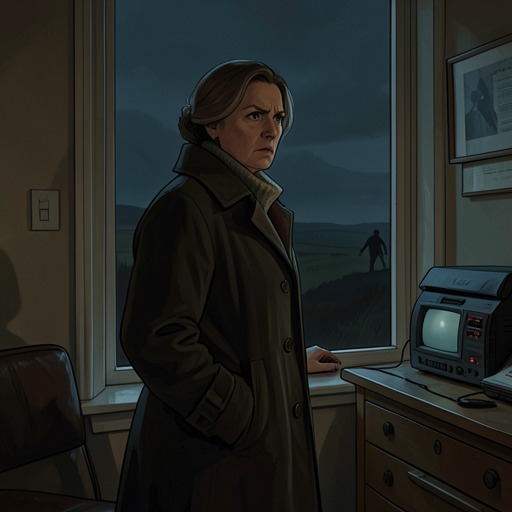
Miles confesses while the governess is asking about the letter, but Peter Quint’s apparition interrupts the scene. The governess sees him outside the window, close to the glass, his white face fixed on the room. She springs up, draws Miles close, and keeps his back to the window, making the immediate task not simply to question him but to keep him unaware of what she sees. Her attention divides between the boy in her arms and the figure beyond the glass.
After Miles admits that he took and opened the letter, the governess reads his response as a collapse of mockery and a sign of profound uneasiness. She believes that he senses a presence without understanding what it is, or knowing that she understands. When she looks back to the window, Quint has disappeared; she interprets the empty air as a triumph and the influence as quenched. That interpretation belongs to the governess’s account of the encounter. The scene does not make the letter a supernatural instrument: its concrete role is to bring Miles’s secret into the open at the moment the governess confronts the apparition.
Consequences and Significance
The letter’s failure closes off the practical possibility of the uncle receiving the governess’s alarm. Its disappearance first reveals the limits of her control over the household’s communications; Miles’s admission then shows that he not only intercepted the appeal but read what she had said about him and destroyed it. The governess learns the fate of the message directly from the person who prevented it from reaching its destination, while the intended recipient remains outside the scene.
As an object, the letter moves from an assumed means of rescue to an absent, then irrecoverable document. Its burning makes the silence around Bly more than a matter of reluctance or fear: a specific attempt to communicate has been intercepted and physically erased. Yet the act of destruction also produces disclosure. By asking about the missing letter, the governess secures Miles’s confession, and the final exchange places that admission beside Quint’s return at the window. The letter cannot carry the governess’s account beyond Bly, but its loss exposes the conflict within the house and sharpens the pressure of the ending.