V-Day 1998
The Vagina MonologuesV-Day 1998 was the inaugural benefit performance that launched V-Day as a movement against violence against women. On February 14, 1998, a sold-out performance of The Vagina Monologues at New York City’s Hammerstein Ballroom brought together performers and a crowd that stretched into the street; the event raised more than $100,000 and made the play’s public naming of women’s bodily experience the basis for an expanding campaign of performance, fundraising, and awareness.
Origins and Purpose
V-Day 1998 grew from a wider effort to confront the silences surrounding women’s bodies and the violence directed against them. The book’s account links that silence to a childhood vocabulary in which the word “clitoris” was never spoken and one area of the body remained unmentionable. In that account, the absence of accurate language left women vulnerable to shame, schoolyard jokes, and the assumption that male lovers or physicians knew more about women’s bodies than women themselves. The benefit’s public performance therefore carried more than theatrical significance: it placed women’s accounts of their bodies before a large audience and connected speech with organized action.
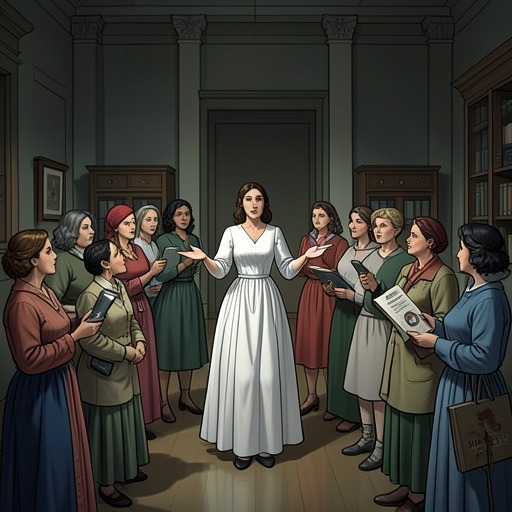
The event followed the formation of V-Day by activist women in 1997. The V-Day Benefit Committee expanded through a chain of personal invitations, with members bringing in others, and its first project was designed to launch a movement through a benefit performance of Eve Ensler’s play. Its stated purpose was to raise both money and awareness to stop violence against women. The structure joined a familiar public occasion—Valentine’s Day—to a subject often forced into silence, using the visibility of a theatrical event to gather people and resources around that purpose.
The Benefit Performance
On February 14, 1998, twenty-five hundred people lined up outside the Hammerstein Ballroom in New York City. The performance had sold out, yet hundreds more remained on the street, clamoring to get inside. The crowd’s size made the event’s reach visible before the performance began: participation exceeded the number of seats, and the desire to be present became part of the launch itself.
The Vagina Monologues was performed by a large group of well-known actors, artists, musicians, and activists. Whoopi Goldberg, Susan Sarandon, Glenn Close, Winona Ryder, Marisa Tomei, Shirley Knight, Lois Smith, Kathy Najimy, Calista Flockhart, Lily Tomlin, Hazelle Goodman, Margaret Cho, Hannah Ensler-Rivel, BETTY, Klezmer Women, Ulali, Phoebe Snow, Gloria Steinem, Soraya Mire, and Rosie Perez joined the event. The range of participants gave the benefit the character of a collective undertaking rather than a single performer’s appearance. Their performance raised more than $100,000 and launched the V-Day movement.
The audience, too, responded as a varied public. Men and women, students and businesspeople, mothers and activists filled the theater. They laughed, gasped, fell silent, cried, and cheered as the performances unfolded. Those successive reactions show how the event moved between humor and pain without separating the play’s bodily subject matter from its political stakes. The audience’s visible engagement was part of the occasion’s force: the work was not only presented but received in a room where people responded together.
Consequences and Development
The benefit’s immediate consequence was to establish the first of many V-Day events intended to raise money and awareness against violence toward women. Its fundraising result gave the movement a concrete resource, while the packed venue and the people unable to enter demonstrated a public appetite for participation. In the book’s account, the evening was transforming not simply because the play was performed, but because a performance became the starting point for continued collective activity.
The model did not remain confined to the 1998 benefit. Subsequent campus performances used the same play but took distinct forms: some were intimate staged readings, while others became elaborate theatrical and social events. Schools added activities and resources, including post-performance Vagina Dialogues, sexual-assault counselors, fundraisers, parties, music, art, and dance. This later variation clarifies what the first benefit set in motion: a repeatable event centered on the play, adaptable to local settings and capable of linking performance to services, conversation, and fundraising.
Significance of the Event
V-Day 1998 joined language, performance, and material support in a single public occasion. The play’s subject challenged the shame and misinformation associated with women’s bodies; the benefit directed the energy gathered in the theater toward a movement whose purpose was to stop violence against women. The contrast between the sold-out room and the hundreds waiting outside gave that combination a striking physical form: the audience was larger than the venue could contain.
The event’s significance also lies in the way it made participation visible and collective. A network of women had assembled the benefit through the V-Day Benefit Committee; performers carried the play to the stage; audiences answered with laughter, silence, tears, and cheers; and the money raised supported the movement’s work. V-Day 1998 thus stands as both a specific Valentine’s Day performance and the launching occasion for a continuing series of benefits. Its legacy in the book is not an isolated night of celebrity theater, but the creation of a public framework in which speaking about women’s bodies could lead directly to organized action against violence.