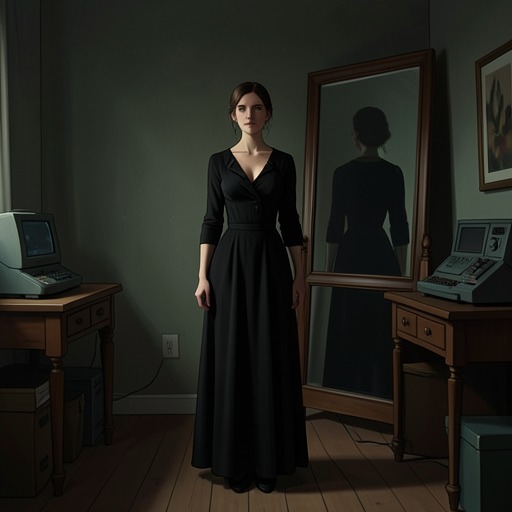
Auvergne
The Vampire LestatAuvergne is the rural landscape where Lestat’s family estate, village life, and earliest memories take shape, and it remains a point of reference long after he leaves. The region links the constraints of his birth into a declining aristocratic family with the older customs and myths through which he later interprets vampire history.
Family Estate and Early Life
Lestat’s childhood unfolds on his father’s land in Auvergne, in the last decades before the French Revolution. His father is a marquis, but the family’s wealth has long been depleted. As the youngest surviving son, Lestat has no claim to the title or land and no clear prospect of a future. His eldest brother, Augustin, inherits the family position, yet has already spent his wife’s small dowry.
The family’s castle, estate, and nearby village make up Lestat’s entire known world. With little money and the household at risk of hunger, he becomes its hunter, bringing in pheasant, venison, and trout to feed his relatives. The work gives him a solitary role and practical importance, even as he remains restless and alienated from the family’s attachment to the past.
Departure and the Limits of Rank
Auvergne also stands behind Lestat’s thwarted hopes for education and advancement. His family sends him to learn to read and write, but Augustin makes clear that they cannot finance an ecclesiastical career befitting their rank. Rather than become a bishop or cardinal, Lestat is expected to live as a poorly educated dependent and attend to the family’s needs. His distress at this prospect exposes the gap between the prestige of aristocratic status and the family’s actual means.
That tension belongs to the wider social order of the period. In Paris, Lestat encounters a theater world divided between government-sanctioned houses reserved for serious drama and boulevard theaters whose lively performances drew both poorer spectators and wealthy audiences. Young bourgeois patrons aspired to aristocratic standing even as some became involved in the Revolution that abolished the class they sought to join. These later encounters sharpen the contrast between the rank into which Lestat was born and the cultural life he chooses beyond Auvergne.
A Landscape Recalled
After leaving, Lestat continues to carry Auvergne with him as an image of home. In a barren room elsewhere, he imagines it as an inn in an Auvergne village, and dreams of traveling onward with Gabrielle, sharing a life of discovery and conversation. The remembered landscape gives emotional shape to a vision of companionship, rather than simply marking a place he has physically revisited.
The region also returns in his reflections on ancient belief. When Marius speaks of traditions in which human blood could be shed in the name of good, Lestat remembers villagers dancing around a Lenten fire and chanting for the crops. His mother had called the practice pagan, as had the priest who had been sent away. The memory makes the old local custom a bridge between the religious language of his childhood and the ancient rites Marius describes.
Ancestry and the Savage Garden
Marius connects the landscape of southern Gaul to his account of the Savage Garden: a world governed not by conventional moral law but by the growth and order of nature. He says that his own ancestry came through a Celtic mother and a Roman father, while Lestat’s descent reaches directly to the people of those northern provinces. Marius further identifies their fair hair, blue eyes, height, and build as the reason each was chosen for immortality by different makers.
In this account, Auvergne is more than the setting of Lestat’s poor and restrictive childhood. Its remembered seasonal rites and its place within southern Gaul let the narrative join personal memory to an ancient cultural past. The same region that confines the young Lestat to a depleted estate becomes, in retrospect, part of the history that Marius uses to explain his ancestry and transformation.