Gabrielle de Lioncourt
The Vampire LestatGabrielle de Lioncourt moves from the constrained world of an impoverished French noble household into the immortal life her son Lestat de Lioncourt offers her. As his mother, she is both the person to whom he finally entrusts the full truth of his existence and a companion who shares his supernatural condition without sharing his later path. Her transformation gives her freedom from mortal illness, but not a permanent place beside him: she disappears in Cairo, and Lestat never learns where she went.
Identity and Background
Gabrielle is the Marquise in the de Lioncourt family, whose hereditary standing has outlasted its wealth. The family lives on its estate in Auvergne, where Lestat grows up as the youngest of the surviving sons. He has no claim to the title or land, and the household’s resources have dwindled; his eldest brother, Augustin, has already spent his wife’s modest dowry. These circumstances establish the social world Gabrielle inhabits: aristocratic rank remains, but it cannot secure the family’s prosperity or the future of its younger children.
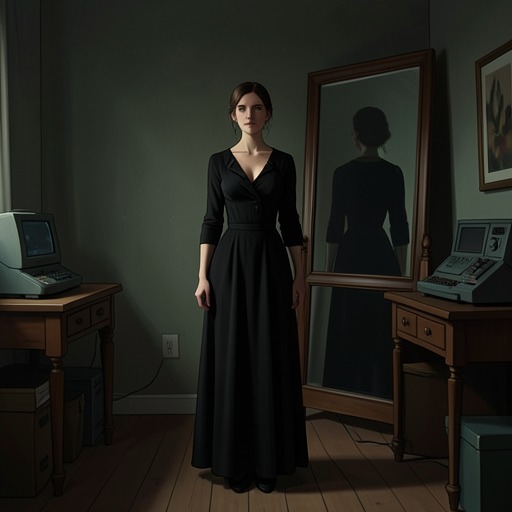
The evidence presents Gabrielle most fully through Lestat’s recollections and through the crisis of her illness. When he returns to her room, she is dressed in dark blue taffeta, her yellow hair gathered behind her ears with curls falling over her shoulders. Her face still recalls the mother he knew as a child. Lestat sees her familiar appearance as a brief restoration of his own mortal past, imagining himself again innocent and at home with her. That moment of recognition makes the impending separation between her mortal life and his vampiric one especially acute.
The Offer of the Dark Gift
As Gabrielle’s condition worsens, Lestat reaches her after instructing Roget to remain at her side and keep her alive until he can come. In her room, he first encounters the familiar image of his mother, but the hope that he can simply return to their earlier closeness cannot last. He tells her what he has kept from her: how a ghostly figure at the theater shattered a window and attacked him, how he was taken to the tower and underwent an exchange of blood, where he sleeps, what powers he possesses, and what the thirst for blood means.
The disclosure is not merely an account of his past. Lestat describes the force that now organizes his existence: blood intensifies passion and greed, and feeding joins satisfaction to death. He reveals his hidden life and its dangers while acknowledging that he does not fully understand what it would mean to pass his condition on. The confession thus becomes the ground for a choice. He asks whether Gabrielle will come with him into this unknown existence, admitting his fear that he might fail and his uncertainty about the gift itself.
Gabrielle answers yes. Her consent is both a decisive turn in her own story and the moment when Lestat’s isolation changes. He has disclosed the secret of his existence to the person whose judgment and presence matter most to him, and she chooses to share the risk rather than remain in the mortal life that illness is ending.
Transformation and Shared Life
After the transformation, Lestat wakes in Paris and recognizes that his mother is alive in a new sense: they are to live forever. Gabrielle lights the candles in their room, and the marks of illness that had altered her face are gone. Her restored appearance confirms the immediate consequence of the Dark Gift, while the familiar domestic gesture of tending the room links this radically changed life to the home and family she has left behind.
Immortality does not make Gabrielle content with the city or with the habits of her new companion. She speaks of wanting to feed quickly and then leave Paris for the woods, where there are no people, only darkness, trees, stars, and silence. The wish distinguishes her outlook from Lestat’s involvement with human society and the urban life he has entered. She seeks distance from people and the quiet of the natural world; their shared condition therefore becomes the beginning of a divergence as well as a bond.
Separation and Lasting Significance
A hundred and forty years after Lestat leaves Marius’s island, Gabrielle has vanished. Lestat says she disappeared that night in Cairo and was never heard from again by anyone, mortal or immortal, known to him. The account establishes the separation but not its cause or destination. Gabrielle’s later life remains outside his knowledge, and the narrative does not turn her disappearance into a confirmed death.
Her absence shapes Lestat’s later memory of his own collapse. When he is alone, weary, and badly wounded in body and soul, he cannot seek Gabrielle’s help because he does not know where to find her. He believes that her powerful blood could at least have hastened his recovery, and that she would have forgiven him anything. This is a striking contrast with his reluctance to appeal to Marius: Gabrielle represents a forgiveness he trusts, but the possibility of that comfort is made unreachable by her disappearance.
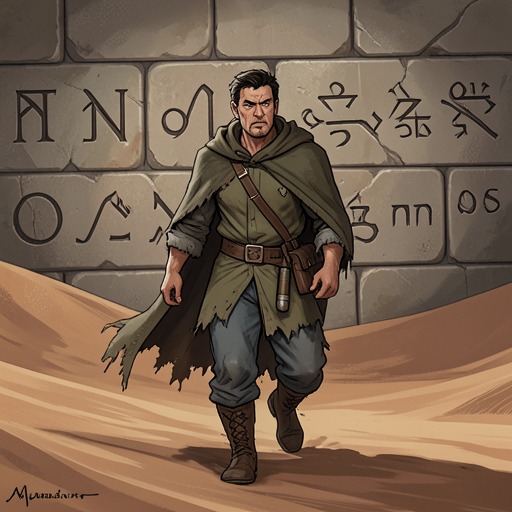
Much later, Gabrielle reappears beside Lestat during a dangerous escape with Louis. She drives the Porsche that pulls them into safety, her yellow hair visible beneath a battered hat. Lestat’s attention turns immediately to her familiar walk, gestures, and worn explorer’s clothes. After two hundred years, he still recognizes her as an intrepid traveler; their long absence has not erased the habits by which he knows her. They have much to tell one another, and his happiness at seeing her briefly outweighs his fear. Yet the reunion also sharpens his awareness that the conflict he has set in motion puts those he loves in danger. Gabrielle’s return restores their connection without resolving their distance or removing the threat around them.
Gabrielle’s narrative importance rests on this tension between intimacy and independence. She accepts the Dark Gift from Lestat, but her wish for silence beyond the city and her eventual disappearance keep her from becoming merely an extension of his life. To Lestat she remains at once the mother who chose to cross into his world, the companion he lost, and the explorer he recognizes when she returns. Her unresolved absence gives their relationship an open ending: reunion is possible, but possession, certainty, and permanent closeness are not.