Italy
The Vampire LestatItaly is both a place of refuge and a school for Lestat after the destruction of the Paris coven. He and Gabrielle pass through it during a journey that carries them across Europe and eventually to Cairo; in Italy, encounters with the Roman coven deepen their understanding of ancient vampire customs, while Lestat’s wider travels turn the surrounding human world into his teacher. The country thus belongs to a period of separation from Paris, discovery, and restless study rather than a simple return home.
Arrival and the Roman coven
After leaving Paris, Lestat and Gabrielle travel first to Lyons, Turin, and Vienna, then to Prague, Leipzig, and St. Petersburg, before going south again to Italy, where they settle for many years. Their stay is part of a much longer itinerary that later takes them to Sicily, Greece, Turkey, the ancient cities of Asia Minor, and Cairo. Across these movements, Lestat writes messages to Marius on walls, maintaining a line of communication even while living far from him.
Early in their time in Italy, the Roman coven welcomes the travelers and invites them to a Sabbat in the catacombs, where they are offered a place among the hymns. The vampires know that Lestat and Gabrielle destroyed the Paris coven and defeated Armand, but they do not treat them as enemies. Instead, they cannot understand why Armand relinquished his power or why the Paris group failed to adapt to changing times. Their response makes Italy a setting in which Lestat’s earlier conflict is viewed from a different vampire culture’s perspective.
Ritual and life among humans
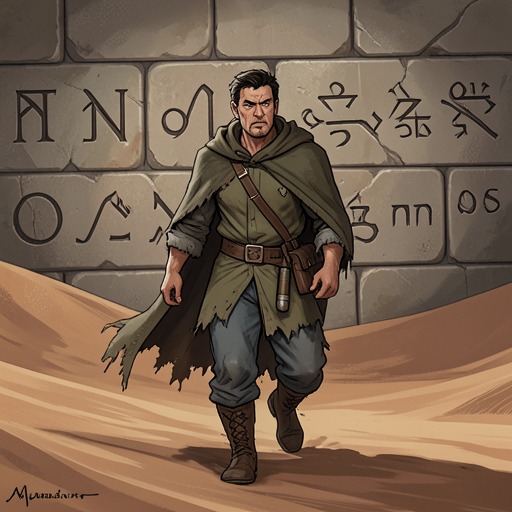
The Roman ceremonies are elaborate and sensuous, yet the coven’s members do not treat human society as something they must always avoid. Lestat observes that they pass themselves off as human whenever it suits them, a practice also found among vampires he and Gabrielle had seen in Venice and among a small number they later encountered in Florence. In black cloaks, they enter opera crowds, move through the corridors of great houses during balls and banquets, and sometimes sit among patrons in taverns and wine shops.
Their public appearance contrasts with the old customs they preserve. These vampires often dress in the fashions of the time when they were born, displaying fine clothing and jewels when they choose; yet they return to graveyards to sleep, flee signs of heavenly power, and participate in Sabbats. Italy’s vampire life therefore joins social adaptability to ritual continuity. The old practices have not disappeared, but neither do they prevent these vampires from mingling with mortals and taking part in the world around them.
A world of study and separation
Italy forms one stretch of a broad education Lestat pursues as he travels. He finds no way back to Paris, however lonely he becomes, and instead treats the world around him as both lover and teacher. In every place he visits, he seeks out the heart of society: its entertainments and gossip, literature and music, architecture and art. His attention ranges from street performers and gypsy violinists to opera singers and cathedral choirs, and from books and newspapers to taverns and other public gathering places.
This curiosity extends beyond formal culture. Lestat spends time in brothels, gambling dens, and places where sailors drink and quarrel; he talks with mortals in public, often ordering food he does not eat or buying wine for others. At the same time, he returns to the books that had belonged so exclusively to Gabrielle during their years at home. Travel does not erase his attachments: he preserves letters from Paris, imagines the troupe and Nicolas’s violin, and describes such scenes in veiled messages to Marius. But those memories do not draw him back. Italy belongs to a larger chosen estrangement in which observation, reading, and movement take the place of a settled home.
Significance
Italy brings several vampire traditions into view without reducing them to a single rule. The Roman coven’s welcome contrasts with the Paris coven’s rigid ways, while its members’ comfort in human crowds sits beside their graveyard sleeping and ceremonial Sabbats. For Lestat, this contact broadens his knowledge of vampire life at the same time that his travels enlarge his study of human society. The country is therefore significant not only as a place where he stays, but as part of the route through which he becomes a more attentive, widely informed observer—one still connected to Paris and Marius, yet unwilling to return to the life he left.