Birds
The VegetarianBirds are recurring creatures and images of flight in The Vegetarian: they appear in scenes of animal suffering, in a filmmaker’s deliberately inserted footage, and in memories that bind In-hye’s family to escape and loss. Their significance shifts with each encounter. A bird may be a vulnerable body in someone’s hand, a moving image detached from its surroundings, or a figure through which a child imagines his mother.
Appearance and Recurrence
In the early part of the novel, Yeong-hye’s sister finds a small white-eye bird crushed in Yeong-hye’s clenched hand. Feathers are missing, and vivid blood spreads below marks resembling a predator’s bite. The bird’s injured body makes animal suffering immediate rather than abstract: it is not simply an image of freedom, but a creature harmed by a human hand.
Birds return through the filmmaking described in the later narrative. In-hye’s husband habitually includes footage of flying things—birds alongside butterflies, airplanes, moths, and flies—even when the images seem unrelated to a piece’s subject. She remembers asking about a two-second shot of a bird’s black shadow rising slowly into the air, placed after footage of a ruined bridge and people crying at a funeral. His explanation is that he included it because he thought it looked good. The cut joins flight to destruction and mourning without supplying a clear interpretive key.
Flight and Failed Escape
The bird image becomes personal in In-hye’s memory of her husband trying to throw himself from Yeong-hye’s veranda, as if attempting to fly. His videos had repeatedly returned to flight, but when he himself needed escape, he could not achieve it. The contrast strips the image of any easy promise of freedom: flight can be filmed and admired, yet remain beyond the person who longs for it.
That failed attempt also alters how In-hye sees the man. She overlays her memory of him at the veranda with a later image of him in a public telephone booth, worn down and despairing. When he calls, she refuses to answer; after he rings again, she disconnects the phone, and he does not call the next morning. Flight thus connects the husband’s artistic motif to a failed escape and to In-hye’s final withdrawal from their relationship.
A Child’s Bird and a Mother’s Image
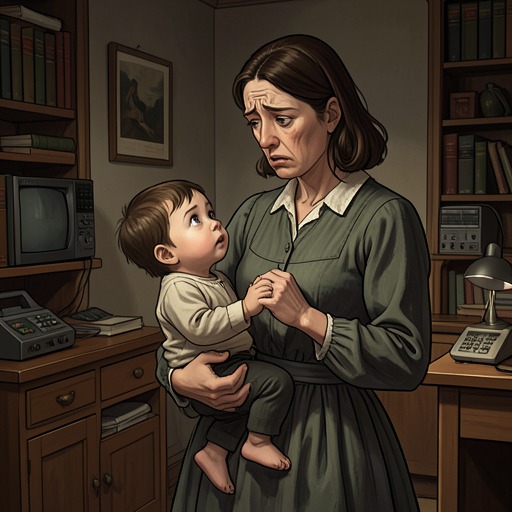
In a remembered conversation, Ji-woo tells In-hye that he saw a photograph of his mother flying in the wind. Looking at the sky, he saw a bird, heard it say that it was his mother, and imagined two hands emerging from its body. He was still a young child whose speech stumbled over some words, and the sadness in his account surprises her. The bird is not merely a distant sign of freedom here: it carries a child’s attempt to understand his mother through an image of absence and transformation.
Near the end, as an ambulance carrying Yeong-hye leaves Mount Ch’ukseong, In-hye sees a black bird flying toward dark clouds. The summer sunlight dazzles her eyes, and she cannot keep following its flight. The moment gives the recurring image no settled resolution. The bird continues onward, but In-hye’s gaze is interrupted; the scene holds flight together with the limits of witnessing and following.
Narrative Significance
Across these appearances, birds are not reduced to one stable meaning. The wounded white-eye makes animal vulnerability concrete; the filmed bird is an abrupt image placed amid ruin and grief; the veranda memory turns flight into an escape that fails; and Ji-woo’s bird gives a child’s longing a strange, bodily form. The final black bird carries that motif into the novel’s unsettled parting, moving toward clouds as the ambulance leaves the mountain.
The recurring image also gains force from the novel’s shifts in viewpoint. Birds are seen, remembered, filmed, or imagined by other people, while their meanings change with the observer and the surrounding scene. That instability is part of their work: flight remains visible, but it does not guarantee freedom, explain suffering, or restore a broken relationship.