Mr. Cheong and Ji-woo’s father–son relationship
The VegetarianMr. Cheong and Ji-woo’s father–son relationship is defined less by shared life than by absence. Mr. Cheong is Ji-woo’s father, but the boy sees him so infrequently that he asks every morning whether there is a father in their family—even while Mr. Cheong is still around. After Mr. Cheong leaves, that question becomes a stark measure of what the child has already experienced: a father who is nominally present in the family but rarely available to him.
A Father Mostly Out of Sight
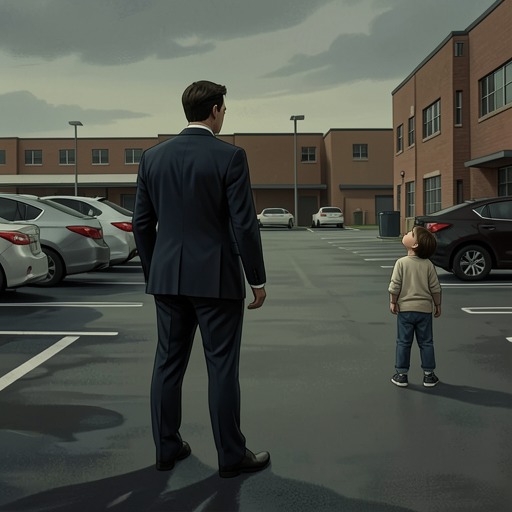
The evidence of their distance begins before the separation. Ji-woo repeats his question every morning, and In-hye explains that he sees his father so infrequently. The routine gives the boy’s uncertainty a daily form: fatherhood is not something he can reliably locate in the household, even when Mr. Cheong has not yet gone. Mr. Cheong’s absence is therefore not only a consequence of his eventual departure; it is already built into Ji-woo’s ordinary experience of him.
Mr. Cheong’s work further frames this absence. He shuts himself away in his studio, works harder than before, and sometimes does not come home in the evenings or at weekends. The account does not describe what he and Ji-woo do together or establish the child’s feelings beyond his repeated question. It does, however, set the father’s increasing seclusion beside the boy’s near-daily search for a place for him in the family. The contrast makes the relationship’s central imbalance plain: Mr. Cheong is absorbed in his own life, while Ji-woo’s question keeps returning to whether a father is there at all.
After the Separation
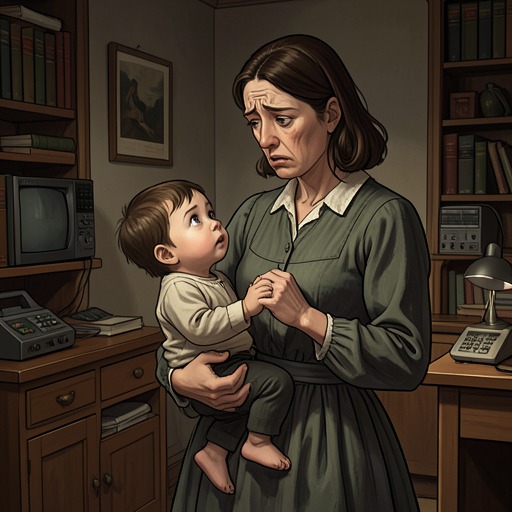
After Mr. Cheong leaves, Ji-woo continues to ask the same question he had asked when his father was still around. In-hye answers shortly, “No,” then gives the situation its private, final shape: “No one at all. There’s only you and me. That will have to be enough, now.” The response acknowledges that Mr. Cheong is no longer in their family life, but its force also reaches backward. The boy’s question had already exposed how little his father’s presence meant in practice; separation turns that long-standing gap into an explicit absence.
In-hye’s answer makes the mother and son a household of two. It is not a report of a newly close father–son bond interrupted by departure, but a recognition that the child’s repeated uncertainty preceded the breakup. The relationship is presented through the people left to manage its consequences: Ji-woo asks, and In-hye must tell him what their family now consists of. The evidence offers no account of Mr. Cheong’s day-to-day contact with his son after leaving, only a later phone call in which he asks for access to him.
The Call for Ji-woo
Around nine months before In-hye recalls it, Mr. Cheong calls near midnight. His voice is familiar, low, and tense; he struggles to sound composed. His request is direct: “I want to see Ji-woo.” He asks whether In-hye could let him see the child just one time. The appeal establishes that he wants a meeting, but the limits of what he says matter as much as the request itself.
In-hye understands that he has called to ask about Ji-woo, not to apologize or seek her forgiveness. He does not ask whether Yeong-hye is all right. The distinction situates his attempted contact within a fractured family: Mr. Cheong reaches toward his son, but the call does not repair his relationship with In-hye or address the wider crisis affecting the sisters. It supplies no account of what he would say to Ji-woo or how he would behave in a meeting; the only stated purpose is that he wants to see him.
In-hye’s Refusal and the Relationship’s Limit
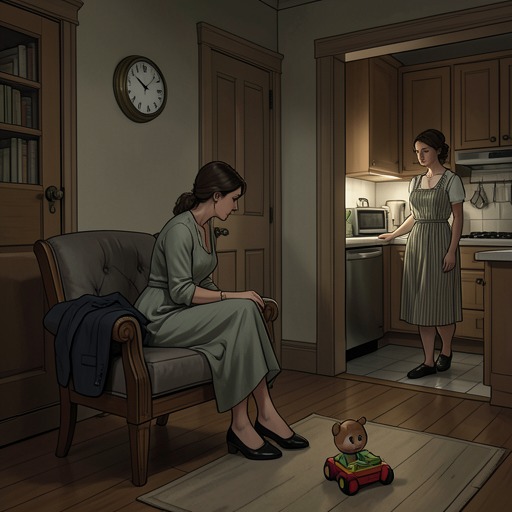
In-hye knows Mr. Cheong as sensitive and quick to frustration when circumstances do not go his way. She predicts that if she refuses him once more, he will probably not contact her for a long time. Even with that consequence in mind—or, as the narration emphasizes, because she knows it—she hangs up without answering. When the telephone rings again, she pulls out the cord. She reconnects it the following morning, but Mr. Cheong does not call again, just as she expected.
Her decision closes this particular attempt at contact without resolving the father–son relationship. Mr. Cheong asks to see Ji-woo, but the request passes through In-hye, who has the power to accept or refuse it; the child himself is not shown taking part in the call. The narrative does not establish whether Mr. Cheong later sees his son. Instead, it ends this episode on the absence of a second call and leaves the relationship’s future unconfirmed. Ji-woo’s daily question, first asked while his father was still around and repeated after he left, remains the clearest measure of their bond: a father exists by kinship, but his place in the child’s lived family is uncertain.