Yeong-hye
The VegetarianYeong-hye is the central character of The Vegetarian, a woman whose refusal to eat meat begins as a private decision and becomes a sustained conflict over who has authority over her body. The novel first presents her through her husband’s narrow assessment of her as unremarkable and convenient; across its three parts, that external view gives way to scenes in which her refusal is unmistakable, even when the people around her cannot understand or accept it.
Identity and Introduction
Before Yeong-hye becomes vegetarian, her husband considers her ordinary in nearly every respect. He recalls her middling height, short bobbed hair, sickly-looking complexion, prominent cheekbones, and plain black shoes, interpreting her quiet, unassuming appearance as evidence that she will fit easily into the life he has arranged for himself. His account reveals less about her character than about the terms on which he chose a wife: he values her lack of demands and the reassurance that she will not challenge his self-image or carefully ordered existence.
That account makes the marriage’s apparent ordinariness unstable from the outset. Her husband describes his preference for a middle course in school, work, and marriage, and presents his choice of Yeong-hye as an extension of that preference. Her later decisions therefore do not merely alter a household routine; they contradict the role he had assumed she would continue to occupy. Because the opening view belongs to him, Yeong-hye initially appears chiefly as the object of his evaluation, while the distance between his confidence in knowing her and her refusal to remain legible to him becomes part of her introduction.
The Decision to Refuse Meat
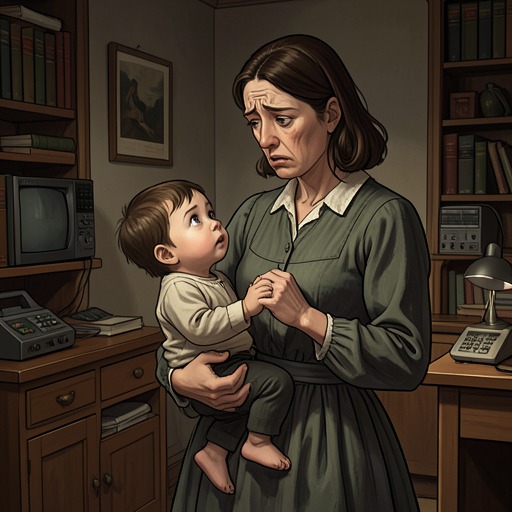
The first part of the novel connects Yeong-hye’s changed life to a dream she reports to her husband. Her brief statement that she has had a dream offers no explanation that he can use to make sense of what follows. The contrast is sharp: she names an experience that matters to her, while her husband responds with irritation and concern about the hour rather than curiosity about what the dream means. The dream marks a boundary between her inner experience and his wish for a comprehensible, manageable wife.
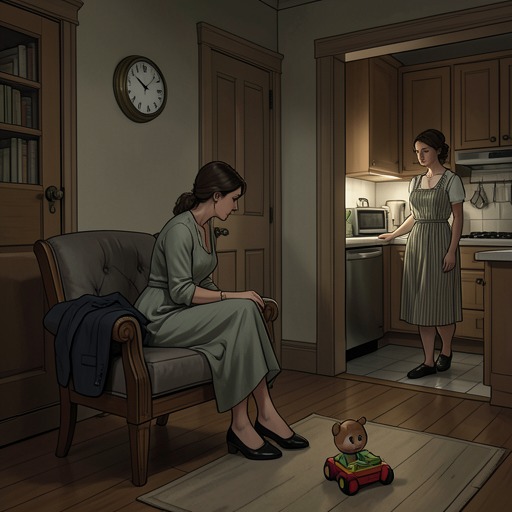
Her refusal soon becomes concrete in the kitchen. When her husband asks her to prepare fried eggs, she tells him that she has thrown the eggs out and adds that she has given up milk as well. These details show that the change is not confined to meat; it is reshaping the household’s food and the assumptions that have governed their daily life. Her husband has already found the freezer nearly empty, with only seasonings and minced garlic remaining, but he continues to treat the situation mainly as an inconvenience rather than as a reason to seek care.
The narrative also connects the change to an earlier moment involving frozen meat. Yeong-hye’s husband recalls that, before the dream, he was mincing meat when she became angry and called attention to what he was doing. He remembers his own agitation while handling the knife and his cut finger, but the episode does not give him a reliable explanation for her experience. Its importance lies in the contrast between his focus on his own composure and the meat that provokes the exchange: even as he narrates the incident, Yeong-hye’s reason for objecting remains outside his control.
Family Conflict and Confrontation
Yeong-hye’s refusal is tested directly at a family meal. Under pressure to eat, she answers clearly, “I won’t eat it.” The clarity of her speech matters: the people around her may regard her decision as a disorder or an affront, but in this moment she states it plainly. Her father and brother react angrily, while another family member tries to restrain the escalation. The scene turns a dietary refusal into an open struggle within the family, where authority is asserted against her choice rather than negotiated with her.
Her decision also takes her beyond the limits the family expects her to observe. During her hospitalization, her husband finds her sitting outside in the hospital garden after she has removed her gown. Her bandaged wrist is exposed, and the scene draws onlookers. When he opens her clenched hand, a small white-eye bird falls onto the bench; it has been injured and bears bloodstains. The episode joins her estrangement from ordinary expectations to an encounter with an animal, but it does not supply a clear explanation for what she has done. Instead, her husband and the watching patients see the crisis from the outside, as Yeong-hye’s own experience remains difficult to reach.
Relationships and the Limits of Others’ Knowledge
Yeong-hye’s marriage is shaped by a basic imbalance: her husband narrates and judges her, but his early confidence in her passivity leaves him poorly prepared to recognize her as a person whose choices may contradict his preferences. His account of the woman he married is therefore also an account of his own expectations. As Yeong-hye’s decisions disrupt his routine, he experiences her change as a disturbance to his life; that response exposes the gap between a compliant role he valued and the independent will he now encounters.
Her family likewise treats her refusal as something to overcome. At the meal, relatives press her to eat, and her father and brother answer her clear refusal with anger. Later, her sister visits her in the ward and asks what happened in the woods and why she will not eat other food either. Her sister’s questions express alarm and concern, but they also show the difficulty of reaching Yeong-hye through the explanations her relatives can offer. Yeong-hye asks for water and then asks whether her sister has spoken with the doctor. Even in this exchange, she does not provide the account her sister seeks; the conversation instead reveals the narrow, urgent terms on which they can meet.
Hospitalization and Narrative Significance
In the hospital, Yeong-hye’s refusal to eat has severe practical consequences. The staff report that she has stopped coming to the lobby for meals and refuses food brought to the ward. After four days without eating, she is dehydrated. Staff also describe difficulty administering medication because she resists attempts to provide treatment, and her doctor doubts that she has been taking the prescribed tablets. The account establishes the immediate medical stakes without resolving the deeper meaning of her actions.
The novel’s shifting perspectives keep that unresolved meaning in view. Yeong-hye is often observed, questioned, or described by other people; the first part’s husband interprets her through the disruption she causes, while later scenes make visible the limits of those interpretations. Her words and decisions remain consequential even when she does not explain them in terms others accept. Across the opening movement from dream to discarded food, family confrontation, and hospital refusal, the novel presents vegetarianism not as a passing preference but as the point at which a woman treated as compliant makes a choice that others cannot simply absorb into their routines.