Yeong-hye's body-art video
The VegetarianYeong-hye's body-art video is an artistic recording made by In-hye’s husband that transforms Yeong-hye’s painted body into an image of flowers, leaves, and green stems. It stands at the intersection of his artistic fixation and her vulnerable condition: the image may appear to leave ordinary human identity behind, but its making and aftermath cannot be separated from the harm and crisis surrounding her.
Origins and Artistic Fixation
In Part 2, the novel introduces the husband’s sustained preoccupation with an image of naked bodies painted with flowers. A performance poster showing flowers painted across men’s and women’s backs has obsessed him for almost a year, and seeing that another artist had conceived a similar image fills him with fear, excitement, and oppression. The body-art video develops within this fixation, turning floral imagery into a filmed encounter with Yeong-hye rather than leaving it on a theater poster or stage.
The project is linked to the small blue Mongolian mark on Yeong-hye’s body. In-hye later recognizes that her casual mention of the mark gave her husband an idea, though she could not have foreseen what it would lead to. Looking back, she judges his actions unforgivable and recalls that Yeong-hye was still ill and taking medication. The video’s artistic premise therefore originates not in an abstract image alone but in the husband’s attention to Yeong-hye’s body and in information In-hye had shared without anticipating its use.
Making and Immediate Aftermath
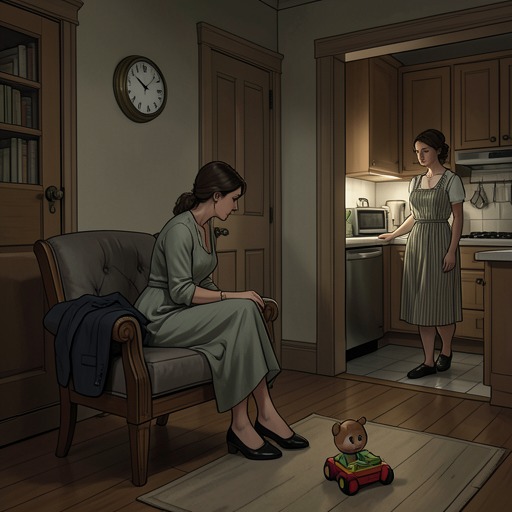
The video belongs to the events that culminate in an emergency at the couple’s flat. By the time paramedics arrive, Yeong-hye is in a precarious state, and the record of the scene shows her resisting attempts to take her into care. In-hye’s husband also tries to run onto the veranda and is restrained by a paramedic. In-hye watches the crisis unfold; when she and her husband look at each other, she sees only terror in his eyes, not a clear sign of regret or explanation.
The consequences are not confined to the images he has filmed. In-hye understands the episode as part of a chain in which Yeong-hye’s illness, her husband’s conduct, and the family’s earlier conflicts have converged. She wonders whether she could have stopped what happened, but concludes that she could not have known what her mention of the Mongolian mark would set in motion. Her later insistence that her husband’s actions were unforgivable distinguishes the existence of an artistic project from any justification of the circumstances around it.
Later Recollection and Meaning
In-hye’s later memory of the filmed bodies changes the emphasis of the image. She recalls two naked figures entwined like jungle creepers, covered with flowers, leaves, and twisting green stems. Though the sight shocked her at the time, she gradually came to think of it as less sexual: the painted bodies seemed altered, as if they no longer belonged to human beings and were trying to cast off the human. Her recollection records both the image’s strangeness and the shift in how she understands it over time.
The video thus holds together an artistic aspiration and an ethical rupture. In-hye wonders whether her husband had staked everything on the desolate images and lost everything, but her reflection does not erase the illness or the events that followed. The work’s floral transformation can be read as an effort to imagine escape from the human, while the narrative’s changing viewpoint keeps Yeong-hye’s body from becoming merely an image: it remains the site of a real crisis, seen first through another person’s artistic gaze and later through her sister’s troubled recollection.