Alethkar
The Way of KingsAlethkar is the kingdom whose divided political structure and martial culture provide the principal setting for the novel’s struggles over vengeance, legitimacy, and national unity. It appears both as a powerful realm capable of producing imposing armies and as a country weakened by the autonomy of its highprinces, the exploitation of soldiers, and the failure of its institutions to act as one.
Political Structure and the Fracture of Unity
Alethkar was once organized through a system in which each of the ten highprinces held a specialized responsibility for governing the kingdom. One authority concerned merchants and maintained patrols across the roads of all ten princedoms; another administered judges and magistrates. Gavilar Kholin regarded this arrangement as a clever mechanism that compelled the highprinces to submit to one another’s authority and cooperate. By the time of the war, however, Alethkar had fragmented into ten autonomous princedoms, and the former system had ceased to function as a practical instrument of common rule.
The kingdom’s political fragmentation is visible in the conduct of its military leaders. Dalinar Kholin argues that the highprinces are squabbling and ignoring the larger purpose of the war, treating the recovery of Gemhearts as a private competition rather than a national campaign. He concludes that Alethkar’s armies and their commanders must be turned into real soldiers under coordinated authority. His proposed remedy is to become Highprince of War, enforce the Alethi Codes in all ten camps, determine which armies attack which plateaus, and have every Gemheart won for the Throne before distributing it as spoil. The plan would convert loosely allied princedoms into a centrally directed war effort, but its very ambition exposes the danger: Elhokar Kholin fears that the highprinces will revolt and that the king will not survive the attempt.
Aristocratic and Military Culture
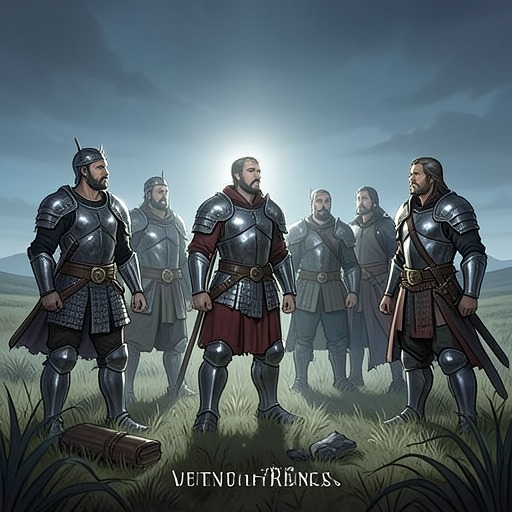
Alethkar’s ruling class projects a striking martial nobility. From Szeth-son-son-Vallano’s perspective, even drunk Alethi possess a natural dignity. Their men wear elaborately embroidered dark silk coats, with silver or gold ornamentation, and each appears suited to command on a battlefield. Alethi women wear brightly colored silk dresses, with the left sleeve longer than the right to cover the hand; their black hair is arranged in braids or piled constructions decorated with gold, gems, and Stormlight. The spectacle is beautiful to Szeth, but also profane, because sacred Stormlight is used for adornment and illumination rather than treated with the reverence he expects.
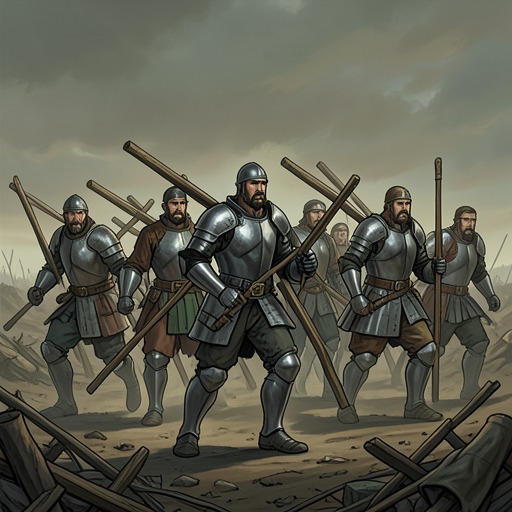
This aristocratic image is inseparable from the kingdom’s reliance on armed hierarchy. In a dispute over bridge crews, Dalinar invokes the Alethi Codes, which state that a general may not ask a man to do anything he would not do himself. He challenges Torol Sadeas to run at the front of the unarmored bridges he sends into battle, contrasting the danger imposed on common soldiers with the protection of Shardplate enjoyed by their commanders. The exchange reveals a conflict within Alethkar’s military ideology: the kingdom celebrates honor and personal courage while permitting systems that make expendable laborers bear the greatest risk.
The same contradiction governs the army’s treatment of recruits. When Amaram explains that the army must be replenished, he places responsibility on the citylord to decide which men will be sent, beginning with volunteers but reserving the right to compel others. Military necessity therefore travels through a formal chain of authority—from the army to the citylord and then to individual households—while the language of duty and honor disguises the coercion involved.
Law, Loyalty, and the Ethics of Command
Alethkar’s political order is sustained by several overlapping forms of authority: royal command, highprincely power, military practice, family obligation, and the Alethi Codes. Their conflict becomes clearest when Dalinar confronts Elhokar after the betrayal at the Tower. Dalinar refuses to treat Sadeas as uniquely monstrous, arguing that any highprince might betray his fellows if he could do so without endangering himself. The problem, in his judgment, is not one corrupt individual but a political system that rewards ruthless competition while allowing its participants to preserve an appearance of honor.
Dalinar’s response is consequently institutional rather than merely punitive. He intends to unite the highprinces in more than name, impose the Codes across all ten war camps, and place the distribution of military spoils under the Throne. His willingness to give his Plate to Renarin Kholin and his Blade to fulfill separate promises further presents authority as something that can be surrendered for a larger political purpose. Alethkar’s future, in this vision, depends on transforming personal prestige and inherited command into coordinated responsibility.
Yet loyalty remains intensely personal. When Elhokar calls for guards, Dalinar tells him that they will not come because they are Dalinar’s men, trained and stationed by him, and have orders not to enter under any circumstances—even if the king himself pleads for help. The moment makes the kingdom’s constitutional weakness physically immediate: the king occupies the throne, but armed loyalty may belong to the highprince who trained the soldiers and controls their orders.
Alethkar in a Wider World
Alethkar is not isolated from the other societies of Roshar. Szeth imagines its scholars developing new Shardblades and fears that such a breakthrough would allow Alethi influence to spread from Thaylenah to Jah Keved, until people across distant countries spoke Alethi to their children. His fear presents Alethkar as a potential hegemonic power whose military technology could become a tool of cultural and political domination.
The wider world also exposes the assumptions built into Alethkar’s social order. In Shinovar, warriors are considered the lowest men, while farmers receive lavish respect; in Babatharnam, authority belongs to the elderly, with the oldest ruler called the Most Ancient. These systems contrast sharply with Alethkar’s preference for warriors, nobles, and rule associated with eye color. The comparison makes Alethkar’s hierarchy appear neither universal nor inevitable, but one social arrangement among many competing models of status and governance.
Trade further connects Alethkar to distant regions. At the Purelake, Ishikk moves through shallow, transparent water carrying buckets of fish, while foreign merchants exchange goods across cultural boundaries. In another trading encounter, Vstim’s party presents a heavy crate of scrap metal to Thresh, who welcomes it as valuable merchandise even though it resembles garbage to Rysn. Such scenes place Alethkar within networks of commerce, translation, religious difference, and technological exchange rather than depicting it as a self-contained kingdom.
Historical Memory and National Reimagining
Alethkar’s present is shadowed by the loss of older political unity. The account of the ten specialized authorities recalls a time when the kingdom’s rulers were forced to cooperate, while the current autonomy of the princedoms represents a long decline from that arrangement. Dalinar’s plan to reunify the armies is therefore not simply a wartime reform; it is an attempt to recover a political principle that Alethkar once possessed and later abandoned.
That effort unfolds alongside the recovery of forgotten history elsewhere. Urithiru is described as the center of the Silver Kingdoms, a city with ten thrones for ten kings, but it was abandoned before the Lost Radiants turned against mankind and is now dismissed by most scholars as a myth. The survival of only fragmentary records, with The Way of Kings standing as the single complete early work preserved through Vanrial’s efforts, emphasizes how much of the world’s political past has been broken and obscured. Against this background, Alethkar’s crisis becomes part of a larger pattern: old structures have been forgotten, inherited institutions have lost their purpose, and the possibility of renewal depends on recovering what history concealed without simply reproducing its failures.