Darkeyes
The Way of KingsDarkeyes is a socially subordinate status in Roshar’s eye-color hierarchy, opposed to the privileged status of Lighteyes. Its decisive significance is institutional rather than merely physical: darkeyes may serve as guards, soldiers, servants, porters, merchants, or citizens, but their access to weapons, office, education, and social recognition is shaped by rank and by the presumption that light eyes authorize rule. The evidence also complicates that hierarchy. Darkeyes are not a single undifferentiated class, and the customs of other peoples make Alethi assumptions about eye color appear contingent rather than universal.
Definition and Social Position
Darkeyes occupy the lower side of Alethi social ordering, but the category contains internal distinctions. Kal’s family belongs to the second nahn, while most people in his town belong to the fourth or fifth, and that difference makes others uncomfortable around him. His father’s unusual profession intensifies the family’s sense of not fitting neatly into local expectations. The conversation about whether a “real darkeyes” can become a Lighteyes separates social promotion through marriage and wealth from the more radical possibility of a person born darkeyed changing status outright. The exchange therefore reveals both the existence of mobility at the margins and the strength of the boundary that makes such mobility seem extraordinary.
The hierarchy is also expressed through language and service. In the Conclave, a master-servant identifies Shallan Davar as a high-ranking darkeyed citizen of the second nahn, and his carefully formal manner reflects the refinement expected from someone whose occupation is itself a Calling. His rank gives him dignity and institutional access, but it does not erase the distinction between darkeyes and Lighteyes. The scene shows a system in which status is administered through titles, professions, etiquette, and religious ideas about one’s proper place in the afterlife.
Labor, Weapons, and Military Service
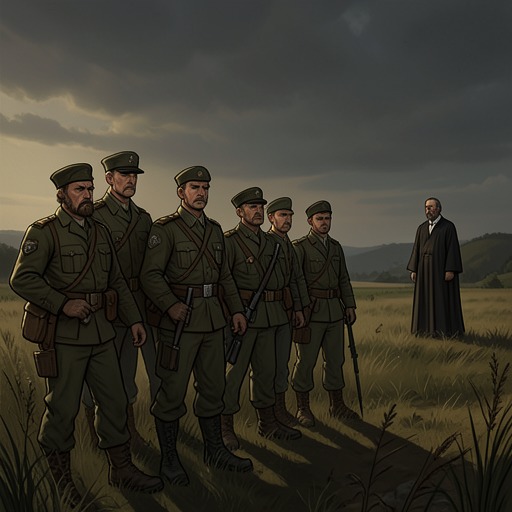
Darkeyes are central to Alethi military power while being denied the privileges associated with elite warfare. When Szeth-son-son-Vallano encounters the royal guard in Kholinar, the guards are darkeyed and therefore forbidden the sword. Their painted red breastplates and ornate helmets nevertheless mark them as high-ranking citizens with honored positions. Their service is respected, but the prohibition on swords makes the hierarchy visible in the weapons they are permitted to carry: they approach with spears, not blades.
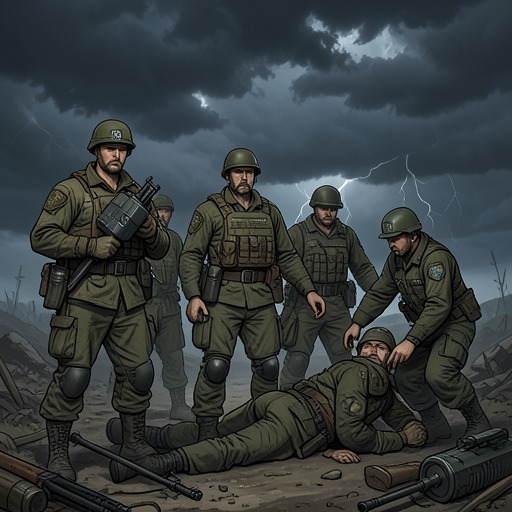
The same distinction governs the battlefield. Cenn’s equipment consists of a leather jerkin, a knee-length skirt, a simple steel cap, and a matching breastplate, while many Lighteyes wear full armor, ride horses, and gather honor guards around themselves. The visual contrast turns class into military geometry: darkeyed spearmen form the vulnerable mass of the army, whereas Lighteyed officers possess protection, mobility, and symbolic authority. Cenn’s terror deepens when he considers the possibility of facing a Shardbearer, since ordinary men almost never kill such opponents and each rare victory becomes legendary. His fear is not presented as a private weakness alone; it arises within a battlefield arranged to expose darkeyed bodies to danger.
Kaladin’s history further illustrates how military service can coexist with civic identity and vulnerability. He describes himself as having served in Amaram’s army and as a citizen of the second nahn. The wording places him within both categories at once: he has the standing of a citizen, yet his darkeyed status remains immediately relevant when others assess his background. The military can use darkeyes as soldiers, but service does not automatically dissolve the social order that made them subordinate.
Comparison with Other Social Orders
The status of Darkeyes becomes clearer when contrasted with societies that assign value according to different principles. Vstim explains that among the Shin, warriors are treated as the lowest of men, almost like slaves, and anyone who takes up a weapon enters that condition. Farmers, by contrast, receive lavish respect, including the landowning farmer who works the fields himself. This arrangement reverses the Alethi tendency to associate martial authority with prestige. The comparison shows that neither soldiering nor farming carries an inherent social meaning; each society turns its preferred labor into a hierarchy.
Sigzil’s account of Babatharnam offers another contrast. There, authority is assigned through age: the elderly receive office, and the older a person becomes, the more power that person holds, with the king called the Most Ancient. Moash explicitly compares this system favorably with rule based on eye color. The comparison does not abolish the Alethi hierarchy, but it exposes its arbitrariness by placing it beside a political order that uses a different bodily or temporal marker to distribute authority.
The wider world also challenges Alethi assumptions through customs surrounding foreigners, religion, and trade. At the Purelake, Ishikk follows local rules about dress and invokes Nu Ralik as a god whose name is treated as sacred and not to be spoken casually. In Sesemalex Dar, foreigners cannot own homes or shops but are welcomed as traveling relatives if they show respect and offer fruit. These practices do not directly replace the Darkeyes system, yet they establish a recurring pattern: status is made by local institutions, and what seems natural in one culture may look strange or even foolish in another.
Political Consequences and Narrative Significance
Darkeyes are part of the social machinery that makes Alethi warfare possible, while decisions about war remain concentrated among Lighteyed rulers. Dalinar Kholin condemns the highprinces for squabbling over Gemhearts and proposes to unite them by placing the war under coordinated command. He intends to enforce the Codes in all ten camps, determine which armies attack which plateaus, and have all Gemhearts won for the Throne before distributing them as spoils. His plan would reorganize the military competition that consumes darkeyed soldiers, but the evidence also shows its limits: the proposed reform concerns the control of armies by the highprinces and the king, not the abolition of the eye-color hierarchy itself.
The term Darkeyes therefore names both a population and a political contradiction. Darkeyes can be honored guards, citizens of relatively high nahn, trained soldiers, skilled workers, and indispensable participants in trade and administration, yet their opportunities remain framed by rules that reserve particular weapons and forms of authority for Lighteyes. The status links everyday etiquette to battlefield risk and national government. Its narrative force lies in that tension: the society depends on darkeyed competence while treating darkeyed subordination as ordinary, and the presence of alternative social orders quietly demonstrates that this arrangement is constructed rather than inevitable.