First Ideal
The Way of KingsThe First Ideal is the common opening oath of the Immortal Words and the ethical foundation of the Knights Radiant. Expressed as “Life before death. Strength before weakness. Journey before destination,” it is presented not as a chronological platitude but as a demanding rule of conduct: Radiants must value living beings before mortality, cultivate strength rather than surrender to weakness, and honor the process of becoming rather than treating the destination as the only measure of worth.
Origin and Form
The First Ideal is identified as part of the motto once used by the Lost Radiants. Sigzil explains that the wording was their motto, or at least part of it, and recites its three balanced clauses to Kaladin. The compact structure gives the Ideal the character of both a creed and a mnemonic: each phrase places a positive value before its negation, creating a sequence that can be remembered, repeated, and used as a standard against which conduct is judged.
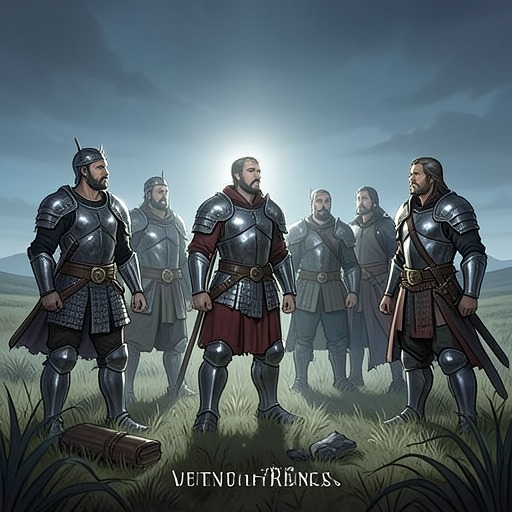
The oath belongs to the Immortal Words, the body of Ideals that guided the Radiants’ way of life. Teft distinguishes Radiance from the mere ability to infuse and command Stormlight. Power alone does not make a Radiant; the order’s identity also depends on the things its members do and the principles by which they live. In that account, the First Ideal is the beginning of a larger discipline rather than a complete code. Four later Ideals existed, but the later vows differed among the ten Radiant orders, while the First Ideal remained the same for all of them.
Meaning and Practice
The First Ideal joins three kinds of priority. “Life before death” directs attention toward preservation and moral urgency: life is not to be treated as disposable simply because death is inevitable. “Strength before weakness” establishes strength as an obligation or aspiration, opposing passive surrender rather than denying that weakness exists. “Journey before destination” shifts value from a final achievement to the choices and transformation that occur while pursuing it. Together, the clauses make the Ideal less a prediction about the order of events than a hierarchy of commitments.
Its meaning is initially vulnerable to misunderstanding. Kaladin treats the first clause as obvious in the narrow sense that life necessarily comes before death, comparing it to day before night and one before two. Teft objects that Kaladin is not taking the matter seriously, revealing the gap between grammatical sequence and ethical interpretation. The Ideal’s force lies precisely in that gap: its words sound simple enough to invite literalism, yet their function is to govern a person’s way of life.
Place in Radiant Identity
The First Ideal separates a Radiant from a person who merely possesses supernatural ability. Teft states that a person may draw in Stormlight and command it, but being a Radiant requires more than that capacity. The Immortal Words guide everything the Radiants do, making oath-bound behavior inseparable from power. The Ideal therefore operates simultaneously as initiation, moral boundary, and interpretive key: it explains what Radiant abilities are supposed to serve and why command of Stormlight alone is insufficient.
Because every one of the ten orders shared the First Ideal, it provides a common foundation beneath their later differences. The order-specific Ideals may have directed different forms of service, but the opening commitment linked them to one conception of Radiant life. The oath thus supplies continuity between otherwise distinct traditions and becomes one of the clearest surviving statements of what the Lost Radiants believed their power was for.
Renewal and Consequences
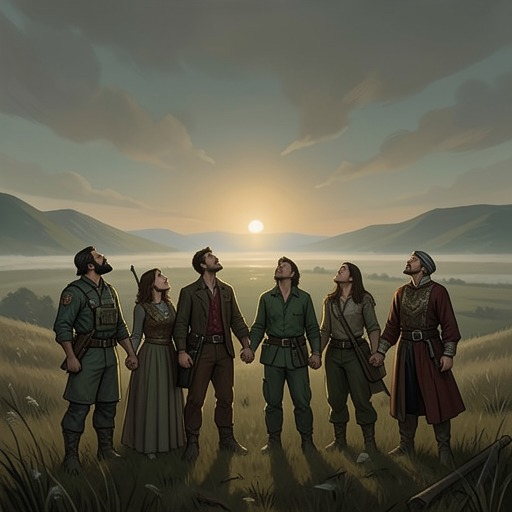
The First Ideal returns at a moment when the restoration of the Knights Radiant is being demanded. A mysterious figure speaks the three clauses while addressing Dalinar and then calls for the ancient oaths to be spoken again and for humanity to regain the Shards once carried by the Radiants. The familiar motto is therefore reframed as an imperative of renewal: the old words are not relics to be admired, but vows that must be recovered if the Knights Radiant are to stand again.
Dalinar admits that he cannot comprehend how such a restoration can be achieved, yet he promises to try. The Ideal consequently marks a change from historical recollection to present responsibility. Its language points backward to the Lost Radiants while placing a demand upon those living now. The appeal also acquires a collective dimension: the figure warns that people must face their enemies together, since division may allow their adversary to prevail without direct confrontation. In this context, “Journey before destination” carries particular weight, because the work of rebuilding trust and unity becomes part of the oath’s meaning rather than an obstacle to be ignored in pursuit of victory.
The First Ideal finally gathers the book’s contrast between power and character into one repeated formula. It begins as remembered doctrine, is challenged by a literal reading, is explained as the foundation of Radiant conduct, and ends as part of a call to restore a broken order. Its three priorities make the oath both concise and expansive: it governs how a Radiant understands life, weakness, progress, power, and the collective future of the Knights Radiant.