Kharbranth
The Way of KingsKharbranth, known as the City of Bells, is a vast coastal city built up the side of a steep incline. Its wedge-shaped form opens toward the ocean, while bright, blocky buildings rise toward a lofty rim and bells ring in the wind. Across the narrative, Kharbranth serves as both a destination of intellectual discovery and a threshold through which travelers, merchants, servants, and dangerous secrets enter the wider world.
Setting and Appearance
Kharbranth first appears through Shallan Davar’s astonished arrival by ship. The city is so large that she struggles to take in its scale: thousands or tens of thousands of inhabitants seem possible beneath the upper rim, and the whole settlement resembles a mountain towering above the harbor. Its buildings have square windows and walls that appear to be made from mud or daub, perhaps mixed with crem, yet they are painted predominantly in reds and oranges, with occasional blues and yellows. The city’s visual impression is therefore both massive and vivid, combining rough construction with deliberate color.
The bells give Kharbranth its defining sound. They tinkle and ring with what Shallan perceives as pure voices, making the city recognizable before its full shape has even been absorbed. This sound joins the steep streets, crowded walkways, and ocean-facing harbor into a setting that feels simultaneously elevated and difficult to navigate. The city’s physical form turns arrival into an ascent, while its bells make that ascent part of a public, urban rhythm.
Port, Institutions, and Economy
Kharbranth is sustained by more than its waterfront trade. The city’s king requires a thousand sapphire broams for a chit of admittance, with the stated justification that the king’s many hospitals require extensive upkeep. The price places entry behind a formidable economic barrier, but it also identifies the city as a center whose wealth is directed toward organized medical care. Kharbranth’s civic identity is therefore tied not only to commerce and spectacle but to the maintenance of hospitals.
The city’s own account of what it sells is pointedly limited: fish, bells, and information. Fish and bells are described as hardly unique, whereas information becomes Kharbranth’s exceptional resource. The Palanaeum contains more than seven hundred thousand separate texts, exceeding even the collection of the Holy Enclave in Valath. This archive makes Kharbranth a repository for the intellectual history of Roshar and explains why the city attracts people whose ambitions depend on books, records, and forbidden knowledge.
Its harbor also makes Kharbranth a practical point of connection. Shallan arrives aboard The Wind’s pleasure, a narrow single-masted vessel that has traveled cautiously along the coast, sheltering in coves during highstorms. The ship’s modest size contrasts with the city’s enormous vertical scale: a small craft and a handful of passengers are absorbed into a metropolis whose population and archive seem almost immeasurable.
Travelers and Encounters
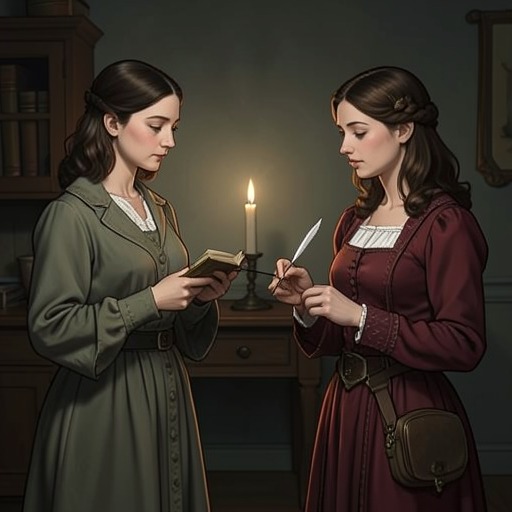
Kharbranth gathers people moving for radically different purposes. Shallan reaches it in pursuit of learning and in defiance of the life she had expected to lead. She had imagined remaining secluded in her family’s manor, escaping only through her father’s library, then marrying one of her father’s allies and living in another manor. Kharbranth becomes the physical evidence that those expectations can be abandoned; travel turns the imagined world of books into an actual city that must be climbed, observed, and remembered.
The city also receives Ishikk, a fisherman of the Purelake, whose journey begins from a very different social and geographic world. He splashes toward a meeting with strange foreigners carrying buckets on a pole across the shallow waters of the Purelake, then moves toward an encounter shaped by the city’s wider networks. His arrival links Kharbranth to the Purelake’s fishing economy, local religious customs, and the uncertain exchange of information across distant regions.
Szeth-son-son-Vallano enters Kharbranth under concealment and humiliation. In the City of Bells, he carries a sack of grain from a ship to the docks and joins the other porters, keeping his eyes down both to resemble a worker and to avoid the sun that he believes watches his shame. The crowded, steep streets make porters more efficient than a chull cart, so the same urban conditions that facilitate ordinary labor also provide cover for a dangerous figure. Kharbranth is peaceful and excited on Szeth’s arrival, with fishermen calling to one another as they prepare their nets, but his presence gives that peaceful harbor a concealed menace.
Narrative Significance
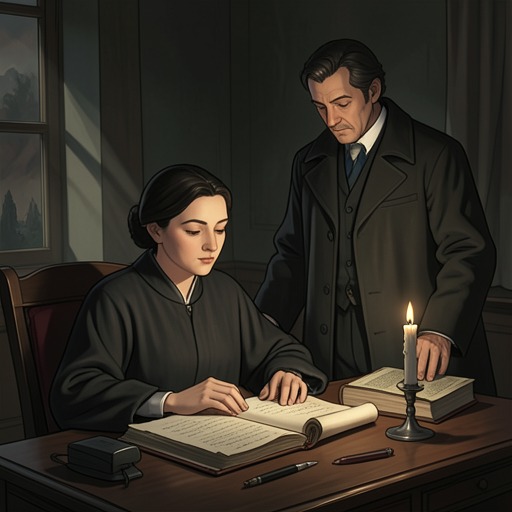
Kharbranth functions as a threshold between isolation and connection. For Shallan, it is the first overwhelming reality of a journey she had only imagined through books. For the Palanaeum, it is a center where knowledge has been accumulated on a scale that transforms information into a civic commodity. For visitors from the Purelake and other distant regions, it is a meeting place where unfamiliar customs, languages, religions, and intentions can come into contact.
The city’s openness is inseparable from its barriers. Ships can reach its harbor, and crowded streets allow workers and strangers to circulate, yet admission is expensive, the ascent is physically demanding, and access to the archive is treated as a privilege worth a thousand sapphire broams. That tension makes Kharbranth more than a picturesque setting. It is a place where movement, knowledge, healing, and secrecy are all organized through institutions, prices, and controlled entry.
Its recurring significance lies in the contrast between what the city displays and what it conceals. Bells announce its presence, bright buildings expose its scale, and hospitals and the Palanaeum proclaim its public purposes. At the same time, the city receives strangers whose real objectives are not immediately visible, including Szeth-son-son-Vallano in the guise of a porter. Kharbranth thus becomes a city of audible welcome and hidden consequence: a place whose openness allows revelation while its crowds and steep passages make concealment possible.