Lighteyes and darkeyes hierarchy
The Way of KingsThe Lighteyes and darkeyes hierarchy is the defining system of social stratification in Alethkar. Eye color marks inherited rank: lighteyes occupy authority and prestige, while darkeyes are placed in graded lower nahns and are generally expected to serve. The system presents itself as an ordered society in which advancement is possible, but its military and administrative practices reveal how deeply it treats some lives as more valuable than others.
Structure and Social Meaning
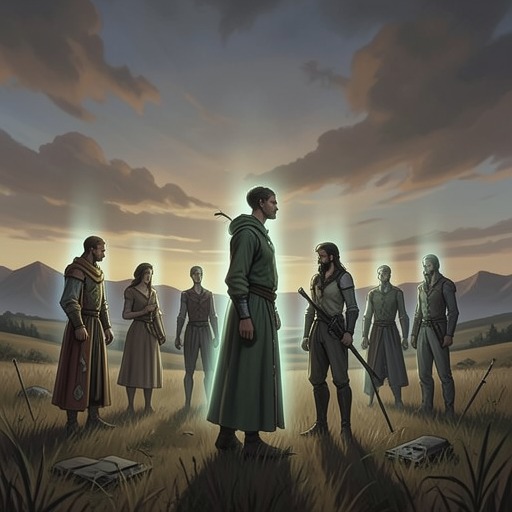
The hierarchy is visible in dress, manners, speech, and access to institutions. Alethi lighteyes are presented as naturally noble in bearing, with men in embroidered dark silk coats and women in brightly colored silk dresses whose covered left hands conform to propriety. Their black hair may be decorated with gold, gems, and Stormlight, combining beauty with visible wealth. This aesthetic distinction makes rank appear almost natural, as though status were written into the body and confirmed by public display.
Darkeyes are not a single undifferentiated class. The master-servant who receives Shallan Davar at the Conclave is a darkeyed citizen of the second nahn, a rank high enough to command refined service and move confidently within an institution dominated by lighteyes. His crisp clothing, formal bow, and professional pride show that the hierarchy contains intermediate positions rather than only a simple division between rulers and subjects. Vorin belief further links social placement to a person's Calling: choosing a worthy profession and working diligently are understood to influence one's place in the afterlife, while the devotary associated with worship may reflect that occupation.
The system also shapes language. The master-servant addresses Shallan Davar in her native Veden, apparently recognizing her origin from her hair color, and speaks with the formal title Brightness. Elsewhere, a name itself becomes a measure of identity and social difference. Rock questions how a person can know who they are if their name has no meaning, criticizing lowlanders through an assumption that language should reveal communal belonging. Such moments show that hierarchy is reinforced not only by law or wealth but also by titles, speech, naming, and ritual forms of respect.
Mobility and Its Limits
Alethi society teaches that even a darkeyes can rise. In Hearthstone, Kaladin Stormblessed explains that a wealthy darkeyed merchant might marry into a lowborn lighteyes family, join that family, and have lighteyed children. The more dramatic route is military: a man who wins a Shardblade is said to gain light eyes, and even a slave could supposedly become a lighteyes by winning one. This possibility is described as a fundamental tenet of society and one of the chief reasons common men go to war.
Yet the boys discussing this promise immediately expose its weakness. They do not want stories about marriage or inherited children; they ask whether a genuinely darkeyed person has ever become a lighteyes in real life. Kaladin Stormblessed answers that it must happen, because otherwise so many men would have no reason to fight, but the exchange leaves the claim suspended between faith and evidence. The hierarchy therefore legitimizes itself through an image of open opportunity even while ordinary experience offers little proof that the promised transformation occurs.
The contrast is sharpened by comparisons with other societies. Sigzil describes Babatharnam as a place where elderly people receive office and authority increases with age; Moash immediately considers that arrangement fairer than deciding rule by eye color. A separate account of Shinovar reverses Alethi values even more dramatically: warriors are treated as the lowest people, almost like slaves, while farmers receive lavish respect. The comparisons do not erase the internal complexity of these cultures, but they make clear that Alethi rank is a social choice rather than an inevitable ordering of human worth.
Military Power and the Valuation of Lives
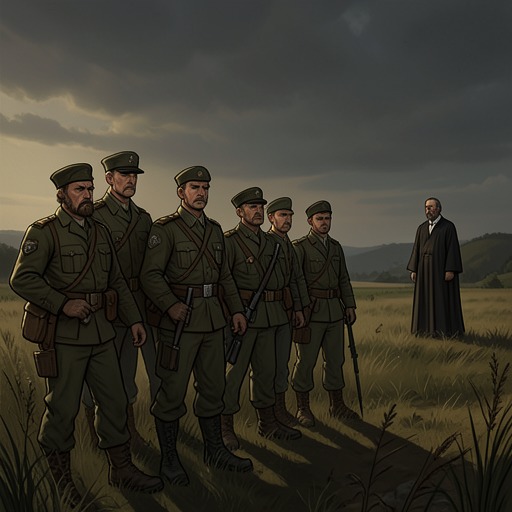
The hierarchy becomes most brutal in war. Dalinar Kholin invokes the Alethi Codes, which state that a general must not ask a man to do anything he would not do himself. He challenges Torol Sadeas over the use of unarmored bridge crews, asking whether Sadeas would run at the front of the bridges without Plate. Sadeas answers by treating the question as irrelevant: he does not even perform other kinds of labor, and the bridge crews exist to draw Parshendi fire away from soldiers and horses.
Torol Sadeas has designed the system around expendability. He doubles the number of bridges and makes them extremely light by removing armor and shields, reasoning that the Parshendi will be tempted to fire on the exposed bridgemen rather than on more valuable troops. The loss of several crews during an assault is acceptable so long as it does not hinder the army. His explanation makes the hierarchy's underlying arithmetic explicit: a darkeyed bridgeman is not considered equal in military value to a mounted knight in Shardplate.
The same principle appears within the bridge crews themselves. When Kaladin Stormblessed's men are described as insubordinate, Lamaril states that bridgemen exist for one purpose: protecting the lives of more valuable men. Obedience is not the real measure of their worth; their prescribed function is to absorb danger for those above them. The chain of command converts a moral decision into an administrative one, allowing officers to speak of speed, efficiency, and battlefield results while responsibility for death is transferred downward onto darkeyed bodies.
Governance, Rank, and Reform
The division between eye colors also contributes to the fragmentation of Alethkar. Dalinar Kholin recalls that the ten highprinces once held specialized responsibilities for the kingdom, such as regulating merchants or administering judges and magistrates. Gavilar Kholin admired this arrangement because it forced the highprinces to work together, but the system had disappeared as Alethkar divided into ten autonomous princedoms.
Dalinar Kholin's political response is not to abolish rank but to reorganize its power. After recognizing that the highprinces would betray one another whenever they could do so without personal risk, he plans to become Highprince of War, enforce the Codes in all ten camps, coordinate plateau assaults, and place the gemhearts under the authority of the Throne for distribution as spoils. His aim is to turn ten competing armies and their leaders into a real army. The proposal uses the existing hierarchy and military offices to challenge the disorder and selfishness that the hierarchy has enabled.
This reform carries a sharp irony. Dalinar Kholin opposes the waste of bridgemen and invokes a code requiring commanders to share the risks they impose, yet his immediate plan is still a centralized military structure headed by highprinces and the king. The evidence therefore presents reform as a struggle over how hierarchy should be exercised, not as a simple replacement of hierarchy with equality. The question is whether authority can be made responsible to those beneath it.
Contradictions and Narrative Significance
The hierarchy binds together apparently unrelated details: the formal service of a second-nahn darkeyes, the belief that a Shardblade can transform eye color, the use of bridgemen as living shields, and the political authority of lighteyed highprinces. It is both a social identity and a practical system for distributing danger, labor, and legitimacy. Even religious ideas about Calling and the afterlife help stabilize it by presenting one's assigned work as morally meaningful.
At the same time, the narrative places the hierarchy beside competing models of worth. Babatharnam grants authority through age, Shinovar honors farmers over warriors, and the Alethi Codes formally insist that generals should accept the same dangers they impose on soldiers. These alternatives expose the gap between inherited status and earned responsibility. The hierarchy survives because it is reinforced by custom, military necessity, religious interpretation, and the seductive promise that anyone might rise, but its most revealing moments occur when characters calculate whose life can be sacrificed and whose must be protected.