Nan Balat Davar
The Way of KingsNan Balat Davar is a member of the Davar family and one of Shallan Davar’s brothers. His significance lies less in public power than in the pressure he embodies inside the household: he is crippled by an old injury, drawn to killing animals as a private release, and forced to manage the consequences of his dead father’s hidden ambitions. Through his messages to Shallan Davar, he turns the family’s financial crisis into evidence of a much larger danger involving the Soulcaster, powerful sponsors, and an attempted bid for highprince.
Identity and Condition
Nan Balat Davar is twenty-three years old and already walks with a cane. His leg was broken so badly that the surgeon nearly amputated it; although the limb was saved, the injury left him with a constant latent ache and made even the ordinary act of descending the household steps laborious. His physical condition is therefore not a passing mark of vulnerability. It governs how he moves through the Davar estate and gives his scenes a persistent sense of effort, pain, and frustrated youth.
Balat’s emotional life is equally marked by violence. He likes killing things, though he draws a strict boundary at human beings. Animals, especially small ones, provide an outlet that he does not fully understand: killing them makes him feel better, even though he cannot explain why. The distinction between people and animals preserves a moral limit, but it does not make the impulse harmless. His pleasure in small deaths reveals a damaged interior life in which pain has been redirected toward creatures weaker than himself.
Life at the Davar Estate
Nearly six months after Shallan Davar left the family estates, Balat remains behind amid the household’s deterioration. The setting around him is richly alive: the gardens of Jah Keved are enclosed by stone walls and overwhelmed by vines, while distant songlings produce irregular sounds that answer one another without forming human melodies. Balat notices this environment while leaning on his cane and moving through it with difficulty, but the gardens are associated most strongly with Shallan, who had been the only family member to appreciate their beauty fully.
His life changes when a spanreed message confirms that Shallan Davar has succeeded in the first stage of her plan and become Jasnah Kholin’s ward. The news carries an extraordinary contradiction. Shallan had never previously left the estates, yet she is now preparing to rob the most important woman in the world. Balat is thus connected to a transformation he cannot witness directly: his younger sister has crossed from sheltered family life into a dangerous operation involving Jasnah Kholin and her Soulcaster.
Family Secrets and the Soulcaster
Balat becomes the family member who communicates the most alarming turn in their circumstances. While Shallan Davar is corresponding from her austere underground room in the Kharbranthian Conclave, Balat sends word that Luesh, their father’s steward, has died in his sleep. Luesh had known how to operate the Soulcaster and had been one of the few people the siblings considered trustworthy. His death removes both a practical resource and a protective witness.
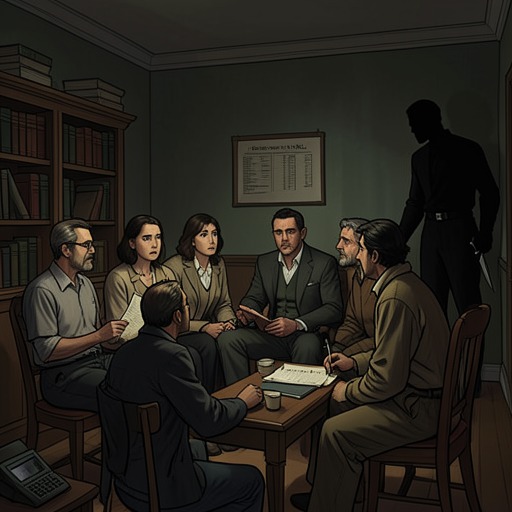
The danger becomes explicit after Luesh’s death, when men claiming to have been friends of the Davar patriarch visit the estate. In private, they imply that they know about the Soulcaster and strongly demand its return. Balat describes them as dangerous men whom the family cannot safely oppose. Their appearance confirms that the Soulcaster was not merely an unexplained possession inherited from their father; it was an object connected to outside forces that still expected payment or recovery.
Balat also reveals that the family never discovered where their father obtained the Soulcaster. He links that mystery to maps, statements made by Luesh, and letters from other lighteyes that refer vaguely to plans. From these clues, he concludes that their father had been involved in something substantial and may have intended to make a bid for the position of highprince. The plan, as Balat understands it, was supported by powerful forces that supplied the Soulcaster so the Davar household could create wealth and strengthen its claim to succession.
His proposed solution is desperate but practical. Shallan Davar must bring Jasnah Kholin’s working fabrial back to the family, allowing them to produce new quarries of valuable stone and then surrender the device to the men demanding it. Balat had initially been hesitant about Shallan’s plan, but the family’s remaining options are disappearing. His message transforms her theft from a private act of ambition or deception into an emergency intended to keep the household alive.
Relationship with Shallan Davar
Balat’s relationship with Shallan Davar is defined by dependence, secrecy, and an inversion of ordinary protection. Shallan is the youngest sibling and had never left the estates before undertaking her plan, yet Balat relies on her to obtain the very object that may determine the family’s survival. His warning is not simply an account of household news; it is an appeal that places the burden of rescue on a sister who is already operating under Jasnah Kholin’s scrutiny.
At the same time, Balat protects Shallan through controlled disclosure. He sends the message after dismissing the others, leaving only Eylita and himself involved in the exchange. This decision makes the spanreed correspondence a private channel for family crisis. He tells Shallan about Luesh’s death, the threatening visitors, and their father’s possible political conspiracy because distance has made her the only person who can act, but the information also binds her more tightly to the dangerous secret she is trying to manage.
The later discovery of the symbol of three overlapping diamonds confirms the pattern Balat had described. The mark is associated with Luesh, the men who pressured the family to return the Soulcaster, and the forces that financed their father’s bid to become highprince. When Shallan Davar recognizes the symbol, she concludes that her father may have belonged to the group. Balat’s earlier suspicions therefore become the foundation for a revelation that reaches beyond family crime into organized political intrigue.
Narrative Function and Consequences
Balat Davar functions as an offstage pressure point in Shallan Davar’s storyline. He does not accompany her into Kharbranth or directly confront Jasnah Kholin, but his messages carry the collapsing estate into Shallan’s new life. The spanreed makes family danger portable: the underground chamber, the locked Soulcaster, and the scholarly world around Jasnah are repeatedly interrupted by news from the vines and stonework of the Davar home.
His testimony also reinterprets the family’s past. The father’s death, the missing explanation for the Soulcaster, Luesh’s knowledge, the maps, the letters, and the visitors are no longer separate oddities. Together they suggest an attempted ascent toward highprince backed by powerful allies, followed by a demand that the family return the instrument that made such ambition possible. Balat’s importance lies in this act of connection. He turns scattered household details into a coherent threat, even while his physical pain and compulsive violence show that the family crisis has already marked its survivors from within.