Szeth–Taravangian relationship
The Way of KingsThe Szeth–Taravangian relationship is a master-and-servant bond disguised as a mystery. Szeth believes he is obeying an unseen master through the commands attached to his Oathstone, while Taravangian has arranged the murders from behind the appearance of vulnerability. The relationship therefore joins absolute obedience to calculated political concealment: Szeth bears the visible guilt, but Taravangian determines where that guilt will be directed and claims responsibility for the larger purpose behind it.
Hidden Master and Bound Assassin
Szeth’s identity as Truthless makes the relationship possible. He describes his condition as a punishment: he must kill, has no choice in the matter, and must still bear the sins of what he does. Taravangian recognizes the contradiction in that identity. Szeth is called Truthless, yet his suffering and experience have taught him truths that others do not understand. The king presents Szeth’s imposed guilt as a form of knowledge, telling him that he bears great sins for his people and therefore possesses a kind of truth.
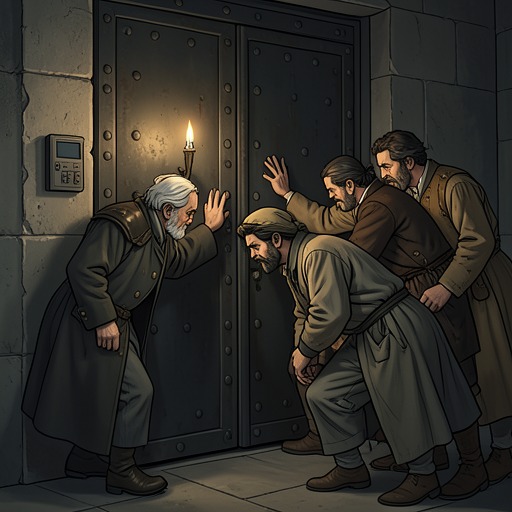
That conversation changes Szeth’s understanding of the power controlling him. When Taravangian reaches into his sleeve and withdraws a glittering rock, Szeth realizes that the king was always the unseen master. The object is not merely evidence but the instrument of command: Taravangian sets Szeth’s Oathstone on the ground between them. The physical placement makes the hidden hierarchy visible. What had seemed like an external obligation is revealed as a human arrangement, maintained by the king’s deliberate manipulation.
Deception as Political Method
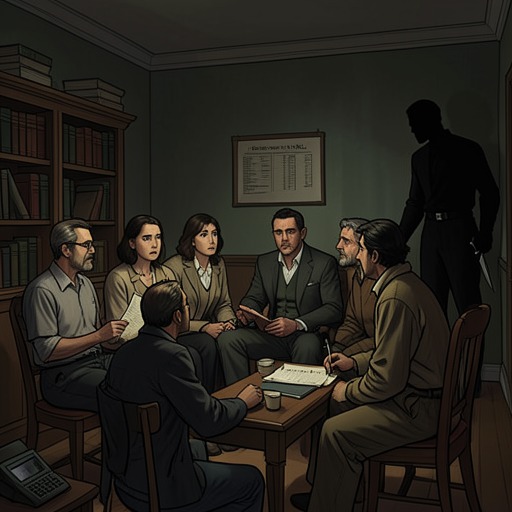
Taravangian has protected himself by placing his own name on the list of targets. He explains that, if captured, he would be grouped with the victims, since appearing among those threatened is the best defense against suspicion. This strategy makes Szeth’s violence serve two purposes at once. The assassinations remove selected people, while the inclusion of Taravangian’s name creates evidence that the king is not directing the campaign.
The deception is especially cruel because Taravangian accepts the possibility that Szeth might kill him. The instructions were explicit, and Taravangian knows that Szeth is exceptionally good at following instructions. The king therefore preserves his cover even at the cost of placing his own life within the assassin’s reach; once the confrontation occurs, he simply issues an order that Szeth must not harm him. The exchange demonstrates that the Oathstone’s authority remains operative even after Szeth discovers the master behind it.
Taravangian’s control is not presented as a simple relationship between a passive servant and an untroubled commander. Szeth is left in a storm of emotion when he understands that the apparently kind and contemplative king sent him to produce the screams and deaths surrounding them. Taravangian admits that some of the murdered guards were his dear friends. His statement does not undo the violence, but it establishes that he treats personal loss as a cost of his political design rather than as a reason to abandon it.
Two Justifications for Violence
Szeth asks whether vengeance motivated the killings, but Taravangian rejects that explanation. His motive is instead framed as protection against a catastrophe he believes is approaching. In the same setting, dying people speak strange words that are recorded by attendants. A dying youth cries that the day was taken, that the lights fail, and invokes the Stormfather before falling still. Taravangian explains that such utterances began seven years earlier, around the time King Gavilar first investigated the Shattered Plains, and that the dying appear to see something while standing between life and death.
This knowledge gives Taravangian a larger justification for commanding Szeth. He believes the words of the dying may save the people from destruction, and he asks whether it is better for one man to sin than for an entire people to be destroyed. The question converts murder into a claimed act of collective preservation. Szeth refuses that conversion, calling Taravangian a monster. Taravangian accepts the accusation without qualification: he declares himself the monster who will save the world.
The contrast between them is consequently ethical as well as practical. Szeth experiences killing as an imposed punishment and bears the sins despite his lack of choice. Taravangian treats killing as an instrument that can be measured against a projected future disaster. One is trapped inside obedience; the other claims the authority to define which deaths are acceptable. Their relationship exposes the danger of a salvation justified entirely by outcomes, because the king’s assertion that he will save the world does not lessen the immediate reality of the suffering he has ordered.
The Order Against Dalinar Kholin
The relationship reaches a decisive new stage when Taravangian adds Dalinar Kholin to Szeth’s list. He says that he had hoped to avoid this step, but recent events have made it inevitable because Dalinar Kholin might seize control and unite the Alethi highprinces. Taravangian therefore identifies political unity itself as a threat to his plan and orders Szeth to travel to the Shattered Plains to end Dalinar Kholin.
The instruction is not a vague threat or a suggestion. It is a direct activation of the master-servant bond, delivered after the king has revealed his identity as the unseen author of Szeth’s previous missions. Taravangian further insists that the assassination must be carried out brutally and quickly. The urgency connects the order to his fear that Dalinar Kholin’s influence will consolidate before Taravangian can prevent it, while the demand for brutality shows that the relationship’s final expression remains the same as its foundation: command translated into bodily violence.
Narrative and Moral Significance
The relationship is built around a reversal of appearances. Taravangian’s white beard, wise face, and apparently kindly manner initially encourage Szeth to misjudge him, but the revelation makes those signs of benevolence part of the dramatic contrast. The king’s gentleness coexists with the management of assassinations, the sacrifice of friends, and the attempted destruction of Dalinar Kholin. Szeth’s discovery does not free him; instead, it makes the machinery of his bondage more terrible by giving it a recognizable human face.
Their bond also turns the Oathstone into a symbol of distributed responsibility. Szeth performs the murders and suffers their moral weight, while Taravangian writes the names, engineers the circumstances, and explains the necessity. Neither side can be reduced to the other: Szeth’s obedience enables the campaign, but Taravangian’s political reasoning gives it direction. The relationship’s central tragedy lies in that division. The servant is denied meaningful choice, yet remains the hand that kills; the master claims to act for the world, yet repeatedly chooses to make individuals bear the cost.
By the end of the revealed exchange, Taravangian is no longer merely Szeth’s hidden commander. He becomes the architect of a wider strategy in which foreknowledge, deception, dying testimony, and assassination are made to serve one imagined defense of the world. Szeth’s horror marks the point at which obedience encounters recognition: the unseen master is seen, the Oathstone’s authority is explained, and the next command places Dalinar Kholin directly in the path of the king’s moral calculus.