Tien
The Way of KingsTien is Kaladin Stormblessed’s younger brother and one of the most important figures in Kaladin’s remembered childhood. Though he is repeatedly described as small for his age, Tien possesses an expansive curiosity: he notices what others dismiss, finds interest in ordinary stones, and draws Kaladin out of emotional isolation. His forced entry into military service, followed by his death on the battlefield, becomes the decisive loss that reshapes Kaladin’s understanding of duty and protection.
Identity and Family
Tien grows up in Hearthstone as the younger son of Lirin and Hesina, alongside Kaladin Stormblessed. The family depends on Lirin’s work as a surgeon, and Tien’s place within that household is both affectionate and precarious. During the treatment of Sani’s injured hand, Kaladin recognizes that the family will continue to eat because Sani’s parents can make a small donation. Tien is therefore part of a household whose survival is tied to other people’s misfortune, a fact that helps explain the resentment directed toward the family despite its essential service to the town.
Tien is ten years old when Kaladin is older by two years. Other children call him a runt, but Lirin insists that Tien simply has not reached his height yet. His round, flushed cheeks and slight build make him appear even younger than he is. Years later, at thirteen, he has grown into an eager adolescent, but remains small and his black-and-brown hair still resists being put in order. These details mark him as physically vulnerable without reducing him to weakness; his defining quality is his eagerness to look, discover, and share.
Curiosity and the Brothers’ Bond
Tien’s first major appearance presents him as an interruption to Kaladin’s inward darkness. Kaladin is sitting apart and looking eastward, uncertain whether he wants to become a surgeon like his father or a soldier who might protect Alethkar and change the world beyond a little town. At other times he struggles to care about anything, imagining his dreary feelings as a black eel coiled inside him. Tien approaches him directly, asks what he is looking at, and refuses to accept Kaladin’s answer that he is merely staring at dead weeds.
The object Tien brings is a small stone, weathered on every side except for a jagged break along the bottom. To Kaladin it appears dull and indistinguishable from any other rock. Tien, however, has discovered a way to reveal something hidden in it: he wets his thumb with water from his canteen and rubs the stone’s flat side, darkening its surface and making white patterns visible. The scene gives concrete form to Tien’s way of seeing. He does not simply possess an unusual object; he perceives possibility where Kaladin sees lifelessness, then creates a shared moment by teaching his brother how to look.
This exchange also establishes Tien’s role in Kaladin’s emotional life. He does not solve Kaladin’s uncertainty about becoming a surgeon or soldier, and he does not answer the bleakness represented by the dead weeds and failed snarlbrush. Instead, he redirects Kaladin’s attention through companionship and wonder. His gift is modest, but its effect is profound: he makes the ordinary newly legible and gives Kaladin a reason to turn away from isolation.
Conscription and the Battle
The family’s protection from conscription is sharply unequal. Lirin is exempt because he is the town surgeon, while Kaladin is exempt as his only apprentice; both are connected to an essential function recognized by law. Tien has no such protection. He is only a carpenter’s third apprentice, considered nonessential and therefore available for military service. When his name is read aloud as the son of Lirin, the square falls still and every eye turns toward him. The legal distinction that protects his father and brother exposes Tien to the very danger from which the family cannot shield him.
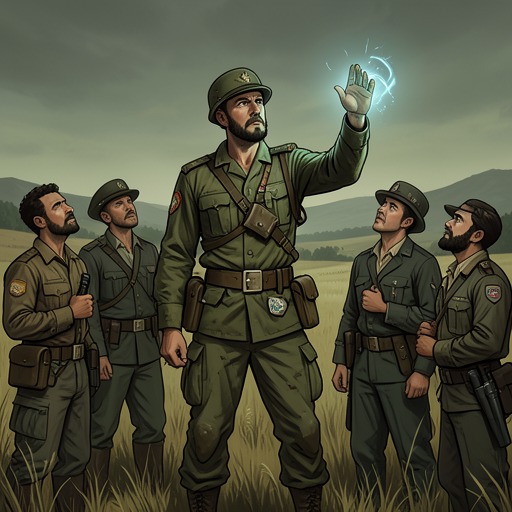
On the battlefield, Tien is placed with a reserve team that has been split apart to fill gaps in other squads. Kaladin sees three younger boys in armor, holding their spears uncertainly, and realizes that Tien and the other two have been positioned in the middle front of the formation despite barely knowing how to fight. The arrangement turns military necessity into a sentence imposed on children. Kaladin calls Tien’s name and breaks from his own line as the enemy approaches, abandoning discipline because the abstract obligation to hold position cannot compete with the immediate obligation to protect his brother.
Kaladin reaches the place where Tien has fallen only after the fighting has already moved through the formation. Cavalry has arrived and is sweeping through the enemy lines, but Kaladin no longer cares about the larger battle. In a hollow in the stone, he finds three corpses belonging to the young soldiers. He rolls over the one lying face-down and sees Tien’s dead eyes staring upward. The discovery is presented without heroic consolation: victory nearby cannot restore the child, and the arrival of military power comes too late to fulfill the protection Kaladin imagined he could provide.
Death and Lasting Consequences
Tien’s death is the central rupture in Kaladin’s early life. Kaladin remains kneeling beside the body, numb and failing even to bind his own wound or move back to safety. His response joins physical danger to emotional paralysis: the brother he rushed to save is dead, and the protective impulse that drove him out of formation has ended in helplessness. Tien’s death therefore becomes more than a tragic battlefield casualty. It is the moment when Kaladin’s dream of doing good as a soldier is forced into direct contact with the reality of institutions that place inexperienced boys in the front line.
Tien’s presence is defined by contrast with the circumstances of his death. At home, he is the child who sees changing colors in a rock and reveals white patterns hidden by water. He is eager, small, and untidy, but able to make the dull world worth examining. In battle, that same child is reduced by the military system to a reserve body used to fill a hole in a squad. The gap between these two representations gives his death its force: the story first establishes a distinct person whose attention and affection matter, then shows how war treats him as interchangeable.
For Kaladin, Tien becomes an enduring measure of responsibility. The memory of finding him dead underlies Kaladin’s later compulsion to defend those who are inexperienced, powerless, or placed in danger by someone else’s decision. Tien cannot continue as an active participant in the plot, but his influence persists through the values and wounds that shape Kaladin’s choices. His curiosity opens Kaladin to connection; his death turns protection from an ideal into a burden that Kaladin carries forward.