Veristitalians
The Way of KingsThe Veristitalians are a scholarly order whose defining purpose is to reconstruct the past as accurately as possible. Their work gives historical inquiry an active moral and political function: the past is not merely preserved, but examined for truths that can clarify the present and shape what should be done next.
Identity and Method
The order distinguishes itself from ordinary historical writing through its insistence on truth rather than reputation. Jasnah Kholin explains that many people use history to present the most flattering account of themselves and their motives, whereas the Veristitalians seek unbiased, factual accounts of what happened. Their members therefore choose subjects that have been misunderstood or misrepresented, treating distortion itself as a reason for investigation.
This method is empirical without being narrowly literal. The Veristitalians reconstruct events from the historical record, but they also test apparently fanciful material against what may have occurred in reality. Their inquiries include tales of creatures fighting alongside the Parshmen and stories of stone beasts that might have been some kind of Greatshells. Such accounts are not accepted simply because they are old, nor dismissed simply because they resemble folklore; they remain hypotheses until further facts can establish what they mean.
Jasnah Kholin and the Historical Record
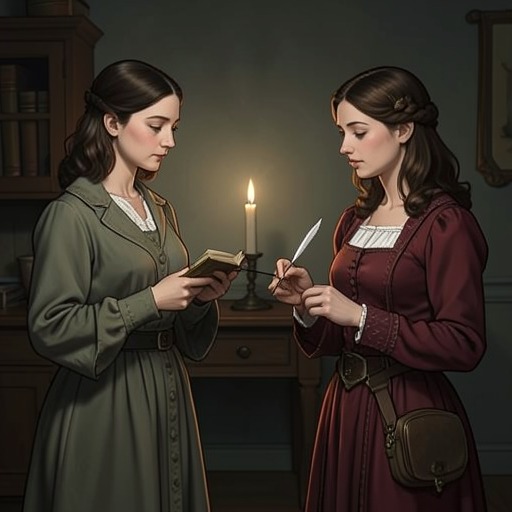
Jasnah Kholin is identified as a Veristitalian, and her scholarship demonstrates the order's characteristic combination of independence, skepticism, and persistence. She is concerned that something important may be hidden beneath the sheer number of accumulated pages in the historical record. The density of documentation does not reassure her. Instead, it raises the possibility that volume, repetition, or inherited interpretation has concealed the truth.
Her research takes her beyond the immediate political concerns surrounding the Shattered Plains and the campaign to avenge her father. She studies folktales and investigates reports of evil spirits because she believes they may preserve evidence of something real. The inquiry is sufficiently important that she refuses to abandon it even when returning to the Shattered Plains or remaining in Kharbranth carries serious personal and political implications.
Jasnah's instruction of Shallan Davar reflects the same priorities. Classical works and historical conundrums have a place in her teaching, but Jasnah insists that such material must remain an adjunct to current projects rather than become an excuse for unfocused study. When the available sources in Kharbranth have been exhausted, she tells Shallan Davar that they need many more facts before drawing conclusions. She also warns that pursuing the investigation will be a heavy burden and may keep Shallan Davar away from her estates for a considerable time.
Evidence, Interpretation, and Power
The order's principles stand in sharp contrast to the ways powerful people manipulate explanations. Torol Sadeas's reconstruction of the attempt on King Gavilar presents a persuasive chain of physical evidence: flawed gemstones were allegedly planted in the king's Shardplate so that they would crack under strain, while a carefully weakened saddle girth would cause him to fall during a hunt. The resulting death could then appear accidental, with the greatshell, failed Plate, and fall obscuring the intervention of an assassin.
Torol Sadeas also separates the likely timing of the sabotage from the later meeting between King Gavilar and Dalinar Kholin, using that distinction to argue that Dalinar Kholin is an unlikely suspect. The scene shows why factual reconstruction matters in a society where suspicion can be redirected through status and rhetoric. Evidence may challenge a convenient accusation, but the interpretation of evidence remains entangled with political power: the same facts can be arranged either to clarify responsibility or to cast suspicion upon an enemy.
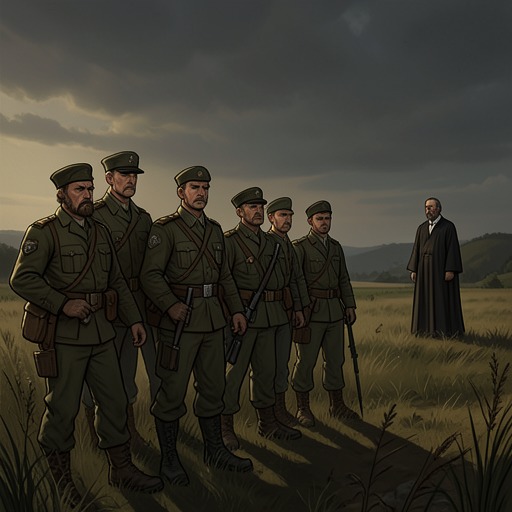
Other institutions likewise expose the difference between formal rules and their practical use. A slaver named Tvlakv openly explains that Kaladin Stormblessed's branded history must be treated as a convenient fiction because a man sold for high crimes would fetch a worse price than a supposed deserter. He and Kaladin Stormblessed therefore agree to pretend that desertion was the reason for the sale, even though the arrangement is illegal outside Alethkar only in a nominal sense, since Tvlakv observes that no enforceable law protects them where they are. In the army, the rules governing bridgemen produce a similarly coercive logic: punishment can include extra labor, whipping, docked pay, exposure to a highstorm, or execution, while refusing to charge the Parshendi is treated as a direct capital offense. The evidence surrounding the Veristitalians thus gains force from its surrounding world, where official accounts and legal categories are repeatedly shaped by profit, hierarchy, and survival.
Ethics and Present Consequences
The Veristitalians' concern with truth is not detached antiquarianism. Their stated purpose is to understand the present through a more accurate account of the past. Historical correction becomes a form of preparation: if an event has been misunderstood, then the society built upon that misunderstanding may make dangerous decisions. Jasnah Kholin's research into old accounts therefore carries consequences beyond scholarship, especially because the stories may contain signs of creatures, powers, or historical conditions that remain relevant.
The order's ethical ideal also resonates with Lirin's conduct as a surgeon. Lirin states that when choosing between two patients he follows three guidelines: if the wounds are equal, the youngest patient comes first; if the wounds are not equally threatening, the worst wound comes first. His decision to treat the more serious injury rather than yield to Roshone's demand that he prioritize his own son demonstrates a comparable refusal to let rank or personal interest replace an objective standard. The comparison does not make the two practices identical, but it highlights a shared commitment to judgment governed by principles rather than flattering stories about who deserves preference.
The Veristitalians consequently represent knowledge as a discipline of resistance. They resist inherited explanations, self-serving histories, and the temptation to mistake a large archive for a truthful one. Their work begins with uncertainty and proceeds through accumulated facts, but it is directed toward decisions that must eventually be made in the present. In that sense, their deepest subject is not the past alone; it is the danger of acting confidently on a past that has never been honestly reconstructed.