
Lieutenant Mamiya’s Life After the Well
The Wind-Up Bird ChronicleThis thread traces Lieutenant Mamiya from wartime captivity and survival through decades of emotional emptiness to his final act of testimony to Toru Okada.
increasing Bearing strength in each event
 decreasing
Bearing strength in each eventdecreasingCrossing into Mongolia
Crossing into Mongolia
A Mission Beyond His Orders
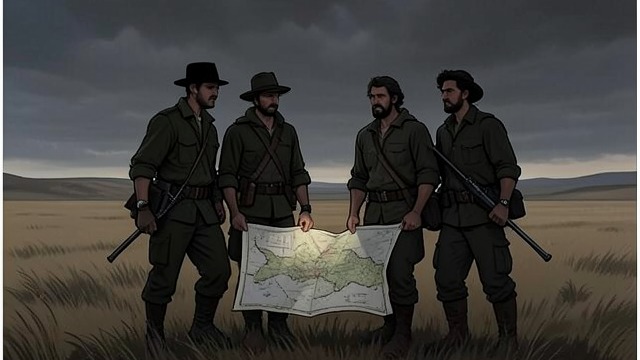
Lieutenant Mamiya is assigned to escort Yamamoto across the Khalkha River with Hamano and Oishi Honda. The mission combines mapmaking with a secret purpose that Mamiya does not understand. He obeys Yamamoto despite the risks of entering Outer Mongolia and the possibility of provoking a wider conflict.
An Uneasy Unit
The four men become closely dependent on one another in the exposed steppe. Mamiya sees the human cost of military ambition through Hamano’s misgivings and the stark landscape around them. Honda’s quiet certainty that Mamiya will survive is the first hint that his fate may be known in advance.
Captivity and the Well
Captivity and the Well
The Capture
Outer Mongolian soldiers seize Mamiya and Yamamoto, kill Hamano, and search for a hidden document. Mamiya watches Yamamoto be skinned alive after refusing to reveal its location. The violence leaves him unable to treat survival as a simple good.
A Choice Under Force
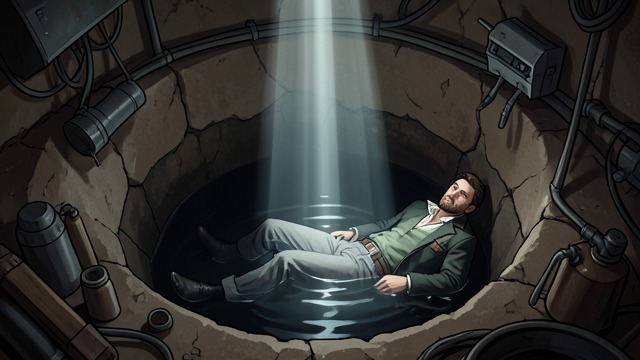
Rather than shoot him, the captors give Mamiya the choice of death by pistol or a jump into a dry well. He jumps and survives the fall with serious injuries. In the darkness, he experiences a brief shaft of intense sunlight that feels like a revelation, though he cannot understand what it has shown him.
Rescue and the Lost Life
Rescue and the Lost Life
Honda Finds Him
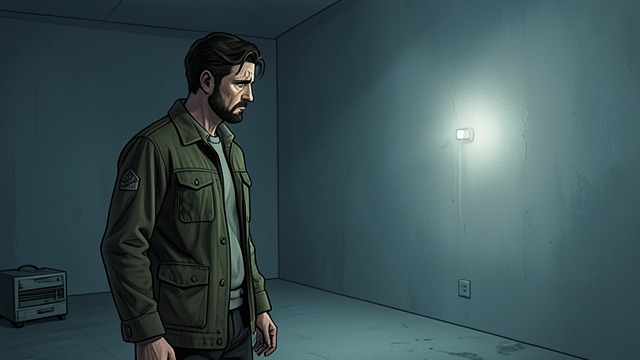
Oishi Honda returns for Mamiya, retrieves him from the well, and guides him back to the Japanese outpost. Mamiya survives, as Honda predicted, but he understands survival as an imposed sentence rather than a victory. The revelation he believes he nearly received in the sunlight has disappeared.
A Shell After the War
Mamiya loses his left hand during the Soviet advance, spends years in Siberian captivity, and eventually returns to Japan. He becomes a teacher and lives alone, but experiences the decades after the well as an empty shell. The knowledge that he could not die when he believed he should has not brought him comfort.
Encountering Boris Again
Encountering Boris Again
The Manskinner Reappears
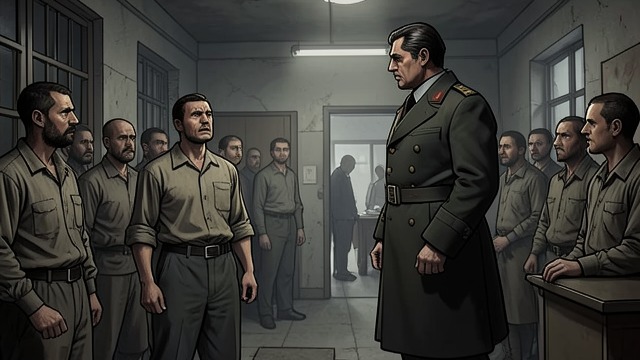
Mamiya recognizes Boris Gromov, the Russian officer responsible for Yamamoto’s torture, among prisoners at the Siberian mine. Boris has fallen from power but is still dangerous, and he offers Mamiya a role as intermediary with Japanese prisoners. Mamiya accepts, hoping to protect people from worse treatment.
Complicity and Resistance
Boris uses partial self-government to build control over the camp and turns the Japanese committee into an instrument of coercion. Mamiya comes to understand that his cooperation has helped create the conditions for oppression. He eventually tries to kill Boris, but the weapon is unloaded and the later shots miss; Boris curses him rather than killing him.
A Testimony to Toru
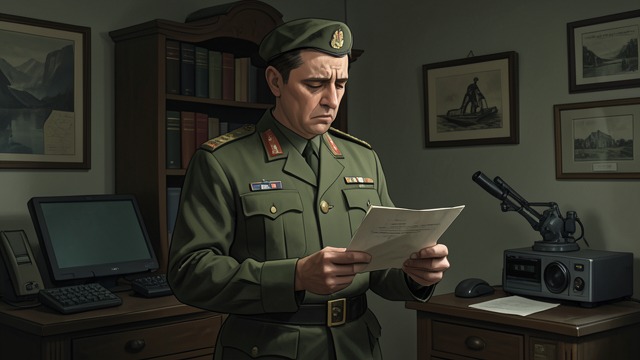
A Testimony to Toru
Telling the Unfinished Story
After Mr. Honda’s death, Mamiya delivers his keepsake to Toru Okada and recounts the well, the sunlight, and the violence at the Khalkha River. He later writes again to insist that the events were real, not a fabrication or an old man’s confused memory. Telling the story gives him a limited sense of salvation.
A Final Perspective
Mamiya does not claim that his testimony restores what he lost. He believes the life he should have lived ended in the well, and that the years afterward were an obligation he continued to fulfill. His letter nevertheless offers Toru a model of how a single experience can alter a person’s sense of reality, fate, and the possibility of a second chance.
Spring 1938
Spring 1938, after the mission fails
The third day in the well, 1938
1947 to 1948, at the Siberian coal mine
Summer 1984
