Boris Gro
The Wind-Up Bird ChronicleBoris Gromov, called “Boris the Manskinner,” is a former NKVD major who first enters Lieutenant Mamiya’s story as the Russian officer responsible for Yamamoto’s execution and later reappears as a prisoner who makes himself ruler of a Siberian mining camp. His career binds organized violence to administrative control: a man who once wielded state power through secret police and torture recreates a private regime through political influence, camp labor, black-market wealth, and a network of armed enforcers. When Mamiya fails to kill him, Boris sends him home with a curse that gives the encounter its lasting personal consequence.
Identity and Background
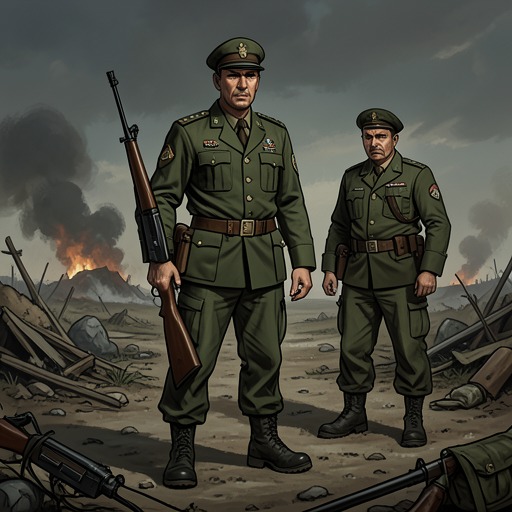
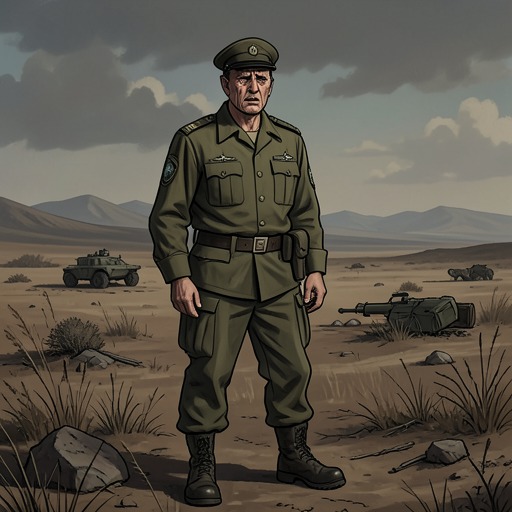
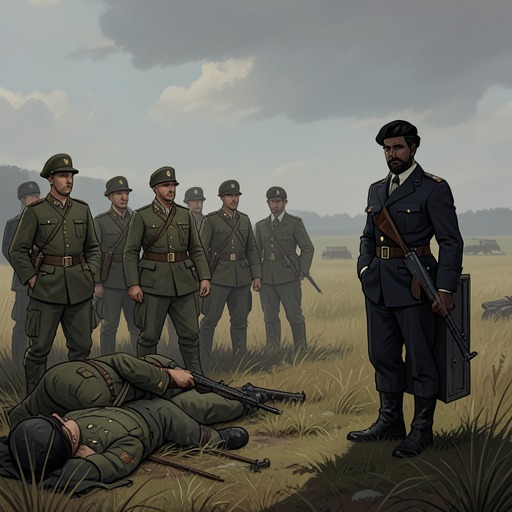
Mamiya recognizes Boris in the spring of 1947 while serving as a translator at a Siberian mine. Boris is then gaunt and nearly bald, dressed in prison clothes rather than the officer’s uniform Mamiya remembers. The change in appearance cannot disguise him: nine years earlier, on the bank of the Khalkha River, Boris had ordered Mongolian soldiers to skin Yamamoto alive. Recognition returns Mamiya to the terror of that earlier encounter, and Boris, seeing his reaction, appears to recognize him in turn.
The camp’s Soviet officer Nikolai identifies the prisoner as “Boris the Manskinner” and supplies his history. Boris’s real name is Boris Gromov. In 1938, as an NKVD major assigned to Ulan Bator, he organized the Mongolian secret police on the model of Beria’s NKVD and helped suppress suspected counterrevolutionaries through arrests, camps, and torture. After the Battle of Nomonhan, he was recalled to Moscow and sent to Soviet-occupied Eastern Poland, where he acquired his nickname for using the skinning of prisoners as a method of torture. He later returned to Moscow during the German invasion and served Beria as a torturer in the purges of people suspected of collaboration with Hitler.
Boris’s career ends in disgrace after he tortures and kills an armored-battalion commander accused of contact with the German SS. The commander proves innocent and is related to a senior Communist Party official; the Red Army also objects to the damage done to its standing. Boris loses his rank, is tried, and is sentenced to death with his Mongolian adjutant. The NKVD reduces Boris’s sentence to hard labor, while the adjutant is hanged. Nikolai says Beria privately promised to restore Boris after a year in camp, a rumor that helps explain why the prisoner is treated less like a powerless inmate than a dangerous political figure.
From Prisoner to Camp Ruler
When Mamiya next meets him, Boris has been given a private room, supplies of alcohol and tobacco, and a measure of protection despite his apparent status as a convict. Boris tells Mamiya that he remains powerful at Party Central and wants to work with the Japanese prisoners, whose numbers and labor are essential to mine production. He offers Mamiya a liaison role, presenting cooperation as a way to obtain favors for the prisoners. Mamiya refuses to become a spy, but Boris’s offer foreshadows the way he will turn apparent negotiation into control.
Boris keeps his promise to grant the Japanese prisoners partial autonomy and permits them to form a representative committee. The committee is made responsible for order, while guards are told to stop their open violence so long as the prisoners meet production quotas. The change initially brings a genuine, if limited, respite: the committee wins some easing of the work, and the prisoners feel less threatened by the guards. Yet this autonomy is also the mechanism by which Boris weakens their ability to resist him. He selects the most violent men among prisoners and civilian guards for a personal force armed with guns, knives, and clubs, while regular soldiers look away from its abuses.
Boris’s favorite enforcer is a prisoner known as The Tartar, a supposed Mongolian wrestling champion who stays close to him. As Boris consolidates power, he works on the Japanese committee members individually with bribes and threats. After six months, he has made the committee an instrument of his rule. Its chairman, a colonel who had spoken up for the prisoners, is suffocated on Boris’s orders; the death is attributed to illness, and Boris has Japanese prisoners carry out the killing. The committee then chooses Boris’s candidate as its new chairman. Production quotas rise, mining becomes more dangerous, and accidents increase. The prisoners’ nominal self-government now requires them to supervise their own exploitation.
Resources, Labor, and Political Power
Boris’s rule extends beyond discipline to the mine’s supplies and transport. He puts Mamiya in charge of the business side of his operation, including the management of personal assets. Boris diverts about forty percent of the food, clothing, and medical supplies sent to the camp by Moscow and the International Red Cross, hides the goods, and sells them. He also moves trainloads of coal through the black market, bribing railway workers and the stationmaster and using food and money to secure the cooperation of train guards. He says the proceeds fund the secret police, but Mamiya believes most of the fortune is Boris’s own, invested in gold and foreign accounts.
The mine’s official goal of increasing production makes this predation especially lethal. It is run as a strategic facility under political and military oversight, and its director is concerned above all with production figures. Prisoners who die are replaced by new arrivals; dangerous seams are worked despite the rising accident rate. Under Boris, the same logic becomes a deliberate method of population management. He assesses each prisoner’s potential, drives weaker laborers harder, and reduces their food so that they die and leave fewer mouths to feed. Their rations go to stronger workers to raise output. When the workforce declines, trains bring in more convicts, many of whom die during transport or soon after arrival. The system treats human beings as replaceable inputs to production, while Boris’s organization converts their deprivation into both greater output and private wealth.
By late 1947, Mamiya has become indispensable to Boris’s business operations, while The Tartar oversees violence. Boris has established a comfortable domain in the camp and amassed a fortune, protected by his private force. Messages continue to arrive from Moscow through secret couriers, but Boris no longer seems eager to return to the political center. His authority is no longer merely a residue of his former office: it is reproduced locally through money, labor, intimidation, and the expectation that central power may still protect him.
Mamiya’s Resistance and Boris’s Curse
Mamiya decides to kill Boris, not because he expects the camp to become humane afterward, but because he cannot accept allowing Boris to continue living. He waits for a moment when he can be certain of killing him with one shot. The opportunity remains difficult to create: Boris is cautious and keeps The Tartar near him, while Mamiya has only one hand and no weapon. Mamiya continues to act as Boris’s trusted subordinate while waiting for a chance to strike.
When Mamiya finally points a Walther at Boris and fires, the bullet misses, striking the wall clock behind him. Boris remains composed, retrieves the pistol, and returns it to its holster. He tells Mamiya that the failure did not reflect poor marksmanship: Mamiya was not qualified to kill him. Boris then curses him, declaring that wherever he goes he will never be happy, love anyone, or be loved. He says he will not kill Mamiya, but frames that decision not as mercy but as a consequence of having no need to kill him.
A week later, Mamiya leaves the camp for the port of Nakhodka and eventually reaches Japan. In his letter to Toru Okada, he describes himself as defeated, lost, and a walking shell, and attributes his inability to love or be loved to Boris’s curse. He cannot establish that the curse caused his emotional desolation, but he presents it as the language through which his life after the camp has come to make sense. Boris’s final power over Mamiya is therefore not another act of physical control: it is the sentence Mamiya carries home and uses to describe his existence.
Narrative Role
Boris is both a returning antagonist in Mamiya’s remembered history and the architect of a camp regime that turns institutional weakness into personal dominion. His passage from state torturer to condemned prisoner does not end his capacity to command. Instead, he adapts: political connections, collaborators, coercion, and control of supplies allow him to rebuild authority on the margins of the Soviet system. The promise of prisoner autonomy and the mine’s insistence on efficiency become cover for the same underlying structure, in which the powerless bear the cost and violence is delegated so that Boris can remain insulated.
His encounter with Mamiya closes the earlier violence at the Khalkha River without undoing it. Mamiya survives the well and the camp, but cannot turn survival into a victory over Boris; his shots miss, and Boris remains alive as Mamiya is sent away. In the letter addressed to Toru Okada, the story reaches beyond the historical episode: Boris’s curse becomes the stark expression of Mamiya’s conviction that survival has left him emptied of the capacity for love. The connection is presented through Mamiya’s own account, making Boris’s lasting significance inseparable from the way the survivor remembers him.