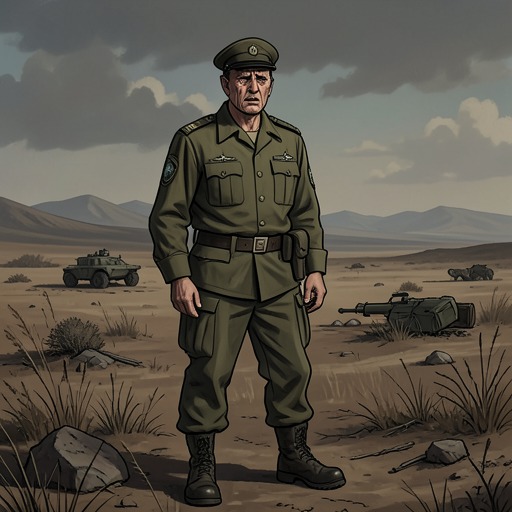
Boris Gromov’s Takeover of the Siberian POW Camp
The Wind-Up Bird ChronicleBoris Gromov’s takeover of the Siberian POW camp turns a secret bargain for limited Japanese self-government into a system of indirect control. Lieutenant Mamiya helps arrange the bargain, but the promised autonomy proves temporary: Boris first reduces visible disorder, then uses the committee, camp production, and targeted intimidation to extend his authority over the prisoners. The episode makes political concession and coercion parts of the same mechanism, while leaving Mamiya with the knowledge that his attempt to improve conditions helped open the way for a more calculated form of domination.
Causes and the Secret Bargain
The takeover grows out of the camp’s existing struggle for power. Boris approaches the Japanese prisoners through Lieutenant Mamiya, who has been working as an interpreter. Mamiya takes the proposal to a former lieutenant colonel who has become the prisoners’ unofficial leader. The colonel is interested in removing the incumbent political supervisor and securing some autonomy for the Japanese, while Mamiya warns that Boris is dangerous and cannot be trusted. The colonel’s calculation is that the situation can hardly worsen; Mamiya, too, believes the bargain may offer a practical way forward.
Mamiya then arranges a private meeting between the colonel and Boris and interprets their discussion. The thirty-minute meeting ends with a secret pact and a handshake. Afterward, the two men avoid direct contact and appear to communicate through coded messages. Mamiya’s role as intermediary ends, but he does not escape the consequences of the agreement: the bargain has connected the prisoners’ bid for self-government to Boris’s own contest for power.
A Reform That Buys Time
About a month after the meeting, Party Central removes the Georgian political supervisor and appoints a replacement. Within days, three Japanese prisoners are found dead, their deaths made to resemble suicides. The prisoners understand that these were killings of suspected informers, but no investigation follows. By then, Boris has gained a powerful foothold in the camp.
Boris fulfills the part of his promise that the prisoners can see. The Japanese receive partial autonomy and form a representative committee, chaired by the colonel. Russian guards are told to stop their violent conduct, while the committee becomes responsible for maintaining order among the prisoners. The ostensible arrangement is conditional: if the Japanese keep order and meet their production quotas, they will be left alone. At first, the policy seems to offer meaningful relief from the guards’ previous violence.
For several months, the change brings a real, if limited, interval of calm. The committee obtains a slight reduction in the harshness of the work, and the prisoners no longer have the same reason to fear the guards. Some begin to hope that their circumstances may improve. In retrospect, however, this respite is also the time Boris uses to make the arrangement secure enough to turn against its beneficiaries.
Control Through the Committee
While the Japanese manage their own affairs, Boris consolidates his power elsewhere in the camp and town. He chooses forceful men from among prisoners and civilian guards for a personal guard, giving them the means to intimidate and assault those who resist. Ordinary soldiers assigned to the mine keep their distance. The appearance of a representative committee therefore masks the growth of a separate coercive structure that the committee cannot control.
Boris also works on the Japanese committee members individually, using bribes and threats rather than immediate public confrontation. The initial autonomy helps lower the prisoners’ vigilance while he builds influence inside the body ostensibly representing them. After about six months of strengthening this arrangement, he moves against the colonel, the committee’s central figure and one of the few members not aligned with him. Boris orders the colonel’s killing and has Japanese prisoners carry it out; the death is attributed to illness. The committee then elects Boris’s chosen candidate to succeed him.
The transfer of the chairmanship changes what autonomy means in practice. Production quotas become progressively more burdensome, and the work grows harsher than before. Mining accidents increase, while prisoners who serve Boris receive lighter duties and privileges. Those outside his favor face greater hardship and the threat of punishment. The committee remains, but its authority is increasingly used to supervise the prisoners’ labor on terms imposed by Boris.
Consequences and Narrative Significance
The camp’s earlier shared suffering gives way to unequal conditions, suspicion, and resentment. Prisoners cannot safely complain or resist openly; people disappear, and the darkness of the mine makes their fate difficult to establish. The system does not simply restore the former pattern of guard violence. It replaces it with violence that is selective and organized: favors secure cooperation, threats isolate opposition, and nominal self-government makes prisoners participate in administering their own increasingly severe conditions.
Mamiya feels responsible because he brought Boris and the colonel together. He recognizes that Boris might have found another route into the Japanese zone, but that possibility does not undo his sense that he made a terrible mistake. The takeover consequently has two linked outcomes: Boris turns a limited concession into durable control, and Mamiya is left to reckon with his part in the chain of decisions that made the concession possible. The episode’s central reversal lies in the word autonomy itself: what first appears to be a protection from outside force becomes the means by which that force is reorganized and extended.