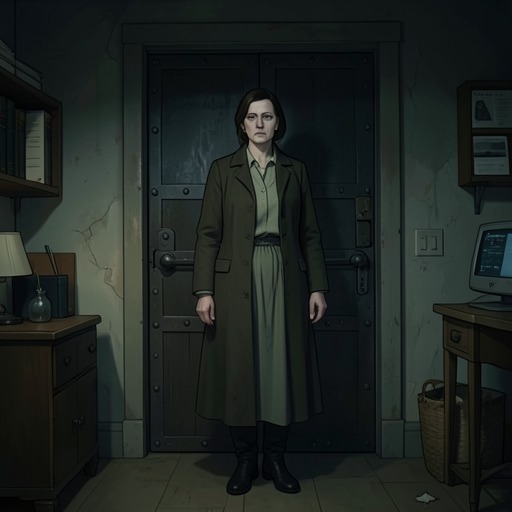
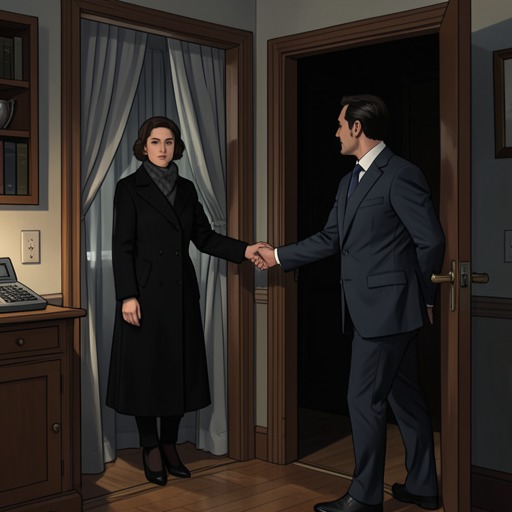
Kumiko is sent to live with her grandmother in Niigata
The Wind-Up Bird ChronicleKumiko’s childhood separation from her parents began at age three, when they sent her from Tokyo to live with her grandmother in Niigata. Although her parents explained the move as a response to her poor health, Kumiko later suspected it had served as a family bargain: a temporary transfer of a child that eased a feud between her mother and grandmother. The separation lasted until she was six, but its consequences reached beyond the move itself. Her return to Tokyo followed a wrenching farewell, a period she could not remember, and the death of the sister who had helped her find a place in the family.
The decision to send her away
Kumiko’s parents told her that she had been a sickly child and would benefit from the countryside’s clean air. Her own memories did not support that account: she remembered no major illness, and she recalled no particular concern about her health in her grandmother’s household. She therefore regarded the medical explanation as an excuse rather than a convincing reason for the move.
A relative’s account gave her doubts a family context. Kumiko heard that her mother and grandmother had been engaged in a long-standing feud, and that sending the child to Niigata had been part of a truce. Her presence gave her grandmother tangible confirmation of her connection to her son, Kumiko’s father, while her parents’ decision appeased the older woman. In Kumiko’s understanding, she had been used as a kind of hostage in a dispute between adults.
The fact that Kumiko was the youngest of three children sharpened her interpretation. An older sister and Noboru Wataya remained in the household while she was sent away; Kumiko later suggested that her parents may have thought losing the company of their third child would be an easy solution. She did not describe the decision as a deliberate plan to abandon her, but as one made without sufficient thought for what separation might mean to a young child.
Three years in Niigata and the return to Tokyo
From the age of three until six, Kumiko was raised by her grandmother in Niigata. She did not portray that period as unhappy: her grandmother doted on her, and she enjoyed playing with cousins who were closer to her age than her own siblings. Her return was prompted by her parents’ growing anxiety about how long she had been away. They brought her back to Tokyo in the year she was to begin elementary school, believing that the separation had gone on long enough.
The return, however, was not a simple restoration of the old family arrangement. Once the decision had been made, Kumiko’s grandmother became increasingly distressed. Her behavior swung between clinging affection and rejection, and she sometimes struck Kumiko hard enough to leave welts. She alternately said she could not bear to lose the child and demanded that she go away; she also directed bitter words at Kumiko’s mother and attempted to harm herself. Kumiko was too young to understand the upheaval around her. The return to her parents’ household was therefore accompanied by a second rupture: the loss of the close daily life she had known with her grandmother, in an atmosphere she could not make sense of.
Withdrawal and the loss of her sister
Kumiko’s response to that distress was to shut herself off from the world. She stopped thinking and hoping, and the following months became a blank in her memory. When that blank ended, she was back in the household she was supposed to have belonged to all along: her parents, Noboru Wataya, and her sister. Yet the place did not feel like home to her; it felt like a new environment to which she had not found a way to belong.
In the returned household, Kumiko became taciturn and difficult to reach. She did not feel unconditionally safe with her parents, and even their embrace could leave her uneasy. Her sister was the one family member she slowly began to trust. The sister stayed with her, shared a room, talked and read with her, accompanied her to school, helped with homework, and comforted her when she cried alone. Where the rest of the family struggled to get through to Kumiko, her sister tried to meet her confusion and loneliness with steady companionship.
That relationship ended when the sister died of food poisoning the year after Kumiko returned from Niigata. Kumiko later believed that, had her sister lived, home might have become a more normal and bearable place. She also carried guilt about surviving her, asking herself why she had not died in her sister’s place. The family’s repeated praise of the dead girl’s beauty, intelligence, piano playing, and popularity made the comparison harder to escape. When Kumiko was made to take piano lessons on the grand piano her sister had used, the instrument became associated with being measured against someone she could neither replace nor equal.
Significance in Kumiko’s family history
The episode shows the difference between formal family membership and experienced belonging. Kumiko is returned to her parents and siblings, but that physical reunion does not undo the separation or make the house feel like hers. Her early removal is framed not as a journey into an idyllic countryside or as a single, easily explained act of parental care, but as a decision entangled with adult conflict and followed by a distressing return.
The years in Niigata also form part of a chain of losses: separation from her parents, the destabilizing farewell to her grandmother, a blank in memory, and then the death of the sister who had made the Tokyo household more habitable. The account links Kumiko’s later distance from her family to specific experiences of divided care and failed understanding without reducing that distance to one cause. Even her relationship with Noboru Wataya bears the mark of a household in which she could not settle into an easy sense of closeness. The childhood episode thus establishes a history of displacement within a family that, by blood, was always hers.