Lost Revelation and Grace
The Wind-Up Bird ChronicleLost Revelation and Grace names both a vision and its irreversible failure: in a well on the Outer Mongolian steppe, Lieutenant Mamiya saw a brief flood of sunlight in which a living shape seemed to be forming, but it dissolved before he could discern or receive it. He later understood this missed revelation as the moment his inner life was extinguished, leaving him to endure a long existence that felt like an empty shell. The account turns on a stark double possibility: the light destroys what it illuminates, yet recounting its loss to Mr. Okada offers a tenuous kind of rescue.
The vision in the well
Lieutenant Mamiya locates the experience in the well where Outer Mongolian troops had thrown him after he was wounded. His leg and shoulder were broken, and he had neither food nor water; shortly beforehand, he had witnessed a man being skinned alive. In this extremity, he hypothesizes, his consciousness had become so concentrated that the sudden sunlight allowed him to descend to what he calls the core of his own consciousness. He presents this account not as a logically grounded explanation but as the closest approach he can make, even decades later, to what happened.
The light entered the well for only ten or twenty seconds, arriving without warning and disappearing just as abruptly. At first it overwhelmed sight: Lieutenant Mamiya imagined himself enveloped in brightness, unable to see. Then something began to emerge within it, a living presence that remained indistinct. The image is not a figure he can identify, but a form struggling to take shape in the light, its obscurity as important as its appearance.
He experienced the apparition on two consecutive days. Each time it began to form and then melted back into the brightness before becoming complete. Lieutenant Mamiya understood its approach as something like an offer of heavenly grace, but the offer was never fulfilled. He trembled while waiting for it; whether it withdrew by choice or simply ran out of time, its disappearance left him without the clear sight he believed he needed.
The missed revelation and the empty life
The immediate physical ordeal of hunger and thirst became, in his recollection, secondary to the torment of not being able to see the shape clearly. He describes the deprivation as a hunger to see and a thirst to know. He would have accepted death in the well, he says, if only he could have been granted a full view of the presence. What tormented him was not merely that the vision ended, but that it ended before it could become intelligible.
After it vanished forever, Lieutenant Mamiya felt that the life he had lived in the well had been lost. He describes the revelation’s heat as having burned away the living things within him, leaving nothing of value and searing the core that had made him himself. The light thus carries a double meaning: it offers the possibility of grace, yet its intensity also figures the destruction that follows when the revelation cannot be received. The loss is not just a missed glimpse but, in his interpretation, the loss of the person who might have emerged from it.
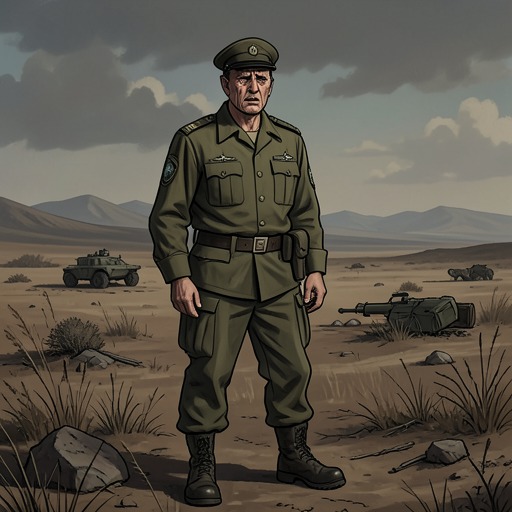
That interpretation reshapes his memories of the decades that followed. After the battle in which he lost a hand, the Siberian labor camp, repatriation, and thirty uneventful years as a rural social studies teacher, he lived alone and tilled the land. Yet he regards those years as a hollow interval, almost an illusion, rather than a continuation of the life he had possessed before the well. He volunteered for the front when the Soviet Army invaded Manchuria and later sought the harshest circumstances in the labor camp, but could not die. Corporal Honda had predicted that he would return to Japan and live a long life; the prediction proved less a comfort than a curse, because Mamiya came to believe that he could not die.
Death, duration, and the withheld gift
Lieutenant Mamiya’s account makes the briefness of the light the measure of a life. It shone for seconds, and he believes that once its offer had passed without being grasped, there would be no second chance. The long stretch of survival that followed could not compensate for the lost moment. His warning is therefore not simply that life is short, but that the decisive opening within it may be shorter still, and that a person may remain alive long after the possibility that gave life meaning has disappeared.
He describes physical death not as a threat but as possible salvation: it could release him from the hopeless prison of being himself. That longing follows from the distinction he draws between bodily survival and the life within a person. He continued to live for more than forty years, but understood himself as having lost his life at a particular instant in the well. In this paradox, longevity does not refute death; it prolongs the condition he experiences as already dead.
Telling as a fragile form of salvation
The account is framed as a letter to Mr. Okada, and its ending changes the meaning of the telling without undoing the loss. Lieutenant Mamiya apologizes for the length of his story and cannot be sure whether it will be of use to its recipient. Nevertheless, speaking it gives him a sense of having attained a kind of salvation. He calls that salvation frail and tenuous, but valuable precisely because it is something he can still receive after the original grace has vanished.
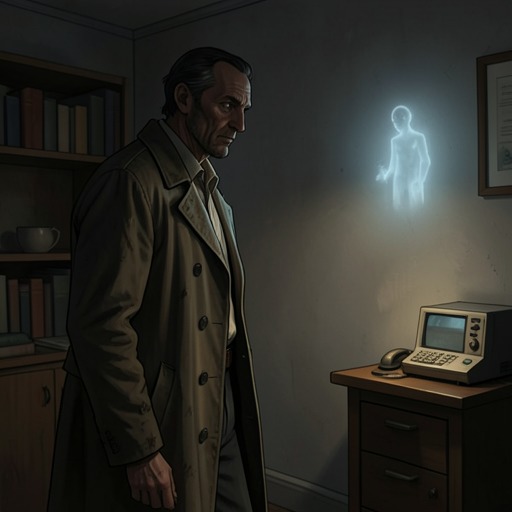
He connects this belated consolation to fate, sensing subtle threads in the fact that Mr. Honda guided him toward meeting Mr. Okada. The story therefore passes from an experience that could not be grasped in the well to a testimony that can be handed on. When Mr. Okada finishes reading, he reads the letter once more and returns it to its envelope: the vision remains unresolved, but its account has reached another person. Lost Revelation and Grace holds those outcomes together—the irreversible failure of the moment and the limited, relational possibility created by remembering and telling it.