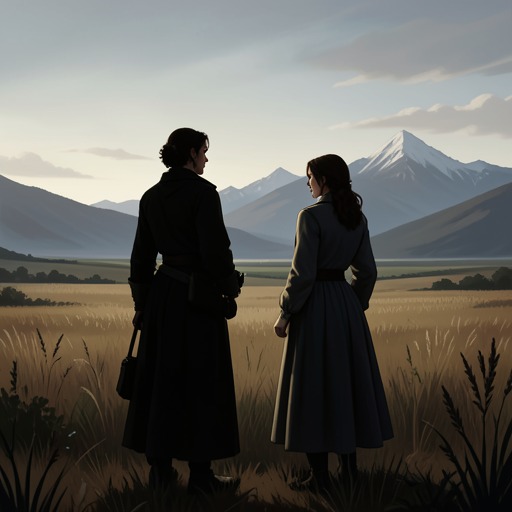
Malta Kano’s search for special water
The Wind-Up Bird ChronicleMalta Kano’s search for special water is both a journey across countries and an inquiry into how water might shape the body’s elements and spiritual powers. Beginning with her departure from Japan after high school, it leads through a Hawaiian commune and an extended search across North America and Europe to a spring in Malta. The journey supplies the name she later uses professionally and the experiential basis for her work as a consultant on the elements of the body.
Departure and the Search Begins
Malta’s younger sister recounts that Malta had long been preoccupied with water and believed that human existence was largely controlled by its elements. After finishing high school, Malta rejected the expected course of going to college. She worked to raise the money for travel and left Japan, despite her parents’ opposition. Her first destination was Kauai, where she had read of springs on the north shore reputed to produce marvelous water.
In Kauai’s interior, Malta joined a hippie commune and lived there for two years. Her sister’s account describes Malta as believing that the local water affected her spiritual powers: by taking it into her body, she could bring those powers and her physical being into greater harmony. The island, however, did not remain a sufficient answer to her search. Although its landscape and the commune’s pursuit of spiritual peace appealed to her, Malta found the community too dependent on sex and drugs, which she did not consider necessary. After two years she moved on.
A Long Journey Through Water and Work
From Kauai, Malta went to Canada, traveled through the northern United States, and continued to Europe. She tested water in the places she visited and identified several sources she considered marvelous, but none was the perfect water she sought. The search therefore became a sustained itinerary rather than a discovery at the first promising spring: she kept traveling as she compared one place with another.
Travel required money. When her funds ran out, Malta sometimes practiced fortune-telling, helping people locate lost belongings or missing persons. She preferred not to accept payment, reasoning that powers bestowed by heaven should not be exchanged for worldly goods, but she relied on this work to support herself. Her reputation spread, and she was able to earn money readily. In England, she assisted police investigating a missing girl: Malta located the place where the girl’s body had been hidden and found the murderer’s glove nearby; the man was arrested and confessed. The case appeared in newspapers, and her sister says she intended to show the clippings.
Malta continued wandering through Europe until she reached the destination of her water search. Nearly five years had passed since she left Japan. Her younger sister received letters from her throughout the journey, often long accounts of where she was and what she was doing. The correspondence kept the sisters emotionally close across distance, even as the letters also made plain that Malta was far from home during her sister’s difficult adolescence.
The Maltese Spring and a Discipline of Purification
Malta later described living on Malta for three years, from 1976 to 1979, in a small village at the foot of a mountain. The water there was unpleasantly salty, affecting even the bread made with it, but one spring high in the mountains was different. Reaching it required a climb of several hours from the village. Malta regarded its water as mystical and believed its influence on the body’s elements was exceptional.
The water’s power, in Malta’s account, depended on remaining at its source: once carried elsewhere, it lost its effect. A person had to climb to the spring and drink there. Malta said that documents from the Crusades called it spirit water and named Alien Ginsberg and Keith Richards among those who had come to drink it. Her own repeated climbs made the spring not merely an object of study but a daily practice.
For one week, Malta consumed only the spring water and no food. She presented this abstention as a required discipline, a form of religious austerity through which the body could be purified. The week of water-only practice marks the most concentrated expression of the search: finding the source was not enough; its use demanded that she submit herself to a regimen tied to its place and properties.
From the Journey to Her Work
Malta said that her years on the island and her experience of its spring led her to choose Malta as her professional name when she returned to Japan. The name thus preserves the journey’s endpoint within her later identity. Her account connects travel, bodily practice, and vocation rather than treating them as separate stages.
She described herself as a consultant who talks with people about the elements of the body and researches water believed to benefit those elements. She did not regard this as a profession in the ordinary sense and took no money for the work. Her card had neither address nor telephone number; she said she was the one who made the calls. She could remain unpaid because family assets, managed by an accountant, provided a decent annual income, and several books she had written brought in additional money. The search for special water therefore informs a later practice presented as nonprofit research and consultation, supported independently of fees from the people she advises.
Narrative Significance
The search gives Malta’s unusual expertise a personal history: her claims about bodily elements and water are rooted in years of movement, observation, and self-imposed discipline. Its pattern is also one of successive partial answers. Kauai offers water that Malta believes can harmonize spiritual power with physical being, but the island and its community eventually fail to satisfy her; Europe yields several remarkable sources, but not the perfect one; the spring in Malta finally becomes the culmination she describes, yet its effects cannot be detached from its location.
That insistence on place distinguishes Malta’s account from a simple search for a portable remedy. The water must be approached at its mountain spring, and the seeker must undertake the climb and the discipline. In the larger narrative, this history explains why Malta treats water as something with bodily and spiritual consequences, and why her consulting work centers on the elements of the body rather than on ordinary professional exchange.