Physical Pain
The Wind-Up Bird ChroniclePhysical Pain is the concrete bodily suffering at the center of Creta Kano’s account of her life: it leads her to decide to die on her twentieth birthday, and its eventual disappearance does not bring relief in any simple sense. Her testimony insists on pain as lived physical experience, not merely a metaphor for unhappiness. Later, as Toru Okada descends into darkness and loses confidence in his own bodily existence, the novel returns to the unstable boundary between body and self. These linked episodes make pain consequential both as a condition of daily life and as a measure of whether a person feels anchored to the world.
Creta Kano’s account of pain
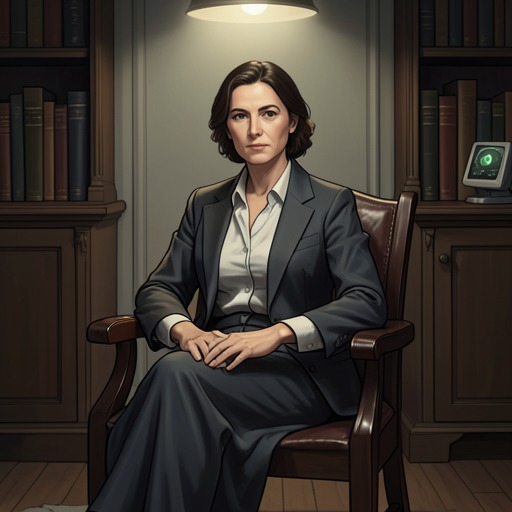
Creta Kano begins her story with a precise date: she was born on May 29, and on the night of her twentieth birthday she resolved to take her own life. When she tried to explain her reasons in a note, she could not complete it. The successive drafts sounded foolish to her, and she abandoned the attempt rather than leave her family feeling responsible. Her account presents the decision as the culmination of a long struggle, not a sudden response to one isolated injury.
She describes two decades in which pain repeatedly interrupted ordinary activity. Her teeth hurt throughout the year despite careful brushing and avoiding sweets; dental anesthetics seemed ineffective, making visits to the dentist a source of dread. Her periods brought severe pain for about a week each month. Changes in air pressure during flights and rides in tall-building elevators could also cause intense head pain, which a doctor attributed to the structure of her inner ears. At least once a week, unexplained stomach pain could prevent her from getting up in the morning. Even when doctors suggested that the stomach pain might be mental, the possibility did not make the pain less real to her, and she felt unable to stay home from school whenever something hurt.
The effects reached beyond pain episodes themselves. Bumps left dark bruises, and the appearance of her bruised body made her reluctant to be seen in a bathing suit; she says she had hardly ever gone swimming. Because her feet were different sizes, new shoes hurt until the larger foot’s shoe was broken in. She also recounts avoiding sports, a hip injury after falling while ice-skating in junior high school that continued to ache each winter, painful constipation, and shoulder stiffness severe enough to interfere with standing, lying down, and breathing. These examples make her account cumulative: physical distress is not one dramatic event but a recurring condition shaping school, movement, recreation, and how she feels about being seen.
The decision to die and its reversal
Creta Kano describes her conclusion in starkly practical terms. She believed that her life had been an unremitting source of pain and that she had already tried, with what she calls absolute confidence, to bear it as well as she could. Her decision, as she tells it, was not a declaration that she had failed to try; it came after she judged that continuing the struggle was not worth the cost. The distinction matters to her account: endurance is acknowledged before it is rejected as a sustainable way to live.
Her later condition reverses the problem without restoring a place for her in the world. After the pain is gone, she wakes and checks her body from head to foot, unable to tell whether nothing hurts because there is no pain or because she cannot feel it. She describes an absence not only of pain but of sensation, and a bodily lightness that makes the body seem separate from the self. Looking in the mirror, she experiences a long distance between herself and the body she sees. The relief she had imagined therefore becomes estrangement: the desired absence of pain does not return the identity and connection that pain had helped define.
That reversal also changes the meaning of her earlier wish to die. Creta Kano recalls crying in the Shinjuku Imperial Gardens and Yoyogi Park, sometimes for an hour or two, and wishing she had died on her birthday. In the numbness she describes, she feels neither pain nor joy and says she no longer feels like herself; she also feels unable to kill herself. The account does not equate numbness with physical pain. Instead, it shows that the end of pain, when joined to a loss of feeling, can leave her without the emotional and bodily bearings by which she had known her life.
Pain, body, and self
Creta Kano’s testimony repeatedly grounds the concept in specific bodily circumstances rather than using it as a loose synonym for distress. She names dental problems, menstrual pain, pressure-related headaches, stomach pain, bruising, injury, constipation, and muscle stiffness. The variety matters: pain governs different parts of her life and cannot be reduced to a single cause or episode. Even where a doctor offers a possible explanation, or where no cause is found, her account keeps the emphasis on what the pain does to her capacity to attend school, move comfortably, and inhabit her body.
The episode also gives physical pain an existential force without presenting that force as abstract. Creta Kano says that the world she had resented for its unfairness was still a world in which she knew who she was. Once sensation disappears, she feels unanchored to that same world. Pain had been intolerable, yet its absence does not simply free her; the contrast exposes how closely bodily feeling and her sense of self had been bound together. The account’s tension is not that suffering is secretly beneficial, but that relief alone cannot repair the separation she experiences.
Echoes in the well and later testimony
The novel later places Toru Okada in the dry well, where darkness makes it difficult for him to confirm his own bodily existence. He tries to establish himself through his senses, but feels his body losing density and weight, as though his mind were drawing it into its own territory. In that state, he recalls Creta Kano’s description of herself as a “Prostitute of the mind” and finds the phrase newly comprehensible. The parallel is not an assertion that their experiences are identical: her account concerns a life shaped by pain and the subsequent loss of sensation, while Toru’s occurs in the well’s darkness. Their scenes nevertheless converge on the question of how bodily experience anchors—or fails to anchor—the self.
Creta Kano’s later memory of waking in Toru’s bed without clothes extends that instability into a gap in recollection. She remembers going down into the well after Toru left and falling asleep there, but cannot recall what happened afterward. The scene supplies no account that would resolve the missing interval. Read alongside her earlier description of bodily estrangement, the lapse reinforces the novel’s interest in discontinuities between body, memory, and conscious identity without turning her uncertainty into an explanation the evidence does not provide.
Her message to Toru much later offers another, explicitly qualified image of bodily decline: she asks him to think of her as slowly dying of an incurable disease that makes face and body disintegrate. She immediately clarifies that this is a metaphor, not a literal description of her appearance, and says it is close to the truth of her situation while conceding that it cannot explain everything. This later language recalls her earlier insistence on the difference between physical pain and metaphorical suffering, but does not cancel it. Across her account, bodily experience is both stubbornly concrete and difficult to translate into words: the note about her death cannot be finished, numbness cannot be located as either absence of pain or absence of feeling, and the later metaphor can communicate only part of what she means. Physical Pain thus remains significant not because it stands for every form of distress, but because the novel follows how its presence, disappearance, and imperfect narration each alter a person’s relation to the body and the world.