Tokutaro Mamiya
The Wind-Up Bird ChronicleTokutaro Mamiya is a former Japanese first lieutenant whose return to Mr. Honda’s life, and later to Toru Okada’s, carries a history of war, captivity, and enduring emotional numbness. He comes to Okada with a keepsake left by the recently deceased Mr. Honda, but the package opens into a much larger legacy: Mamiya’s account of a secret border mission, a well in the Outer Mongolian desert, and a prediction that he would not die on the continent. He survives, yet describes the survival as an obligation after the inward life he valued had already ended.
Identity and Introduction
Mamiya first appears to Okada through registered mail. The envelope is made of heavy rice paper, and its sender’s name and address have been written in bold brushstrokes. Okada knows neither the sender nor the address. The letter explains that Mr. Honda has died of a heart attack at home in Meguro, where he lived alone. His maid found him at the low table of his foot warmer. Because he has no surviving relatives and left detailed instructions, Mamiya has undertaken the distribution of his keepsakes; one item is intended for Okada as a remembrance.
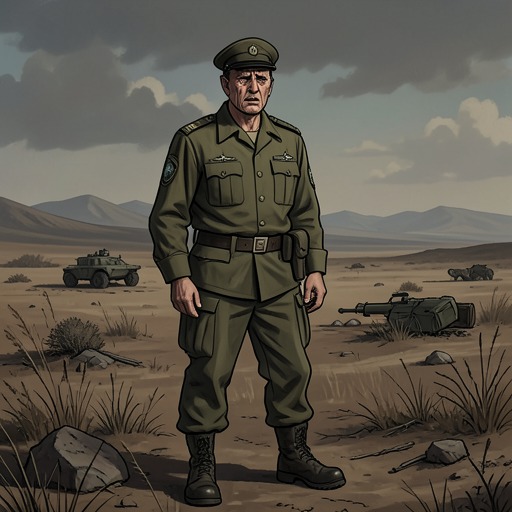
When Mamiya visits, his physical presence makes an impression of disciplined self-command. He is a very tall, bald older man in gold-rimmed glasses, with a tanned face and an erect, efficient bearing. His speech is respectful but precise rather than ceremonially elaborate. A thin glove covers his artificial left hand, while his right hand carries the cloth-wrapped package. The contrast between the prosthetic and his manual-worker’s appearance gives visible form to a history he will later recount without self-dramatization.
Mamiya tells Okada that he first met Mr. Honda in the summer of 1938. Although the two had shared a dangerous military operation, they were not in the same unit at the Nomonhan Incident: Mr. Honda was later wounded there and returned to Japan, while Mamiya did not take part in that battle. Their connection instead began in an earlier assignment, whose consequences remained difficult for both men to discuss.
The Border Mission and Its Purpose
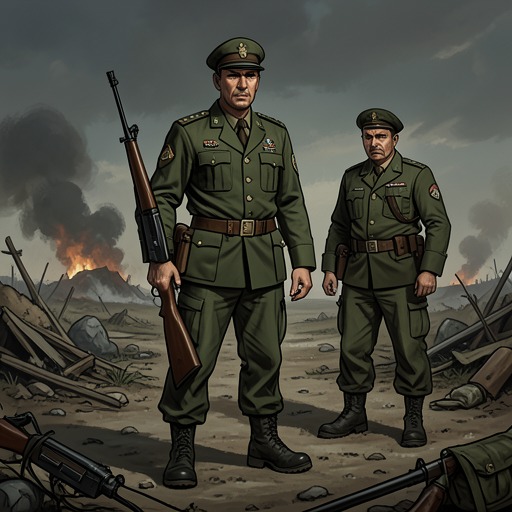
Mamiya had been selected to command a small escort because his main military responsibility concerned the western border of Manchukuo near the Khalkha River. He had surveyed the area from the air and was expected to compare the terrain with existing maps and improve their detail. The maps of the Hulunbuir Steppe were crude, and the immense, sparsely marked landscape made precise surveying difficult. Nomadic Mongolians had lived across it for generations without the same conception of fixed borders that shaped the rival states’ claims.
The uncertainty was political as well as geographical. Manchukuo’s borders touched both the Soviet Union and Outer Mongolia, and unilateral boundary mapping risked provoking an international incident. The Kwantung Army was heavily committed to the war in China and did not want a major clash with the Soviets; it therefore tolerated an unresolved frontier. Mamiya’s survey work nevertheless had a practical military purpose. In the event of war, commanders needed combat maps detailed enough to plan camps, artillery positions, infantry marches, water supplies, and horse fodder. His assignment consequently overlapped with intelligence work and the military secret service in Hailar.
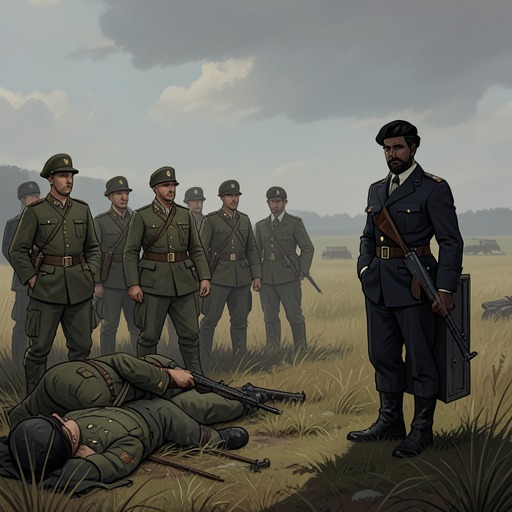
The party included Mamiya, Sergeant Hamano, Corporal Honda, and Yamamoto, whom they were assigned to accompany. Mamiya regarded the escort as too small for an effective armed defense, but a larger force might have attracted the attention of Outer Mongolian troops along the border. Hamano was an experienced and formidable soldier; Mamiya and Mr. Honda, by contrast, had little battlefield experience. Mamiya did not understand why Mr. Honda had been specially assigned until much later, when he came to recognize that the quiet corporal’s presence mattered for reasons beyond fighting ability.
After five days of preparation, the group travelled by train from Hsin-ching to Hailar, then continued by truck through the area of a Lamaist temple to a Manchukuo Army observation post near the Khalkha River. Mamiya estimates the drive at roughly two hundred miles. The empty steppe offered few landmarks against which to check a map. Its scale unsettled his sense of individual identity: the landscape seemed to absorb the mind, leaving him unable to hold his sense of self firmly to the body. This disorienting exposure to open space becomes a counterpoint to the enclosed darkness of the well that follows.
Captivity, the Well, and the Prophecy
Mamiya’s wartime path continued beyond the border mission. In August 1945, during the Soviet advance, a machine-gun wound to his shoulder left him unconscious, and a Soviet tank crushed his left hand. He was captured, treated in a hospital in Chita, and sent to a Siberian internment camp, where he remained until 1949. He had spent twelve years on the continent without setting foot in Japan. His later recollection connects this long captivity to the earlier desert ordeal, but distinguishes physical survival from any return to a full inner life.
In the desert, Mamiya was forced into a well and endured its darkness and isolation. At one point a light reached the bottom for only ten or fifteen seconds a day. When it disappeared, he remained huddled in the darkness, unable to act or even feel his physical existence. In that state, Mr. Honda’s prediction that he would not die on the continent returned to him. Mamiya says that after surviving where and when he expected to die, he could believe the prediction; he also felt that whatever grace had sustained him until then was gone.
Years later, while telling Okada what happened, Mamiya checks his watch and observes that he is alive, as Mr. Honda had foretold. Of the four men who went on the mission, he has lived the longest. Yet his account does not turn survival into an uncomplicated triumph. He remembers the well’s brief light as the point at which the core of his life seemed to burn away. Afterward, even the loss of his hand and the hardships of the Soviet camps could not reach him emotionally. He describes numbness not as a temporary response to any one later misfortune, but as evidence that something in him had already died in the well.
Return to Japan and the Cost of Survival
When Mamiya was finally repatriated, the family and future he might have returned to were gone. His parents and sister had died: his sister was working in a factory when the bomb fell, his father was on his way to see her, and his mother died in 1947 after the shock of their loss. The woman to whom Mamiya had been secretly engaged had married someone else and had two children. In the cemetery he found his own grave. The image condenses the disjunction between the man who had been sent abroad and the survivor who came back to Japan: even his return seemed to confirm that his former life had ended without him.
Mamiya became a high-school social studies teacher and taught geography and history, but he does not regard himself as having been truly alive in the years that followed. He says he simply carried out the acts of living. He wonders whether he should ever have heard Mr. Honda’s prediction, while accepting the idea that destiny can be understood only in retrospect. By the time he speaks to Okada, he describes continuing to live as an obligation rather than a renewed sense of purpose.
Relationships and Narrative Significance
Mamiya and Mr. Honda share the secret mission and its aftermath, but their relationship is marked as much by silence as by correspondence. After the mission, they are separated in Hailar and forbidden to speak or see one another. Mr. Honda is wounded at Nomonhan and sent home; Mamiya remains in Manchuria, then is sent to Siberia. Only years later, after Mamiya’s repatriation, do they meet again and exchange letters. Both avoid discussing the Khalkha River experience because it is too overwhelming to approach directly. Their silence becomes a way of acknowledging what they cannot readily share in words.
Mr. Honda’s prediction binds the men across time. Mamiya survives the continent, but survival fulfills the prediction without restoring what the well took from him. The keepsake he brings to Okada completes his long-delayed task for Mr. Honda, and his departure by bus closes the visit with a different kind of emptiness: Okada watches the bus disappear and feels as though a small child has been left alone in an unfamiliar neighborhood. Mamiya’s testimony thus becomes more than a report of wartime events. It gives Okada a human account of the well’s power to divide a life into before and after, while leaving the meaning of the light, the prophecy, and the experience itself unresolved.