
Traffic and the Search for Coherent Flow
The Wisdom of CrowdsThis thread follows traffic from congestion pricing to the physical feedback loops that defeat individual coordination, then considers redesigned roads.
increasing Bearing strength in each event
 decreasing
Bearing strength in each eventdecreasingLondon Charges for Entry

A Price for Congestion
A City at a Crawl
Central London faced severe congestion, with narrow streets and large numbers of vehicles moving at very low speeds. Mayor Ken Livingstone introduced a £5 charge for driving into the center during daytime hours.
The policy treated congestion as a cost a driver imposed on everyone else, not merely a private inconvenience suffered while sitting in traffic.
A Coordination Signal
William Vickrey’s idea was to use prices to help drivers weigh the value of a trip against its social cost. Some might travel at another time, take transit, or work remotely.
The proposal leaves the decision with individuals but changes the information and incentives guiding it.
Singapore’s Responsive System
Pricing the Road in Practice
Electronic Payment
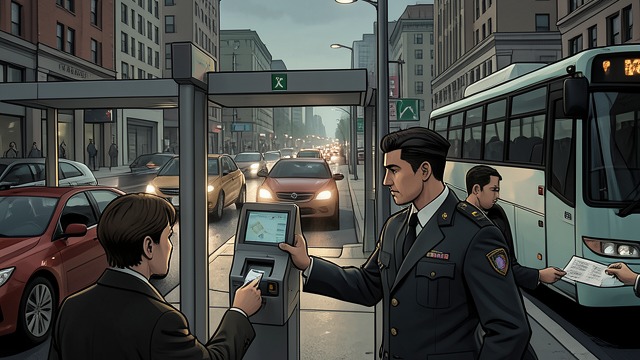
Singapore introduced road pricing in 1975 and later adopted electronic smart cards that charged drivers upon entry to priced zones. The system made costs immediate and difficult to evade.
Rates became more finely differentiated by time, including peak-within-peak pricing. The government also invested in public transportation, linking road charges to alternatives.
Choice Rather Than a Ban
Mexico City’s license-plate restrictions tried to limit driving on selected days, but some people bought second cars and traffic remained difficult. A price, by contrast, gives drivers a reason to consider whether each trip is worth its cost.
The comparison presents pricing as a coordination mechanism, though fairness requires attention to how revenue and mobility are distributed.
Small Brakes, Large Jams
A Highway Near Capacity
Braking Propagates
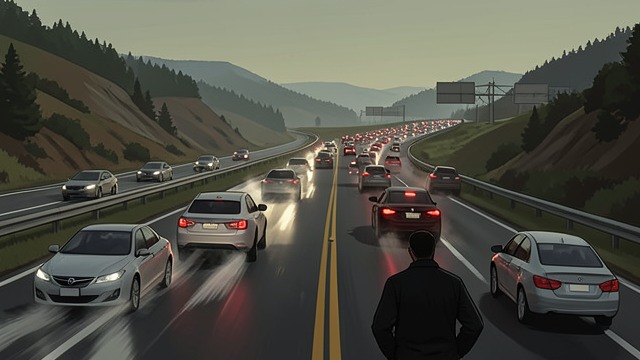
As a road fills, drivers brake to preserve distance. Each response affects cars behind, and a wave of deceleration can move through traffic until free flow becomes stop-and-go congestion.
A slowdown may begin with a bottleneck, a lane change, a curve, or a vehicle moving slightly too slowly. Once a jam forms, it can remain stable and travel backward against the direction of cars.
Local Decisions, Collective Delay
Drivers respond to brake lights and turn signals but have little view of the highway as a whole. Individual efforts to change lanes or protect personal space can intensify the instability.
The problem is not simply bad drivers. It is a system in which limited information and local reactions interact at high speed.
A Moving Bottleneck
Testing Traffic’s Weak Point
A Slow Vehicle on the Bridge
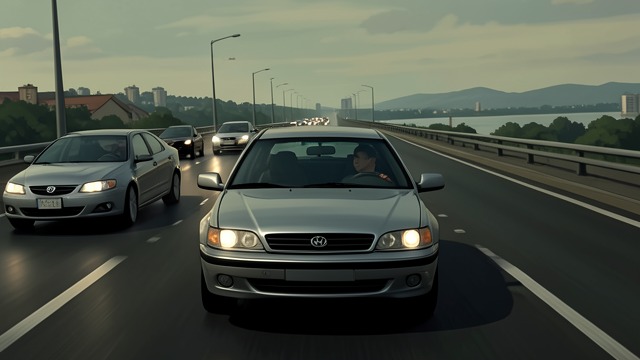
Researchers from Berkeley sent a test vehicle across the Richmond–San Rafael Bridge at a speed substantially below the surrounding traffic. The bridge had no entrance or exit ramps to explain the ensuing disruption.
Lane changes increased and congestion began building upstream, showing how one moving bottleneck could affect the flow around it.
Evidence of Interdependence
The experiment demonstrated the sensitivity of a crowded highway to small differences in speed. Drivers’ reasonable local responses created a broader slowdown.
It helped expose a coordination problem that cannot be solved by telling each driver simply to be more careful.
Toward Coherent Flow
Assist the Crowd
Platoons and Sensors
Automated Buick LeSabres on I-15 near San Diego demonstrated synchronized travel at close spacing. The experiment offered a vision of highways where cars communicate and respond without human reaction delays.
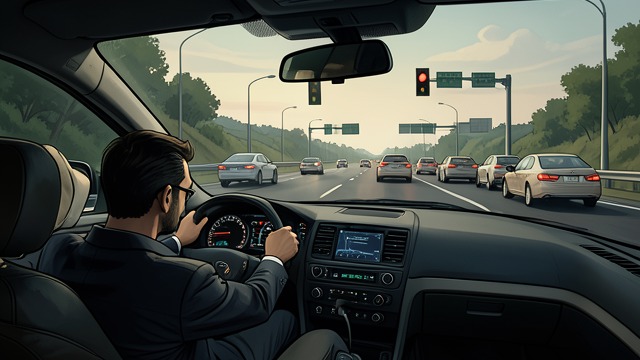
A less sweeping proposal uses driver-assistance sensors and smarter on-ramp signals to smooth traffic. Even a minority of sensor-equipped vehicles might reduce stop-and-go waves.
Timing the Entry
Dirk Helbing and colleagues argued that on-ramp traffic should enter when gaps are available, rather than at fixed intervals. Holding some cars briefly could reduce overall travel time by supporting coherent flow.
The thread ends with a design question: when decentralized drivers cannot coordinate reliably, infrastructure itself may help them do so.
February 2003
From 1975 onward
The chapter 7 explanation of traffic waves
June 14, 2000
The chapter’s proposals for future highways
