
The Columbia Team’s Fatal Certainty
The Wisdom of CrowdsThis thread follows the Mission Management Team as early assumptions and suppressed uncertainty turn a warning into a catastrophic failure of judgment.
increasing Bearing strength in each event
 decreasing
Bearing strength in each eventdecreasingFoam Strikes the Wing

Damage Without a Clear Picture
The Flight Begins
During the Columbia’s ascent, foam broke from the external tank and struck the shuttle’s left wing. Cameras did not provide a clear view of the impact, leaving the amount and location of damage uncertain.
The Debris Assessment Team began estimating the foam’s size, speed, and possible effect on the thermal-protection tiles. The available information was incomplete, but the uncertainty itself was consequential.
An Early Decision Point
The team requested on-orbit images that might have clarified the damage. Approval did not arrive, leaving technical analysis to proceed without the most direct evidence.
The crisis began not with a known failure but with uncertainty that needed to be treated as a reason to investigate.
The First Briefing

Concern Softened in Transmission
A Warning Reaches Management
Don McCormack received a briefing from the Debris Assessment Team, whose engineers said there was reason for concern. When the Mission Management Team discussed the strike, McCormack did not convey that concern with comparable force.
The damage was raised late in a meeting otherwise devoted to routine mission matters. A previous shuttle had suffered significant damage from a similar strike, yet the discussion moved quickly on.
The Leader’s Frame
Linda Ham said she did not think much could be done about the foam, so it was not a factor during the flight. Her framing treated the absence of an obvious repair as a reason not to investigate further.
That first exchange helped define what the group considered discussable before it had gathered enough evidence.
Images Rejected

A Question with an Answer Inside
Confirmation Bias
Ham asked whether any external-tank foam could cause safety-of-flight damage because of its density. The wording pointed toward the reassurance she sought rather than inviting an open assessment.
Lambert Austin replied that the possibility of serious damage could not be ruled out. His warning did not redirect the group’s attention toward a more thorough investigation.
Unsupported Assumptions
Managers rejected requests for images partly on the belief that the available resolution could not reveal the impact site. They lacked the security clearances needed to know that for themselves and did not ask the relevant defense officials.
The group acted with confidence about information it had not obtained, allowing an assumption to substitute for evidence.
Uncertainty Flattened

A Qualified Analysis Becomes Reassurance
The Engineers’ Limits
The Debris Assessment Team presented scenarios and emphasized that its tools and information were inadequate. The Crater algorithm had been designed for much smaller debris, and the team did not know precisely where the foam had struck.
Its conclusion that the shuttle was probably safe was therefore heavily qualified. The analysis did not establish that serious damage was impossible.
Management Selects Certainty
In the Mission Management Team’s discussion, Ham summarized the result as no burn-through and no safety-of-flight issue. No one asked to see the analysis or explored the uncertainties in depth.
The group transformed a provisional, limited conclusion into a settled decision, making uncertainty disappear from the meeting without being resolved.
The Shuttle Breaks Apart
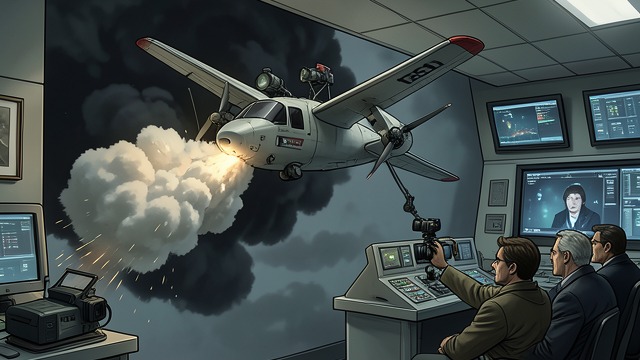
A Decision’s Consequence
Reentry Disaster
As Columbia reentered Earth’s atmosphere, it disintegrated, killing its crew. The foam strike had damaged the wing’s protective system, and the failure that management had treated as unlikely proved catastrophic.
Later investigations developed possible strategies that might have brought the crew back safely, even if the shuttle itself could not have been saved. The claim that nothing could be done had been premature.
A Failure of Group Process
The disaster exposed confirmation bias, hierarchy, inadequate information-sharing, and the absence of structured dissent. The Mission Management Team never meaningfully aggregated the different judgments available within NASA.
The thread ends in tragedy but also with a procedural lesson: teams must keep doubt visible, solicit minority views, and ask for evidence before declaring a problem closed.
January 16, 2003, during launch
January 21, 2003
January 22, 2003
January 24, 2003
February 1, 2003
