
Science as a Collective Enterprise
The Wisdom of CrowdsThis thread follows scientific work from global collaboration through open exchange to the reputational filters that can distort recognition.
increasing Bearing strength in each event
 decreasing
Bearing strength in each eventdecreasingA New Disease Appears
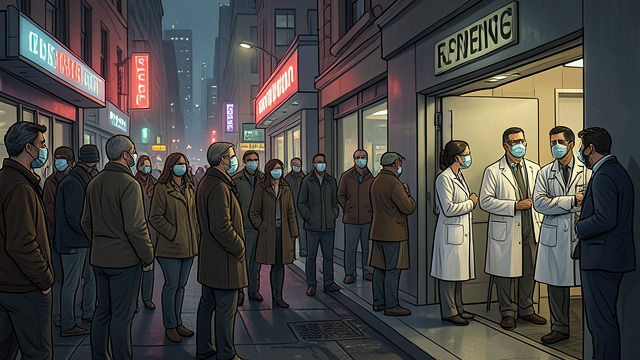
SARS Demands an Answer
Outbreak Reports
Cases of a severe respiratory disease emerged in Guangdong Province and then appeared in Hong Kong and Hanoi. The symptoms resembled flu, but tests did not identify influenza as the cause.
Because the illness spread between people, surveillance and quarantine mattered. Finding its cause also mattered: identification could enable testing and, potentially, a vaccine.
A Global Scientific Problem
The World Health Organization recognized that no single laboratory was likely to solve the question quickly on its own. The disease created an urgent problem that crossed national and institutional boundaries.
The situation set the stage for a collaboration built around sharing samples, results, and competing hypotheses.
Eleven Laboratories Join

A Network Takes Shape
Shared Work
The World Health Organization contacted eleven laboratories across several countries and asked them to investigate the disease together. They began daily calls and used a shared website to post images, analyses, and results.
Laboratories exchanged samples and worked in parallel, allowing them to compare findings and build on one another’s research in real time.
Collaboration Without a Director
The WHO convened the network but did not command each lab’s research choices. The laboratories themselves determined how to divide work and pursue promising explanations.
The arrangement combined different expertise with fast information-sharing, preserving local initiative while making each lab’s contribution available to the group.
The Coronavirus Candidate
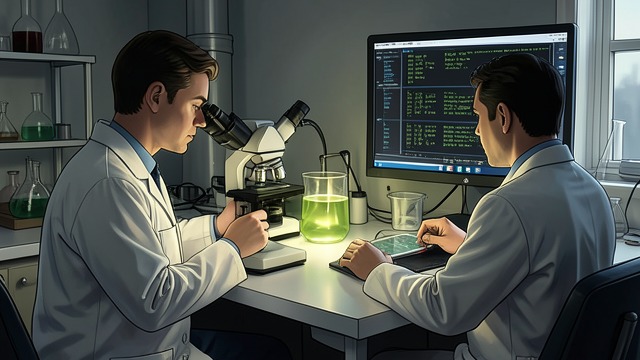
Evidence Converges
Separate Discoveries
Scientists at Hong Kong University isolated a promising virus, while researchers at the Centers for Disease Control separately identified a coronavirus-like specimen. Its presence was unexpected because human coronaviruses were generally associated with mild illness.
Laboratories in several countries found the virus in samples from SARS patients and began sequencing it. Their parallel work strengthened the case beyond what any single observation could establish.
Testing the Link
Researchers in the Netherlands infected monkeys with the virus; the animals developed SARS-like illness. The evidence now supported a causal connection rather than mere association.
The sequence shows why collaboration mattered: separate observations, laboratory methods, and tests accumulated into a stronger conclusion.
The Group Names the Cause
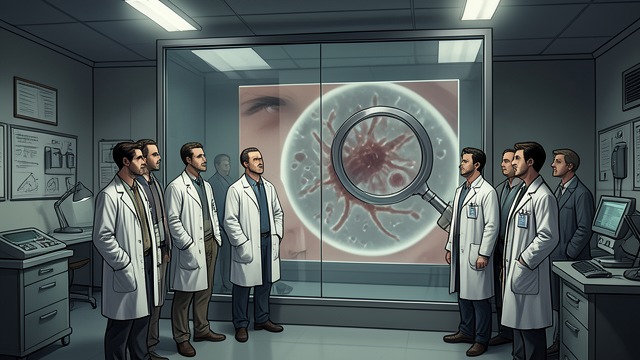
A Collective Discovery
From Candidate to Cause
About a month after the international collaboration began, the laboratories were confident enough to announce that a coronavirus caused SARS. Cynthia Goldsmith first spotted the virus, but no single observation alone proved the full claim.
The WHO’s account described the participating laboratories as having collectively discovered the coronavirus. Work that ruled out other possibilities helped as much as the final identification.
Speed Through Combination
The network had reached its conclusion in weeks, whereas an isolated laboratory might have taken months or years. Each institution could pursue its strengths while drawing on the others’ findings.
The resolution portrays science as a distributed enterprise in which a shared answer can exceed the achievement of any one researcher.
Recognition and Open Science

Giving Knowledge Away
Publication as a Scientific Norm
The Royal Society’s Philosophical Transactions helped establish a system in which discoveries were published and circulated rather than kept secret. Scientists could gain recognition by making findings available for others to examine and use.
Open exchange made scientific knowledge cumulative and collective: even a failed hypothesis could help others avoid an unproductive path.
The Filter of Reputation
Recognition also creates inequalities. Robert K. Merton’s Matthew effect describes how famous scientists receive disproportionate attention, while important contributions by unknown researchers may be overlooked.
The thread closes with an unresolved tension: science depends on shared evidence and communal judgment, yet reputation can shape which evidence the community notices.
November 2002 to early March 2003
March 15–17, 2003
March 21 to early April 2003
April 16, 2003
The chapter’s historical account, from 1665 onward
