
Prediction Markets as Organizational Tools
The Wisdom of CrowdsThis thread follows prediction markets from election forecasts to corporate experiments and proposed intelligence applications.
increasing Bearing strength in each event
 decreasing
Bearing strength in each eventdecreasingAn Alternative to Polls

Prices as Probabilities
Traders Forecast Elections
The Iowa Electronic Markets lets participants buy and sell contracts tied to election outcomes or candidates’ vote shares. Prices roughly express the market’s collective estimate of a candidate’s prospects.
Its traders are few and do not resemble the electorate, yet the markets often forecast results accurately and in some comparisons outperform major polls.
Aggregating Different Information
Participants can use polls, private research, news, and other knowledge. Market prices combine those judgments in a format that changes as information arrives.
The case suggests that prediction need not depend on asking a representative sample what its members intend to do; a diverse group may forecast what another population will do.
The Oscars and the Box Office
Forecasting Entertainment
Journalists and Academy Voters
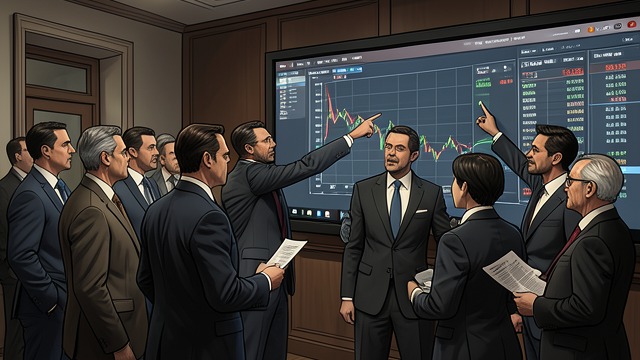
Before the 2000 Academy Awards, The Wall Street Journal surveyed hundreds of Academy members and correctly forecast five of six major winners. The Hollywood Stock Exchange correctly predicted all six.
The exchange also identified many eventual nominees in 2002, using a play-money market rather than a conventional expert panel.
A Commercial Signal
Research comparing forecasts found the exchange’s closing price the night before a movie opened to be a strong predictor of weekend box office. Hollywood began to consider the market’s data useful.
The example extends collective forecasting beyond elections, while showing that a market’s value depends on participation and a question with a measurable outcome.
Internal Forecasts at Hewlett-Packard

Employees Predict Sales
A Small Market
Hewlett-Packard experimented with internal markets in which employees from different parts of the company traded according to their expectations for printer sales. Participants brought information from distinct roles and departments.
The markets operated briefly and involved only a few dozen people, yet over several years their forecasts outperformed the company’s ordinary forecasts most of the time.
A Better Route for Information
An anonymous market could let employees contribute without exposing their judgment to the same political pressures as a meeting. Its price offered a clear summary of dispersed knowledge.
The experiment suggests that decision markets could help companies forecast, though it does not mean they should make final strategy choices automatically.
Drug Candidates Priced

Predicting Approval
A High-Stakes Forecast
InnoCentive created profiles for six drug candidates, three known to win approval and three to be rejected. Employees traded securities linked to those outcomes.
The diverse employee market quickly pushed likely winners upward and losers downward, suggesting that dispersed observations could help evaluate development decisions.
Implications for Research
Pharmaceutical companies risk substantial resources when deciding which candidates deserve continued investment. A reliable forecast could improve the allocation of time and funding.
The experiment supports markets as an input to decisions, not a replacement for scientific review or responsibility for the final choice.
The Policy Market Abandoned
Forecasting the Middle East
A Controversial Proposal
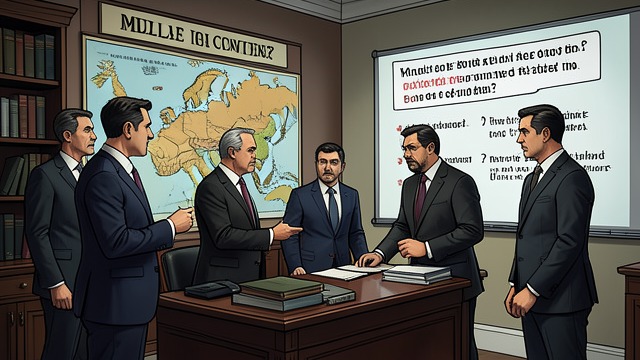
The United States Department of Defense’s FutureMAP plan included internal prediction markets and a public Policy Analysis Market intended to forecast political, economic, and military events.
Critics objected that people might profit from assassinations or other catastrophes. Senators Ron Wyden and Byron Dorgan helped denounce the plan, and it was canceled.
A Lost Test
The author argues that the market was intended to supplement intelligence, not replace it, and that many proposed questions concerned broader regional trends. Its accuracy was never tested because the project ended.
The thread closes on a conflict between moral discomfort and potential informational value, leaving the promise of this method unresolved.
The Iowa Electronic Markets from 1988 onward
2000 to 2002
The late 1990s experiment
The InnoCentive experiment described in chapter 10
Summer 2003
