
The Measure That Crowds Make
The Wisdom of CrowdsThis thread follows the book’s argument that aggregation can transform weak individual guesses into strong collective estimates, while also exposing its boundary conditions.
increasing Bearing strength in each event
 decreasing
Bearing strength in each eventdecreasingClassroom Estimates

The Average Outperforms
Simple Questions, Strong Results
Hazel Knight asked students to estimate classroom temperature; the group’s average came close to the actual reading. Other studies asked students to rank weights or compare piles of buckshot.
In Jack Treynor’s jelly-bean experiment, the class estimate was close to the jar’s true count, and only one participant did better.
Errors Can Cancel
Participants often made individual guesses without consulting one another. When their errors differed, averaging them reduced the impact of any single mistake.
The experiments support an important qualification: the group does not beat every person every time, but it can be a dependable source of estimates across repeated questions.
Finding a Shorter Maze Route

Many Attempts, One Path
Agents Explore
In Norman Johnson’s maze simulation, agents explored different paths, learning from one trip before trying again. Individual performance improved on the second journey as agents used what they had discovered.
Johnson then combined the majority choice at each turning point to construct a collective route.
An Optimal Result
The group’s path took nine steps, matching the shortest possible route and the best individual result. No single agent had to supply the full solution for the aggregate path to succeed.
The simulation illustrates how local judgments can be combined into a problem-solving sequence more effective than the average individual’s performance.
The Market Knows Thiokol
A Price Before an Explanation
Relative Movement
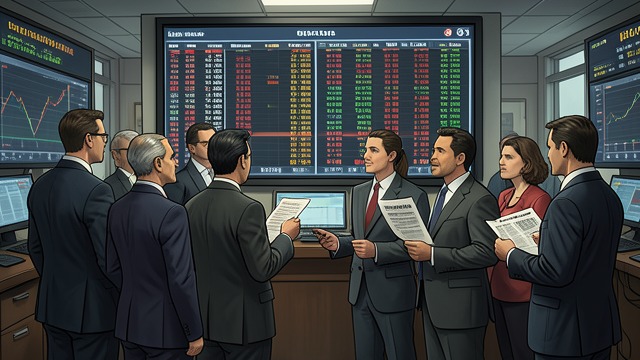
In the hours after Challenger exploded, Morton Thiokol’s stock fell more sharply than those of the other contractors. Public reporting had not yet identified the company’s O-ring seals as the cause.
The price movement represented the combined choices of investors with differing amounts of information and attention.
An Inference, Not Magic
The book proposes that traders’ scattered clues may have produced a useful collective judgment. It also acknowledges that coincidence, trading conditions, or other explanations cannot be excluded completely.
The example gives the aggregation thesis a real-world test while insisting that a striking result should not be mistaken for certainty about the mechanism.
Errors Must Be Independent

Information Minus Error
A Mathematical Intuition
A person’s estimate can be viewed as a mixture of information and error. If many people possess some relevant information and their errors do not all point in the same direction, averaging can leave a clearer signal.
The group can still fail if its members have no useful information or share a systematic misconception.
Correlation Is the Danger
The book repeatedly warns that imitation and common assumptions make errors correlated. In that case, the crowd does not cancel mistakes; it multiplies them.
Collective accuracy is therefore not a property of headcount alone. It depends on the diversity and independence of the contributions being combined.
The Crowd’s Boundary
What Aggregation Cannot Promise
Factual Answers and Value Choices
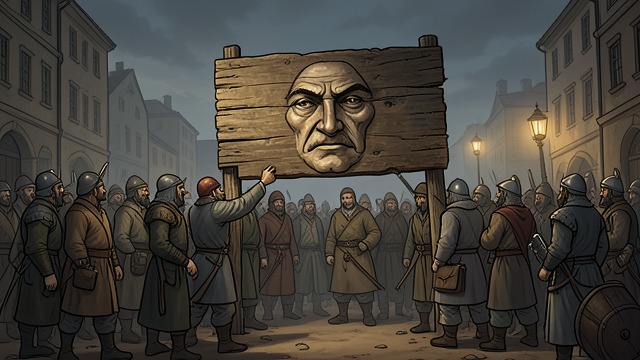
The strongest results appear when groups address cognition problems with answers that can eventually be checked. Coordination and cooperation require different mechanisms, including conventions, institutions, and trust.
Political choices about the common good may involve values that cannot be reduced to one objectively correct answer.
Wisdom Requires Design
Markets, votes, algorithms, committees, and scientific networks can all aggregate judgments, but each can fail when its structure destroys independence or excludes relevant knowledge.
The argument resolves not in a claim that crowds are always wise, but in a practical demand: build systems that preserve diversity, let people contribute locally, and make their judgments usable collectively.
The 1920s to the 1950s experiments
Norman Johnson’s computer simulation
January 28, 1986
The chapter 1 explanation after the market cases
The conclusion of the book’s central argument
