
From Ox Guess to Collective Wisdom
The Wisdom of CrowdsThe book develops from a single fairground experiment into a general argument that diverse independent judgments can outperform individual expertise.
increasing Bearing strength in each event
 decreasing
Bearing strength in each eventdecreasingThe Plymouth Fair
A Skeptic at the Fair
The Contest
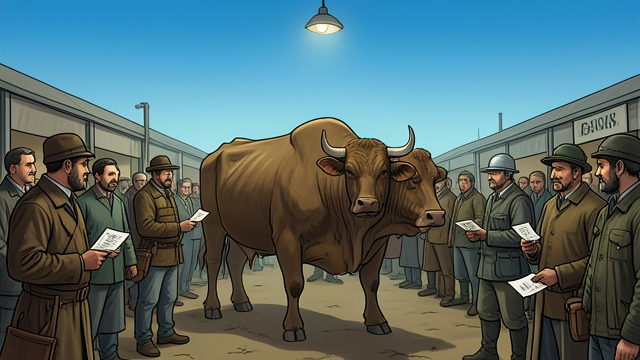
Francis Galton arrived at the livestock exhibition expecting to find evidence that ordinary people judged poorly. He regarded inherited ability as scarce and political judgment as a task for a select few.
The ox-weight competition offered a practical test: hundreds of people would independently estimate the same animal’s dressed weight. Their guesses came from different levels of expertise and experience.
The Unexpected Average
After discarding illegible tickets, Galton averaged the remaining estimates. The collective answer missed the actual weight by only one pound, challenging the hierarchy he had expected the data to support.
The book begins here because the result poses its central question: how can imperfect people, combined under the right conditions, produce an unusually accurate judgment?
Crowd or Mob
The Reputation of Crowds
A Long Suspicion
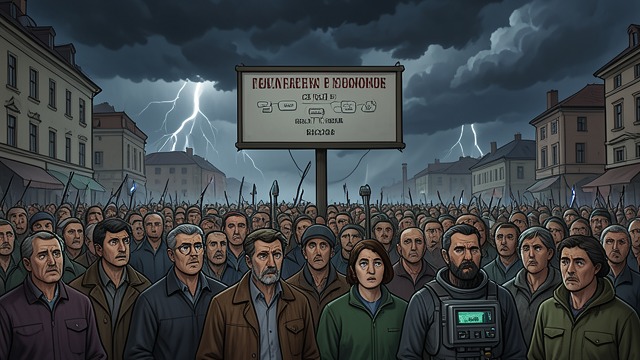
Charles Mackay, Gustave Le Bon, and other critics describe collective behavior as foolish or irrational. Their tradition treats group judgment as a downward pull, reducing individuals to the worst common impulse.
The author accepts that crowds can make disastrous choices, but rejects the claim that collective judgment is invariably inferior. Groups can be mobs, yet they can also solve problems that no one member can solve alone.
A Conditional Claim
The distinction is not between individuals and groups in the abstract. It is between groups organized so that useful differences survive and groups in which people copy, silence, or distort one another.
That qualification makes the book’s argument both hopeful and limited: collective intelligence is a possibility to cultivate, not a guarantee attached to any gathering.
The Four Conditions

The Ingredients of a Wise Crowd
Separate Contributions
The book identifies diversity of opinion, independence, decentralization, and aggregation as conditions that help a group make good judgments. Diversity adds distinct perspectives; independence prevents individual errors from spreading in lockstep.
Decentralization lets people use specialized and local knowledge. Aggregation then turns those separate contributions into a collective result, rather than leaving them scattered and unusable.
A Fragile Combination
These conditions explain why a crowd can be wiser than its best-known member, but also why groups sometimes fail. If members imitate one another or no mechanism combines what they know, the group loses the advantage of its size.
The framework becomes the book’s connective thread, linking markets, science, companies, traffic, and political life without claiming they all work in the same way.
Three Kinds of Problems

What Groups Are Asked to Solve
Cognition and Coordination
Cognition problems have answers that can be judged, such as estimating a quantity or forecasting an outcome. Coordination problems require people to anticipate one another because each person’s choice affects the choices available to others.
The book’s examples show that the same method cannot be assumed to work for both. Averaging independent estimates may help with a factual forecast, while coordination depends on conventions, expectations, or prices.
Cooperation and Institutions
Cooperation problems arise when individually attractive behavior can damage the group, as with free riding or tax evasion. Their solutions depend not only on calculation but also on norms, trust, and enforcement.
This three-part map gives the argument its structure: collective judgment is examined as a problem-solving method, a way of coordinating behavior, and a foundation for cooperation.
The Submarine’s Location
A Composite Search
Scattered Clues
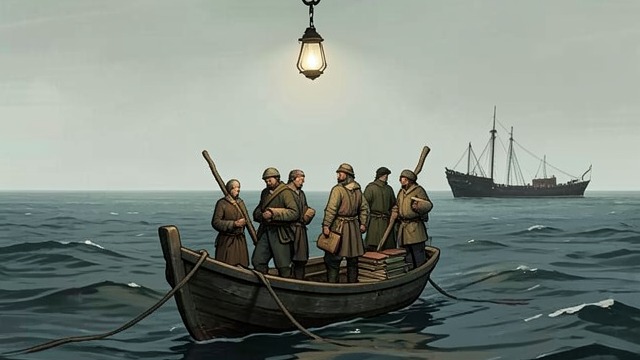
After the USS Scorpion disappeared in the North Atlantic, the navy faced a search area vast in width and depth. John Craven assembled people with different kinds of expertise and asked them separately to estimate possible scenarios.
Their wagers concerned pieces of the event: the sub’s likely speed, its descent, and the circumstances of its loss. No participant possessed a complete explanation or independently identified the eventual location.
A Collective Estimate
Craven combined the judgments using Bayes’s theorem. The resulting location lay about 220 yards from where the submarine was eventually found.
The episode closes the introduction by extending Galton’s simple estimate into a complex investigation. The group’s achievement came not from a single all-knowing expert but from combining partial, distinct judgments.
Autumn 1906
The introduction’s opening argument
Chapter 1, after the Challenger market example
The introduction’s structural overview
May to October 1968
