Hong Kong
The Wisdom of CrowdsHong Kong is one of the central locations in the book’s account of the global SARS investigation. Reports of illness there helped show that the outbreak extended beyond mainland China, while laboratories in Hong Kong contributed to the rapid, shared work that established the coronavirus as the cause of SARS.
Outbreak reports and the search begins
In early 2003, after China notified the World Health Organization that a severe respiratory disease had sickened people in Guangdong Province, a man returning from a trip to China and Hong Kong fell ill in Hanoi. At the same time, workers at a Hong Kong hospital developed similar symptoms. These reports, alongside further outbreaks, helped make clear by early March that SARS was not simply a new strain of flu but an entirely new disease.
The WHO responded with a global warning and a surveillance system intended to identify new outbreaks. Tracking the disease mattered because it was already known to pass from person to person, making quarantine a possible means of control. Discovering its cause was also essential: identifying the pathogen could enable tests and, potentially, a vaccine.
Hong Kong in the laboratory network
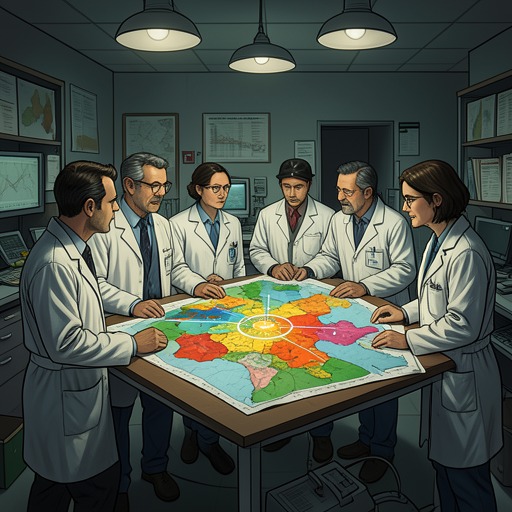
On March 15 and 16, the WHO contacted eleven research laboratories around the world, including laboratories in Hong Kong, and asked them to collaborate in identifying and analyzing the SARS virus. The laboratories began their joint project on March 17. They held daily teleconferences, shared virus analyses and test results on a WHO website, and regularly exchanged samples so that they could check and build on one another’s work.
This arrangement allowed different laboratories to study the same samples at the same time. By March 21, scientists at Hong Kong University had isolated a virus that appeared to be a likely candidate. On that same day, scientists at the U.S. Centers for Disease Control separately isolated a virus that appeared under the electron microscope to be a coronavirus. Over the following week, laboratories in Hong Kong and elsewhere detected the coronavirus in samples from many people diagnosed with SARS, strengthening the case for the candidate.
From candidate to established cause
Scientists in Hong Kong, Germany, and the Netherlands began sequencing the virus. In early April, monkeys infected with the coronavirus in a Dutch laboratory developed SARS. By April 16—only a month after the collaboration began—the participating laboratories were confident enough to announce that the coronavirus caused SARS.
The book presents this finding as a collective achievement rather than a discovery attributable to a single laboratory or scientist. The Hong Kong team’s early isolation of a promising candidate was important, but its status as the cause depended on subsequent evidence from the international network: detection across patient samples, sequencing, and the wider effort to rule out alternatives. The collaboration made it possible to reach the conclusion in weeks, where any laboratory working alone might have taken months or years.
Significance of the place
Hong Kong’s role shows how an outbreak’s geographical reach and the research response to it were intertwined. Reports from Hong Kong helped reveal the disease’s spread, and work by Hong Kong scientists helped narrow the search for its cause. The case also illustrates the book’s broader account of scientific knowledge as collective: results are shared, checked, and accepted across a research community, rather than established by one person’s claim alone.